
On a Thursday evening off Kerns Road, the smell of warm prasad drifts out of a converted house turned temple, and a line of families in salwar kameez and office lanyards forms at the door. The Indians in Huntersville, North Carolina did not arrive looking for a town. They arrived following a job, a nuclear plant on the edge of Lake Norman, and the community grew up around the work the way it has in so many American suburbs since.
The Place
Huntersville sits about seventeen miles north of uptown Charlotte, in northern Mecklenburg County, hugging the eastern shore of Lake Norman. It was a quiet cotton and farming town for most of its history, a railroad stop with a few brick storefronts.
That changed when the lake was created and Charlotte’s banking boom pushed professionals north along Interstate 77. Today Huntersville has roughly 70,000 residents, with Birkdale Village as its commercial heart and some of the best-regarded public schools in the county.
The town reads as the comfortable, master-planned edge of a fast-growing southern metro: cul-de-sacs and greenways, lake access and good schools, a place chosen deliberately by families who could have lived anywhere in the region. It is affluent, family-centred, and still expanding.
How It Became Indian
The story of Indians in Huntersville is, unusually, a story you can trace to a single employer and a single year.
The plant on the lake
In the spring of 1981, Duke Power Company brought the McGuire Nuclear Station online on the shore of Lake Norman in Huntersville. Running a nuclear plant takes a great many engineers, and Duke Power recruited heavily, including many engineers from India.
These were not refugees or chain migrants in the usual pattern. They were credentialed professionals, often with graduate degrees, who came on the strength of their technical training. They settled in the new subdivisions around the lake because that is where the work was, and they brought their families.
It is worth pausing on how early this was. In 1981 there was no Indian grocery to drive to, no temple, no weekend Hindi class. A family arriving for a job at McGuire was, in the most literal sense, building the community as they lived in it. The first Diwali celebrations happened in living rooms because there was nowhere else to hold them.
That early scarcity shaped the character of the place. The families who stayed were the ones willing to do the founding work themselves, and the institutions they built carry that improvised, volunteer spirit even now.
Building a centre before a temple
By late 1981 there were enough Indian families in the area to want a place of their own. They had been gathering in living rooms, at local YMCAs, and at an Indian restaurant called Bombay Palace.
In November 1981 the founders bought 2.4 acres of land. They deliberately chose to call the project a “centre” rather than a “temple,” wanting it to hold the cultural and educational life of the community as much as the religious. The cornerstone was laid in April 1982, and on 24 July 1982 the Hindu Center of Charlotte opened its doors. The original building cost roughly $170,000 and fifteen months of planning.
From a few hundred families to thousands
By 1984 there were already 350 to 400 Indian families across the Charlotte area, many of them clustered in the northern suburbs near the plant. The pattern compounded. Engineers told friends and former classmates, who came for jobs at the plant, then at the banks, then at the hospitals and software firms that filled in Charlotte’s growth.
The Hindu Center of Charlotte, which began in a modest building, eventually outgrew it. In 2014 the community broke ground on a far larger temple, a 20,000-square-foot building standing 81 feet tall, completed in 2015 at a cost of $3.2 million. The organisation now counts more than 3,000 families in its network.
Huntersville itself developed a second, more local Hindu presence. The Shree Sai Gurdev Datta Mandir, devoted to Shirdi Sai Baba, opened in a house on Kerns Road, offering daily aarti and serving mahaprasad on Thursdays. It is the kind of small neighbourhood temple that signals a community has put down roots, not just commuted through.
The professional second wave
The Charlotte that grew up after the 1990s, the second-largest banking centre in the United States, gave the original engineering families something to build on. The children of the McGuire generation became analysts, physicians, and software developers. New arrivals came for technology and finance roles rather than the plant.
That layering, the steady nuclear-era families joined by a younger banking-and-tech wave, is what gives the Indian community in Huntersville its particular texture. It is older and quieter than the explosive growth around Charlotte’s Ballantyne district to the south, and it predates the better-known Indian concentrations in the Research Triangle around Morrisville and Apex.
The Landmarks
Hindu Center of Charlotte, 7400 City View Drive, Charlotte. The institution that began with the McGuire engineers in 1982 and rebuilt itself, larger and taller, in 2015. It remains the spiritual anchor for thousands of families across the northern suburbs, including Huntersville.
Shree Sai Gurdev Datta Mandir, 10435 Kerns Road, Huntersville. A Shirdi Sai Baba temple run largely by volunteers, with daily aarti and Thursday mahaprasad. Its house-turned-temple character marks it as a genuinely local place of worship rather than a regional destination.
McGuire Nuclear Station, Lake Norman, Huntersville. Not a cultural landmark in the usual sense, but the reason so many Indian families came to Huntersville at all. The Duke Energy station that opened in 1981 is the quiet origin point of the whole story.
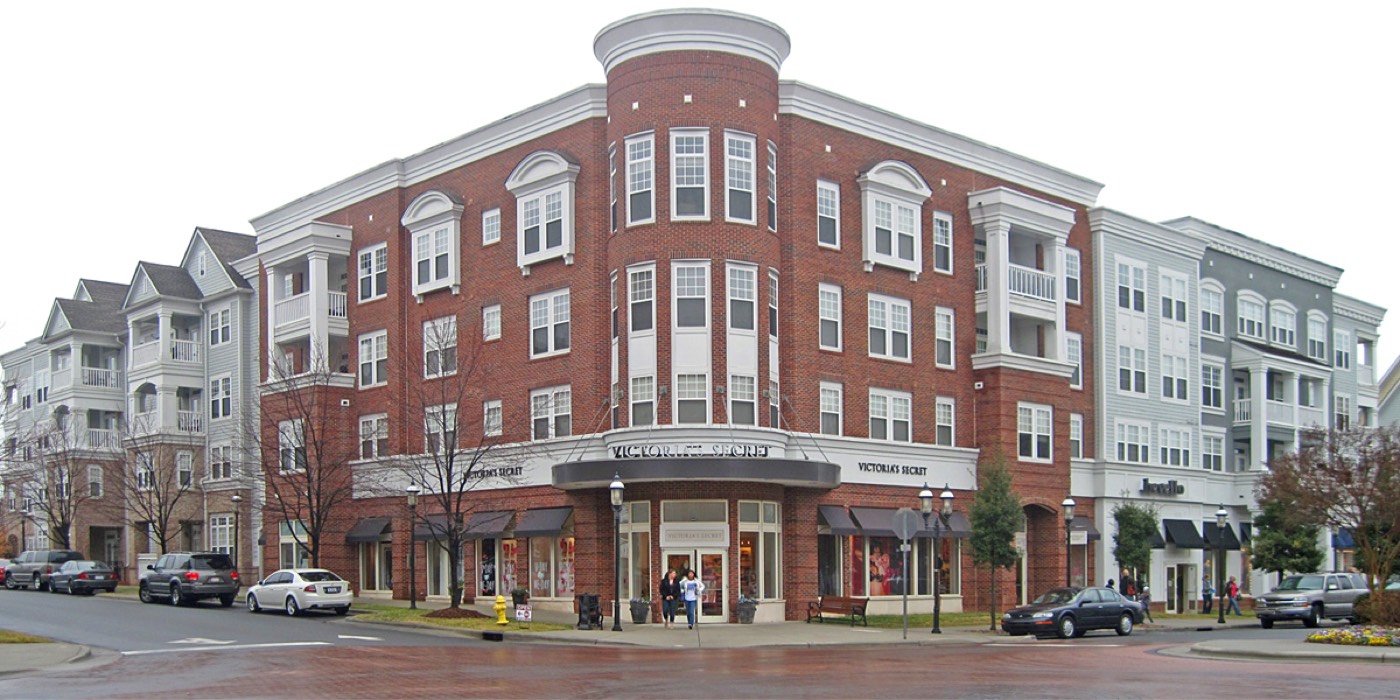
Birkdale Village, Huntersville. The open-air town centre that functions as Huntersville’s living room, where Indian families shop, dine, and gather alongside everyone else, and where the cluster of Indian restaurants nearby reflects the size of the local community.
Sangam Indian Cuisine, Huntersville area. One of the longer-standing Indian and Pakistani restaurants serving the north Charlotte corridor, the kind of place that doubles as a meeting spot for families and a fixture for weekend takeaway.
Patel Brothers, north Charlotte. The national Indian grocery chain’s local store supplies the spices, lentils, sweets, and produce that make a Huntersville kitchen run, drawing shoppers from across the northern suburbs.
Hough High School, Huntersville. One of the area’s most sought-after public schools and a magnet for the professional families who weigh school quality heavily, it has become part of why Indian parents choose the Lake Norman side of Mecklenburg.
Where They Came From
The earliest families were drawn from India’s engineering talent pool, the graduates of the Indian Institutes of Technology and regional engineering colleges who fanned out across the American energy and technology sectors in the late 1970s and early 1980s. They came on professional terms, not as part of a single regional migration.
That gives Huntersville’s Indian population a broad geographic spread rather than a single-state character. South Indian families, with roots in Andhra Pradesh, Telangana, Tamil Nadu, and Karnataka, are well represented, as the presence of South Indian cuisine and Sai Baba worship suggests. Gujarati and North Indian families are present too.
What unites them is class and pathway more than place of origin: highly educated households that entered through skilled work, first at the plant, later at the banks and hospitals and tech firms of greater Charlotte.
The later arrivals followed a different door but the same logic. Charlotte’s rise as a banking capital created demand for analysts, risk modellers, and technologists, many of them Indian professionals on skilled-worker visas. The city’s hospital systems recruited Indian physicians. Software and consulting firms filled out the rest.
For these newer families, Huntersville and the Lake Norman suburbs offered the same things the engineers had found: space, schools, and a temple already standing. They did not have to build from nothing. They could simply join.
Huntersville Today
Asian residents now make up something on the order of four to six percent of Huntersville, with Indians the largest share of that figure. It is not a Little India. There is no single Indian commercial strip the way there is in Edison or Cary. Instead the community is woven through the subdivisions, the schools, and the shopping centres of the Lake Norman suburbs.
You see it in the Thursday queue at the Kerns Road temple, in the Diwali gatherings that fill community halls each autumn, and in the cricket that gets played on suburban fields when the weather turns warm. You see it in the children moving through Hough and the other strong North Mecklenburg schools, and in the parents comparing notes about colleges and coding camps.
The food map tells the same story. Where there was once only Bombay Palace, the north Charlotte corridor now holds a spread of Indian and South Asian kitchens, from biryani houses to South Indian dosa spots, and Patel Brothers keeps the home kitchens stocked. None of it is concentrated on a single street, but all of it is within an easy drive, which is how the suburban version of an ethnic enclave tends to work.
Huntersville’s Indian families occupy a particular place in the Carolina story. They are quieter and older than the booming community around Ballantyne in south Charlotte, and they sit at a distance from the larger, more famous concentrations in the Research Triangle. They are a reminder that the first thread of a community is sometimes just a job, a lake, and a few hundred families who decided to stay.
Frequently Asked Questions
Why did Indians settle in Huntersville, North Carolina?
The Indians in Huntersville, North Carolina largely trace back to 1981, when Duke Power opened the McGuire Nuclear Station on Lake Norman and recruited many engineers from India. Those professional families settled in the surrounding suburbs, and the community grew from there.
Is there a Hindu temple in or near Huntersville?
Yes. Huntersville has the Shree Sai Gurdev Datta Mandir at 10435 Kerns Road, a Shirdi Sai Baba temple. The larger Hindu Center of Charlotte, founded in 1982 by the McGuire engineering families, serves the wider region from 7400 City View Drive in Charlotte.
How large is the Indian community in Huntersville?
Asian residents make up roughly four to six percent of Huntersville’s nearly 70,000 people, and Indians are the largest part of that group. The community is spread through the suburbs rather than concentrated in one neighbourhood.
Where do Indians in Huntersville shop and eat?
Birkdale Village and the surrounding north Charlotte corridor host a cluster of Indian restaurants, including Sangam Indian Cuisine, while Indian grocers such as Patel Brothers in north Charlotte supply spices, produce, and sweets to families across the Lake Norman suburbs.
How does Huntersville compare to Charlotte’s Ballantyne and to Cary?
The Indians in Huntersville form an older, quieter community tied to the nuclear plant, while the Indian community in Ballantyne in south Charlotte grew later and faster. Both are smaller than the well-known Indian populations around Cary in the Research Triangle.
What are the schools like for Indian families in Huntersville?
Huntersville sits in Charlotte-Mecklenburg Schools and includes well-regarded options such as Hough High School. School quality is one of the main reasons professional Indian families choose the Lake Norman side of Mecklenburg County.
If your family’s story passed through Huntersville, or any of the places Indians have made home in America, Atlas of Home can trace that journey. From an engineering college in India to the shore of Lake Norman, to wherever you are now.