
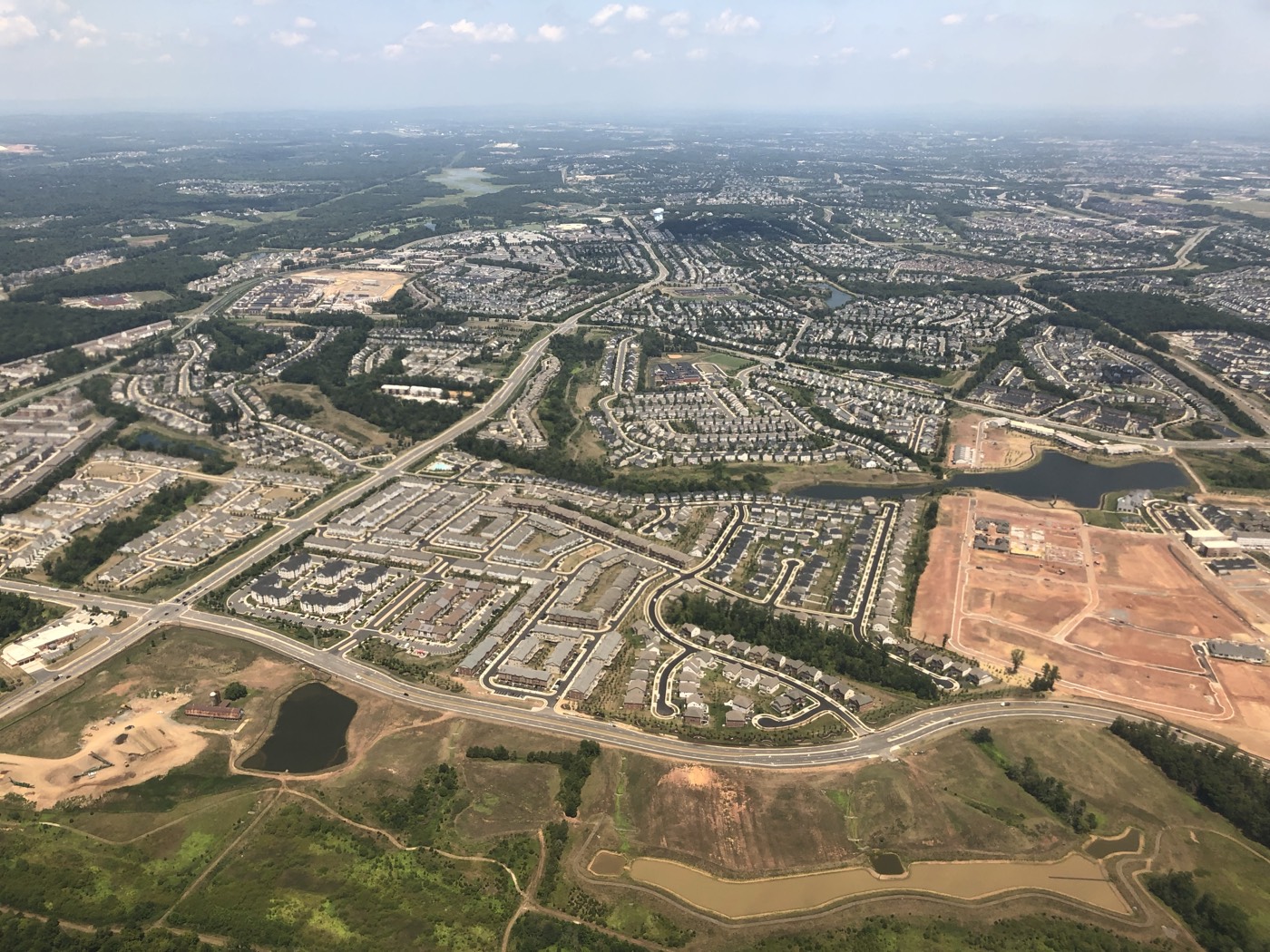
On a Saturday morning in southeastern Loudoun County, the parking lot at the Brambleton Town Center fills early. Children in cricket whites cut across the green toward the trails, a Harris Teeter cart rolls past carrying both rotisserie chicken and a bag of basmati, and the farmers market hums in two or three languages at once. The story of the Indians in Brambleton, Virginia is told in scenes exactly this ordinary: a community that arrived for the work of the digital age and stayed to build a suburban home ground beside the very fibre that carries the world’s internet.
The Place
Brambleton sits in southeastern Loudoun County, roughly 1.3 miles northwest of Washington Dulles International Airport and a short drive from the more familiar name of Ashburn. It is a master-planned community of about 2,500 acres, laid out for walkability, with more than 18 miles of trails, four pools and a 400,000-square-foot Town Center at its heart.
The numbers explain the rest. At the 2020 census Brambleton counted 23,486 residents, up an astonishing 138.6 percent from 9,845 a decade earlier, and estimates since have pushed it past 27,000. Asian residents make up close to 40 percent of the population, and roughly a third of all residents were born outside the United States.
Median household income here sits around $238,000, among the highest in a county that is itself among the wealthiest in America. This is not an immigrant gateway of cramped apartments and first jobs. It is where the second act happens.
How It Became Indian
From a plantation to Royville to a planned town
Long before the cul-de-sacs, this was farmland. Parts of present-day Brambleton sat on land once part of Thomas Lewis’ plantation, and by 1908 a small crossroads settlement called Royville stood near Belmont Ridge Road. For most of the twentieth century this was rural Loudoun, horse country sliding slowly toward the suburbs.
That changed in 1999, when Brambleton Group L.L.C., a division of the Detroit businessman Anthony Soave’s real estate company, acquired the property. Construction began in 2001. The vision was a self-contained, traditional-neighbourhood community of more than 9,000 homes, and it rose almost exactly as the region’s defining industry was taking shape next door.
The fibre that built a county
A few miles north, Ashburn had quietly become the most important crossroads on the internet. By the 2000s, the corridor was branding itself “Data Center Alley,” and today an extraordinary share of the world’s internet traffic passes through Loudoun County’s server farms. The Dulles Technology Corridor pulled in IT firms, government contractors and the engineers who run all of it.
That demand had a clear answer in the global labour market. Indian software engineers, data architects, project managers and consultants, many arriving on H-1B visas through firms clustered around Dulles, became central to the region’s tech workforce. Where the work was, the families followed.
A county transformed
The growth across Loudoun has been steep. Reporting on the region has noted that the local Indian community grew more than 750 percent since 2001, with the Dulles tech corridor as the magnet. Estimates have placed the number of Indian Americans in Loudoun County between roughly 17,700 and 25,000, one of the largest such populations in the Washington metropolitan area after neighbouring Fairfax County and Montgomery County in Maryland.
Brambleton became one of the places where that growth concentrated. New, large, energy-efficient homes; a town centre built for families; and a school system that consistently ranks among Virginia’s best made it a natural landing point for engineers who had cycled through Herndon apartments or rented in Ashburn first.
The pattern is recognisable across the wider region. Families who began in Herndon, the older Indian anchor of the Dulles corridor, often moved outward as careers matured, settling in the master-planned communities of eastern Loudoun. The same currents shaped the Indian community in Ashburn and South Riding just to the south, communities that share schools, temples, grocers and weekend cricket pitches with Brambleton.
Building the institutions
What followed the homes were the institutions. Indian grocers and restaurants opened along the Dulles corridor. Dance schools, tutoring centres and cricket leagues took root. And the established temples of Fairfax County, a short drive south and east, became the spiritual anchors for a Loudoun population that had outgrown its own borders faster than houses of worship could be built.
By the 2020s the community had grown confident enough to be recognised by the county itself. In October 2025 the Loudoun County Board of Supervisors formally recognised Diwali, a small civic gesture that nonetheless marked how thoroughly the festival of lights had become part of the local calendar.
The Landmarks
Brambleton Town Center, around 42415 Ryan Road, Ashburn. Anchored by a Harris Teeter, a Regal cinema, Onelife Fitness and the public library, this is the community’s living room. On any given weekend the central green hosts concerts, a farmers market and the cultural festivals where Indian families are very much part of the crowd.
Brambleton Library, in the Town Center. A 40,000-square-foot branch with a makerspace of 3D printers, sewing machines and a recording studio, it doubles as a community hub. It has hosted Diwali celebrations where children learn the customs of the holiday through crafts and games, the kind of programming that signals which families fill the shelves.
Amrut Indian Restaurant, Brambleton Corner Plaza. A modern Indian spot known for its full bar and signature fusion pizzas alongside a fast-casual counter, Amrut is the sort of restaurant that exists only where the audience is both large and second-generation, comfortable with tradition and happy to play with it.
Himalayan Wild Yak, Brambleton Town Center. Serving Indian and Nepali dishes, its momos, fried goat and chow mein earned praise from Washington Post critics. It is one of several South Asian kitchens that make the Town Center a place to eat your way across the subcontinent.
Patel Brothers, 43761 Parkhurst Plaza, Ashburn. The nearest outpost of the national Indian grocery chain sits minutes away, its aisles of lentils, fresh curry leaves, sweets and puja supplies a weekly ritual for Brambleton households. Its very presence is a demographic fact made visible.
Rajdhani Mandir, 4525 Pleasant Valley Road, Chantilly. Founded in 1985 and settled on its current eight-acre wooded site in 2000, this temple has served the Washington area’s Hindu community for four decades. For many Brambleton families it is the place for major festivals and life-cycle ceremonies, a short drive south of the data centres.
Durga Temple of Virginia, 8400 Durga Place, Fairfax Station. Established in 1999 and dedicated to the goddess Durga, it is one of the region’s most prominent Hindu temples and draws worshippers from across Northern Virginia, Loudoun families very much among them on Navratri and other high days.
Where They Came From
The Indians of Brambleton are not a single village transplanted but a cross-section of urban, professional India. Many trace their roots to the major IT-producing states and cities: Telangana and Andhra Pradesh, with Hyderabad a frequent point of origin; Tamil Nadu and Chennai; Karnataka and Bengaluru; Maharashtra and Pune; and the cities of the north and west that feed the global technology industry.
The selection was occupational before it was regional. The H-1B pipeline and the consulting firms ringing Dulles drew engineers and analysts who had often trained at India’s technical institutes. They tended to arrive young, partner up, and reach the down-payment stage of life just as Brambleton’s homes came onto the market.
The result is a community defined less by a shared hometown than by a shared trajectory: a degree in engineering or computer science, a first American job in the Dulles corridor, and a decision to raise children within reach of both the office and the temple.
Brambleton Today
Brambleton today is a place where the Indian presence is woven into the everyday rather than confined to a district. It shows up in the makeup of Madison’s Trust Elementary, which ranks in the top one percent of Virginia schools, and at Independence High, regularly ranked the strongest comprehensive high school in Loudoun County. Strong schools are both a reason families come and a thing they then sustain.
It shows up in the cricket played on weekend greens, in the Diwali lights along entire streets each autumn, in the queue at Patel Brothers and the bookings at Amrut. The community has reached the stage where its festivals are county-recognised and its second generation is moving through the local high schools toward college.
It is not without friction. The same data-centre boom that created the jobs now presses against the community’s edges, with proposed campuses and energy disputes shaping local politics, and the high cost of entry means Brambleton remains a community of the already-arrived. But for the engineers and their families who chose it, Brambleton has become exactly what it was built to be: a place to put down roots, close to the work, close to the temple, close to home. That arc, from the technology corridors of India to a planned town beside Dulles, echoes older Indian American chapters like Edison, New Jersey, the East Coast’s original Little India.
Frequently Asked Questions
How large is the Indian community in Brambleton, Virginia?
Brambleton’s population is close to 40 percent Asian, with Indian Americans a significant share. The Indians in Brambleton, Virginia are part of a wider Loudoun County Indian population estimated between roughly 17,700 and 25,000, one of the largest in the Washington metropolitan area.
Why did so many Indian families settle in Brambleton?
The main draw was work. Brambleton sits beside the Dulles Technology Corridor and Loudoun’s “Data Center Alley,” which created strong demand for IT, data-centre and government-contracting professionals. New family homes and top-ranked schools made it a natural place to settle.
Are there Hindu temples near Brambleton?
Yes. Rajdhani Mandir in Chantilly, on Pleasant Valley Road, and the Durga Temple of Virginia in Fairfax Station are both a short drive away and serve many Brambleton families for festivals and ceremonies.
Where do Indian families in Brambleton shop and eat?
Patel Brothers in nearby Ashburn is the go-to Indian grocer, while the Brambleton area offers restaurants such as Amrut Indian Restaurant and Himalayan Wild Yak, serving Indian and Nepali cuisine right in the Town Center.
How do Brambleton’s schools rank?
Very highly. Madison’s Trust Elementary ranks in the top one percent of Virginia schools, and Independence High is consistently rated among the best comprehensive high schools in Loudoun County and the state, which is a major reason Indian families choose the area.
How does Brambleton relate to Ashburn, South Riding and Herndon?
They form a connected belt of Indian American settlement along the Dulles corridor. Families often begin in older anchors like Herndon, then move outward to Ashburn, South Riding and Brambleton as careers mature, sharing schools, temples and grocers across all four.
If your family’s story passed through Brambleton, or any of the places Indians have made home in America, Atlas of Home can trace that journey. From the technology cities of India to a planned town beside Dulles International Airport, to wherever you are now.