
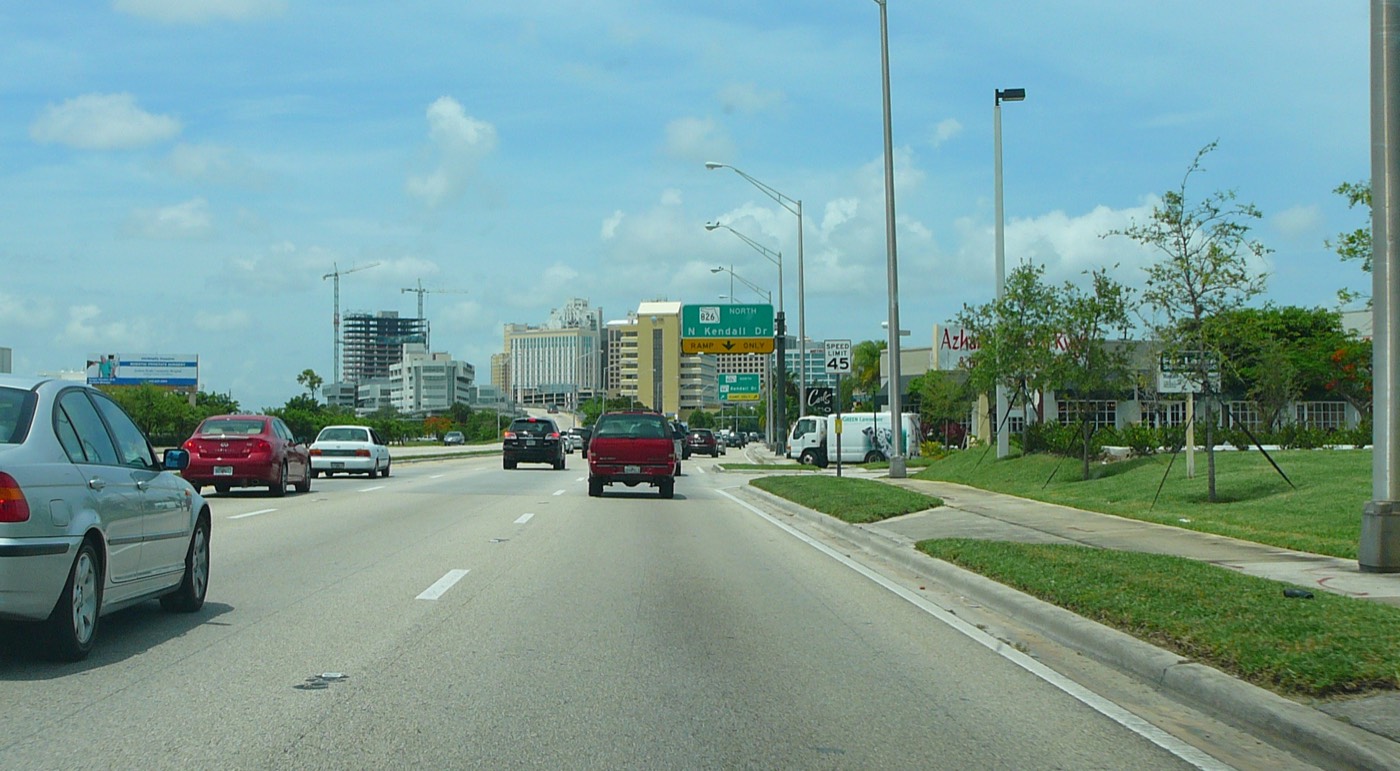
Drive south on US-1 past Dadeland, where the office towers thin out and the canopy thickens, and you cross into a village of banyan shade and circular driveways. The Cubans in Pinecrest, Florida did not arrive here off the boat. They arrived by way of two or three decades of work, a medical degree or a construction company or a law practice, and the quiet decision that the family had finally earned a half-acre lot and a top-rated school zone. This is where Miami’s exile story goes when it succeeds.
The Place
Pinecrest is a village of roughly 18,000 people in southern Miami-Dade County, about 11 miles southwest of downtown Miami, bordered by Coral Gables to the north and Palmetto Bay to the south. It spans about 7.5 square miles of oak and pine hammock, much of it given over to large single-family lots that have made its 33156 ZIP code one of the wealthiest in the United States.
It is young as municipalities go, incorporated only in 1996. Before that it was unincorporated South Dade, a leafy stretch of nurseries, citrus groves and the old Parrot Jungle tourist attraction. The median household income here runs well past three times the county figure, and the median home price has climbed into the millions.
How It Became Cuban
The Cuban arrival in Pinecrest is best understood not as a migration but as a graduation. The neighbourhood is the third or fourth address in a family story that almost always began somewhere else, somewhere louder and tighter.
The golden exile and the first address
When the wave that historians call the golden exile left Cuba between 1959 and 1962, it was unusually professional and propertied: doctors, lawyers, executives, business owners whose holdings had been nationalised by the revolution. They landed first in the city’s southwest quadrant, the district that became Little Havana, and in working Hialeah to the northwest.
Those neighbourhoods were the proving ground. The dentist drove a delivery truck, the lawyer stocked shelves, and the family pooled what it had through informal lending networks until someone could open a bodega, a clinic, a contracting firm. By the 1980s, Cuban Americans owned thousands of businesses across Miami-Dade, in finance, retail, construction and manufacturing.
South to the half-acre lots
As those businesses prospered, the families that owned them began to move. The trajectory ran south and west, out of the dense grid of Little Havana and toward the open lots of unincorporated South Dade. Coral Gables took the earliest and the wealthiest. Kendall, Pinecrest and the area then loosely called Suniland took the next tier of professionals through the 1970s and 1980s.
The draw was specific and unromantic: space, safety and schools. A successful exile family that had spent fifteen years in a small Little Havana house could buy a half-acre under the oaks here, send its children to Pinecrest Elementary and then to Miami Palmetto Senior High, one of the top public schools in the state, and still be twenty minutes from the family business and the grandparents.
It was a deliberate kind of arrival. The first generation had measured success in survival and in opening the business. The second measured it in the address, and Pinecrest, with its tree ordinances and its school rankings, was an address a Cuban family could point to and say that the long climb out of exile had landed somewhere solid.
Incorporation and the village idea
By the mid-1990s this was a settled, prosperous, heavily Hispanic suburb that still answered to county government miles away. Frustrated by growth pressure and zoning fights, residents voted to incorporate. The Village of Pinecrest was born in 1996, with Evelyn Greer as its first mayor, and the new village set about protecting exactly the low-density, tree-canopied character its residents had moved south to find.
One of the new village’s first signature acts captured the spirit of the place. In 2002 it bought the old Parrot Jungle grounds, the 1936 attraction founded by Franz and Louise Scherr at Red Road and Southwest 111th Street, and reopened it in 2003 as Pinecrest Gardens, a public botanical park. A private tourist relic became civic property, which is roughly what the whole village had done with itself.
A working language, not just a heritage
What makes Pinecrest distinctly Cuban is not a strip of restaurants. It is the ordinary fact that nearly half the village is Hispanic and that around four in ten households speak Spanish at home. Here Spanish is not nostalgia. It is the language of the closing dinner, the pediatrician’s small talk, the contractor’s quote and the abuela who lives in the casita out back.
The result is a kind of bilingual affluence found in only a handful of American places. A child can grow up in Pinecrest fluent in two languages, fully American and fully Cuban, with a Palmetto diploma and a grandmother who still remembers Havana. The community here is less an enclave than a destination, the place the enclave was always trying to reach.
That distinction matters. Hialeah and Little Havana are where the culture is performed in public, on the street, in the cafecito line at dawn. Pinecrest is where it is simply lived, behind hedges and inside families, no less Cuban for being quieter about it.
The Landmarks
Pinecrest Gardens, 11000 Red Road. The crown jewel of the village, the former Parrot Jungle site reborn as a public botanical park in 2003. Its enormous banyan tree, tropical plantings and Sunday farmers market make it the closest thing Pinecrest has to a town square, a place where Spanish and English drift together over coffee and produce under the canopy.
Miami Palmetto Senior High School, 7431 Southwest 120th Street. The public high school that anchors the village’s whole reason for being. Consistently ranked among Florida’s best, it offers Spanish among its languages and has educated generations of Cuban American professionals’ children. Its alumni roster runs from Jeff Bezos to Justice Ketanji Brown Jackson.
Pinecrest Bakery, 12101 South Dixie Highway. Founded in 2012 by the Valdes and Rodriguez families, natives of Little Havana who noticed that prosperous Pinecrest had no proper Cuban bakery. The first location opened here, with lines out the door on weekend mornings, and grew into a chain of dozens. Its pastelitos, croquetas and cafecito put the old neighbourhood’s flavours within reach of the new one.
Sergio’s, 11927 South Dixie Highway. The long-running Miami Cuban institution opened its first Pinecrest location in the former IHOP, complete with the classic ventanita window for pastries and strong coffee. Its arrival was treated locally as a milestone, the moment the village finally landed a full-service Cuban staple of its own.
Gulliver Preparatory School, 6575 North Kendall Drive. One of the private schools that draws the village’s professional families, an alternative or complement to the strong public system. Like its public counterparts, it educates a heavily bilingual student body whose parents and grandparents came from the island.
Pinecrest Gardens Farmers Market, 11000 Red Road. One of South Florida’s longstanding community markets, held in the gardens’ parking lot beneath the banyan canopy. On Sunday mornings it functions as the village’s social centre, the stalls and the conversation around them an easy mix of Cuban, Latin American and Anglo Miami.
Pinecrest Parkway, the US-1 corridor. The South Dixie Highway stretch that forms the village’s western edge and divides Pinecrest from Kendall. Its strip centres hold the bakeries, the cafecito windows and the everyday Cuban commerce that serves a community whose homes sit hidden behind the trees.
Where They Came From
The Cubans of Pinecrest trace, almost without exception, to the post-1959 exile and its descendants. The first generation left an island in revolution: Havana professionals, provincial business families, sugar and tobacco men whose property was confiscated, and the wide professional class that fled in the early 1960s.
Few of them came straight to Pinecrest. The honest origin map is internal to Miami. It runs from Havana to Little Havana, from Little Havana to Kendall and the Gables, and only then, after a generation of work, to the oak lots of Pinecrest. Later Cuban waves, the 1980 Mariel boatlift and the rafters of the 1990s, settled overwhelmingly elsewhere; Pinecrest is largely the address of the earlier, more established arrivals and their American-born children.
That history is why Pinecrest reads differently from the Cubans of Hialeah or the Cubans of Little Havana. It shares their ancestry but sits at the far end of their economic arc, the suburb the enclave produced.
Pinecrest Today
Today Pinecrest is among the most comfortable places a Cuban American family can live in the United States, and it knows it. The lots are large, the schools are excellent, the streets are quiet under the canopy, and the cafecito is two minutes away on US-1. It is the visible proof of a community’s climb from refugee to professional class in a single lifetime.
It is also, by the nature of suburbs, less obviously Cuban than the neighbourhoods that made it. There is no Calle Ocho here, no domino park, no continuous streetscape of exile memory. The Cuban character lives instead in the demographics and the everyday: Spanish in the kitchen and the carpool line, a bakery box on the counter, three generations at Sunday lunch.
The village belongs to the same southern arc of Cuban Miami as the Cubans of Coral Gables to the north and the Cubans of Key Biscayne on the bay, a constellation of affluent addresses that together tell the success half of the exile story. Pinecrest is the leafy, school-zoned, half-acre version of that ending, where the journey that began in Havana finally settles down.
Frequently Asked Questions
Are there many Cubans in Pinecrest, Florida?
Yes. Nearly half of Pinecrest’s roughly 18,000 residents are Hispanic, and Cubans are the largest group within that, reflecting the village’s place in the southern arc of Cuban Miami. Around four in ten households in Pinecrest speak Spanish at home.
Why did Cuban families move to Pinecrest?
Most Cuban families in Pinecrest moved south after a generation or two of work in Little Havana, Hialeah and Kendall. They were drawn by large lots, safety and some of the best public schools in Florida, including Miami Palmetto Senior High.
Is Pinecrest a wealthy area?
Very. Pinecrest’s 33156 ZIP code is consistently ranked among the wealthiest in the United States by income, with a median household income several times higher than the Miami-Dade County figure and home prices reaching into the millions.
What is there to do in Pinecrest?
The centrepiece is Pinecrest Gardens at 11000 Red Road, the former Parrot Jungle site now a public botanical park with an enormous banyan tree and a popular Sunday farmers market. Cuban bakeries and ventanitas along the US-1 corridor round out everyday life.
Where did the Cubans in Pinecrest originally come from?
They trace overwhelmingly to the post-1959 Cuban exile, the largely professional golden-exile generation that left Havana and the provinces in the early 1960s. Few came straight to Pinecrest, arriving instead by way of Little Havana, Hialeah and Kendall.
When did Pinecrest become its own village?
Pinecrest incorporated in 1996, with Evelyn Greer as its first mayor, after residents grew frustrated with county governance of their fast-growing suburb. In 2002 the new village bought the old Parrot Jungle grounds and reopened them as Pinecrest Gardens.
If your family’s story passed through Pinecrest, or any of the places Cubans have made home in America, Atlas of Home can trace that journey. From a confiscated house in Havana to a half-acre lot under the Pinecrest oaks, to wherever you are now.