
On a weekday afternoon in Demarest, you can stand by the Duck Pond on Tenakill Brook and watch the rhythm of a borough that has quietly become one of the most Korean places in America. A mother in tennis whites waits for a teenager carrying a violin case. Two grandfathers compare notes in Korean on the bench by the gazebo. The Koreans in Demarest, New Jersey, did not arrive with fanfare. They arrived with report cards, mortgage approvals, and a very clear sense of where the good schools were.
The Place
Demarest is a small, leafy borough of just over 2 square miles in the Northern Valley of Bergen County, tucked between Closter, Cresskill, Alpine, Dumont, and Haworth. It was incorporated in 1903 out of portions of Harrington and Palisades townships, and it takes its name from Ralph S. Demarest, a 19th-century state senator and director of the Northern Railroad of New Jersey, whose station gave the town its centre.
For most of the 20th century it was a comfortable, predominantly white commuter suburb of New York City, ten miles from the George Washington Bridge. It had no downtown to speak of, no train running through it after 1966, and almost no commercial strip. What it had, and still has, is quiet streets, large lots, and a reputation that would prove magnetic.
By the 2020 census, of Demarest’s 4,981 residents, 31.4% identified as Asian, and Korean Americans alone accounted for 19.6% of the entire borough. That is a remarkable figure for a town that markets itself on nothing more exotic than good schools and good lawns.
How It Became Korean
The Korean story in Demarest is inseparable from the larger Korean story of the Northern Valley, and that story begins a few miles south, on the cliffs above the Hudson.
From the bridge towns to the hills
The first dense Korean settlements in Bergen County formed in the towns nearest the George Washington Bridge. Fort Lee and especially Palisades Park became the commercial heart of New Jersey’s Korean America in the 1980s and 1990s, dense with restaurants, churches, and shops. Many of the families who built those enclaves had come first to Queens, then crossed the river for safer streets, cheaper space, and a bridge that put Manhattan within a half-hour commute.
Demarest sits at the far, affluent end of that migration. It was never a landing pad. It was a destination, the place families moved to once the dry-cleaning business or the medical practice or the import firm had succeeded. The Korean households that bought into Demarest in the 1990s and 2000s were, by and large, professionals and business owners who had already done their settling-in lower down the valley.
The school district that did the marketing
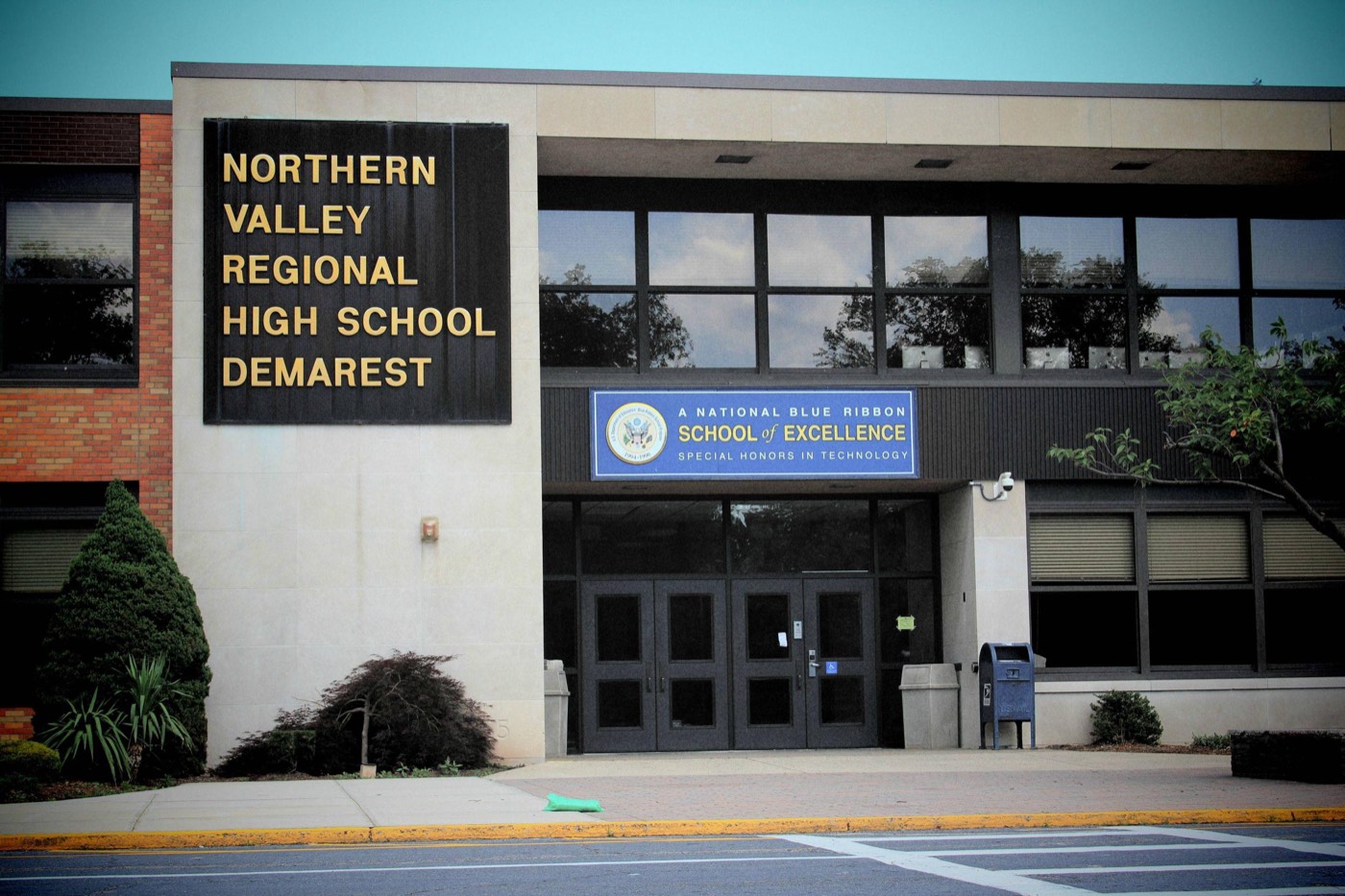
If one institution explains Demarest’s Korean concentration, it is Northern Valley Regional High School at Demarest. Opened in 1955 and shared with neighbouring Closter and Haworth, the school has long sat among the highest-performing public high schools in New Jersey, and its reputation travelled fast through Korean immigrant networks where education is treated as the central family project.
Word of mouth did the rest. A family in Palisades Park or Fort Lee with a college-bound child heard, again and again, that the Demarest schools were among the best in the state and that a Demarest address fed into the Demarest high school. The town’s three small public schools, County Road School for the youngest children, the Luther Lee Emerson School, and Demarest Middle School, became a pipeline that Korean parents studied as carefully as any prospectus.
The pull was strong enough to reshape the curriculum itself. Northern Valley Demarest now teaches Korean as a world language through multiple honours levels, an unusual offering for a New Jersey public high school and a direct reflection of who fills its classrooms.
A church before a Koreatown
Community institutions followed the families. In 1988, a Korean Catholic mission was started in Demarest, renting space from the parish of St. Joseph, under the care of a Korean priest who would later be named a monsignor. Priests were invited from the Diocese of Incheon in South Korea to run it, and in 1998 it was formally established as St. Joseph Korean Catholic Church, a national parish serving Korean Catholics across the Northern Valley until it merged back into St. Joseph’s in 2008.
That arc, mission to parish to merger, traces the community’s own maturation. The Koreans of Demarest never needed to build a commercial Koreatown of their own. The shops and restaurants were a short drive south in Palisades Park and Fort Lee. What Demarest offered was the quieter half of immigrant life: the house, the school, the church, the lawn.
The corridor fills in
Demarest did not become Korean alone. It is one bead on a string of Northern Valley towns that filled with Korean families in the same decades. The pattern repeated next door among the Koreans in Closter, whose share of the population climbed past a quarter, and among the Koreans in Cresskill just to the south. It extended to the Koreans in Tenafly and to the older, denser enclaves of the Koreans in Fort Lee. By the 2010 census, Demarest already ranked among the top municipalities in the entire country by Korean share of population, a distinction it shared with several of its neighbours.
The Landmarks
Northern Valley Regional High School at Demarest, 150 Knickerbocker Road. Opened in 1955 and serving Demarest, Closter, and Haworth, this is the institution that, more than any other, drew Korean families up the valley. Its consistently high state rankings and its honours-level Korean language programme make it both cause and mirror of the borough’s demographics.
St. Joseph Church, 573 Piermont Road. The parish that in 1988 lent space to a fledgling Korean Catholic mission, which grew into the national parish of St. Joseph Korean Catholic Church before merging back in 2008. It remains the spiritual address most tied to the borough’s Korean Catholic generation.
The Duck Pond and Peace Site Gazebo, off Tenakill Brook. A section of the Tenakill Brook at the heart of the borough, with a gazebo built in 1986. It is the closest thing small, residential Demarest has to a town square, and on weekends it draws families of every background, Korean grandparents among them.
Demarest Railroad Depot, 38 Park Street. Designed by architect J. Cleaveland Cady and built in 1872, the depot served the Northern Railroad line that gave the town its name. Passenger service ended in 1966; the borough bought the building in 1977, and it has been listed on the National Register of Historic Places since 2004, now used as a senior centre.
County Road School, on County Road. The borough’s pre-kindergarten and early-grades public school, the first rung of the small district whose reputation pulled Korean families to Demarest in the first place. For many a Korean Demarest child, the educational journey begins here.
Luther Lee Emerson School. The borough’s elementary school for the middle grades, named for a long-serving local figure, feeding into Demarest Middle School and then to the regional high school. Together these schools form the pipeline that Korean parents researched as closely as any home listing.
Where They Came From
The Koreans who settled Demarest did not, for the most part, come directly from Seoul to Bergen County. They came by way of New York, and often by way of the lower Northern Valley first. The broad wave that built Korean New Jersey followed the 1965 reform of American immigration law and accelerated through the 1980s and 1990s, drawing heavily from metropolitan Seoul, Incheon, and the surrounding Gyeonggi region, the dense urban heart of South Korea.
The early arrivals clustered in Queens and then in the bridge towns of Fort Lee and Palisades Park, where Korean was the language of the high street. The link to Incheon was concrete enough that when Demarest’s Korean Catholics needed priests, they came from the Incheon diocese itself.
Demarest received the second act of that migration: the families who had built businesses and credentials lower down, and who moved north for the schools and the space. Theirs was less a story of arrival than of arrival having paid off.
Demarest Today
Demarest today is a borough where roughly one resident in five is Korean American, yet it looks, on its surface, like any prosperous Bergen County suburb: tidy colonials, basketball hoops, a duck pond. The Korean presence shows itself in the particulars. It is in the Korean class listed in the high school course catalogue, in the SAT prep and music lessons that fill teenagers’ afternoons, in the grandparents minding children while parents commute over the bridge.
The commercial life of this Korean community still happens mostly elsewhere, a short drive to the H Mart-anchored strips and restaurants of Palisades Park and Fort Lee. Demarest is the residential reward at the end of that drive, and that division of labour suits it. The borough stays quiet and green; the cooking and the shopping happen down the hill.
There is a tension that affluent ethnoburbs like this one know well. The very intensity of the schools that drew families here can press hard on the children who grow up inside them, and the town’s success has pushed home prices to levels that close the door behind the latest arrivals. But for the families who made it in, Demarest delivered exactly what the immigrant calculus promised: a safe street, a good school, and a short bridge to the city. The Koreans in Demarest got, in the most literal sense, what they came for.
Frequently Asked Questions
How many Koreans live in Demarest, New Jersey?
As of the 2020 census, Korean Americans made up 19.6% of Demarest’s roughly 4,981 residents, with Asian Americans overall accounting for about 31.4% of the borough. That makes the Koreans in Demarest, New Jersey, one of the highest concentrations of any town in the country.
Why did so many Korean families move to Demarest?
The single biggest draw was the schools. Northern Valley Regional High School at Demarest ranks among New Jersey’s best public high schools, and its reputation spread quickly through Korean immigrant networks that prize education. Families moving up from Palisades Park and Fort Lee chose Demarest for its schools, safety, and short commute to Manhattan.
Is there a Koreatown in Demarest?
No. Demarest is a quiet residential borough with almost no commercial strip. The Korean shops, restaurants, and supermarkets that the Koreans in Demarest, New Jersey, rely on are a short drive south in Palisades Park and Fort Lee, the commercial hearts of the region’s Korean community.
When did the Korean community in Demarest form?
It grew mainly through the 1990s and 2000s, as established Korean families moved north from the bridge towns. An early anchor was a Korean Catholic mission started in 1988, which became St. Joseph Korean Catholic Church in 1998 before merging back into St. Joseph’s parish in 2008.
Does Demarest’s high school teach Korean?
Yes. Northern Valley Regional High School at Demarest offers Korean as a world language through several honours levels, an unusual offering for a New Jersey public school that reflects the large share of Korean-speaking families in the district.
How does Demarest relate to other Korean towns in Bergen County?
Demarest is one town in a Korean corridor running up the Northern Valley, alongside Closter, Cresskill, Tenafly, and the denser enclaves of Fort Lee and Palisades Park. Families moved up this chain over time, from the bridge towns to the quieter, more affluent hill towns like Demarest.
If your family’s story passed through Demarest, or any of the places Koreans have made home in America, Atlas of Home can trace that journey. From metropolitan Seoul and Incheon, to the schools and quiet streets of the Northern Valley, to wherever you are now.