
On a Saturday morning at the corner of I-10 and the Grand Parkway, the parking lot at Katy Asian Town fills with families pushing carts out of H Mart, teenagers queuing for bubble tea, and grandparents carrying home dim sum still warm in its bamboo. Two decades ago this was rice fields and feeder roads. Today it is the clearest sign that the Chinese in Katy, Texas have built something permanent on the far western edge of Houston, a suburban community with its own grocers, its own restaurants, and its own quiet ambitions pinned to the local schools.
The Place
Katy sits about twenty-five miles west of downtown Houston, straddling three counties: Harris, Fort Bend, and a sliver of Waller. It takes its name from the Missouri-Kansas-Texas Railroad, the old “Katy” line that ran through the rice prairies in the nineteenth century.
What was farmland for most of the twentieth century became, after the 1970s, one of the fastest-growing suburban corridors in America. The pull was Houston’s Energy Corridor along I-10, home to Shell, BP, and ConocoPhillips, and the master-planned communities that rose to house the people who worked there.
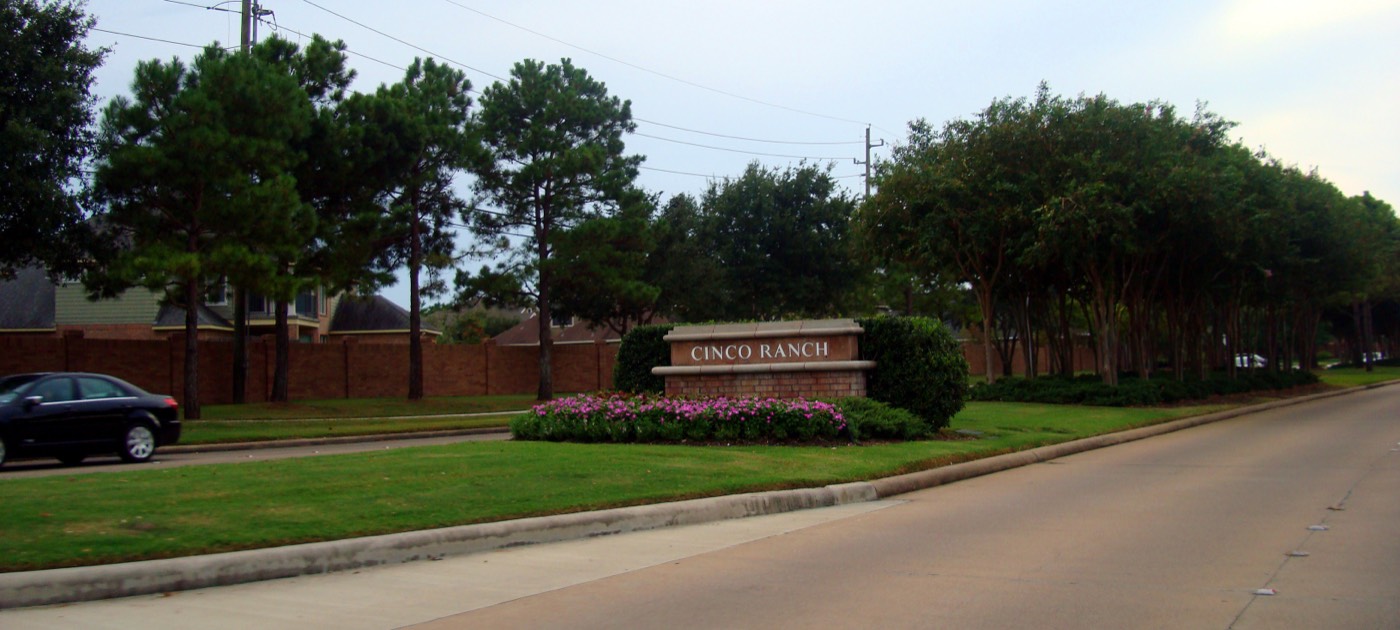
Between 2000 and 2010, the Katy area’s population grew by roughly 84 percent. Much of that growth gathered in places like Cinco Ranch, a 5,000-acre development first assembled in 1984 that now spreads across the Harris and Fort Bend county line.
How It Became Chinese
The Chinese arrival in Katy is a story of two migrations stacked on top of each other: first to Houston, then west to the suburbs.
Houston first, downtown then southwest
Houston’s Chinese community took shape in the early twentieth century, organising more formally around the Chinese Merchants Association by 1951. The first Chinatown clustered near downtown, in what is now EaDo, and most of its early residents spoke Cantonese.
By the 1970s, urban renewal and rising property values pushed that community outward. The new Chinatown along Bellaire Boulevard in southwest Houston saw its first businesses arrive in 1983. Over the following decades that six-square-mile stretch grew so pan-Asian that Houstonians began calling it Asiatown rather than Chinatown.
The drive west
For Chinese families who came to Houston for graduate degrees and energy-sector jobs, the next move was almost predictable. As they settled into careers as engineers, geoscientists, physicians, and analysts, they looked west toward Katy for the same reasons everyone else did: newer houses, more space, and the schools.
The Energy Corridor was the magnet. Katy’s economy counts more than 55,000 people working in oil and gas, and the wider area hosts dozens of laboratory and research firms alongside major employers like Halliburton and Dow. For a Chinese professional family already drawn to engineering and the sciences, Katy offered work close to home and a short commute down I-10.
The other magnet was the houses. The master-planned communities west of the Grand Parkway, Cinco Ranch, Grand Lakes, Seven Meadows, were built for exactly this buyer: a dual-income professional family that wanted a new four-bedroom home, a good lot, and a guaranteed school zone. They were affordable by the standards of the coastal cities many of these families might otherwise have chosen, and they came without the decades of accumulated cost that older suburbs carried.
Word travelled the way it always does in immigrant communities, through relatives, colleagues, and church congregations. One family’s move into a Cinco Ranch cul-de-sac became three families, then a street, then a recognisable pattern across the western subdivisions.
A community measured in numbers
The growth was steep. From 2000 to 2010 the Asian population in the Katy area rose more than 251 percent. By 2017 the Census Bureau estimated roughly 44,300 Asian residents in the Katy area, about 12.9 percent of the population.
The trend held on the Fort Bend side, where the county recorded the highest proportion of Asian residents of any county in Texas: 22.2 percent in 2020, after the Asian population there grew by nearly 84 percent over a decade. Within a ten-minute drive of what would become Katy Asian Town, the Asian population grew 35 percent between 2011 and 2015, twice the rate of the white population.
The Chinese were a large share of that wave, though they arrived alongside Indian, Vietnamese, Korean, and Taiwanese neighbours. The result was less a single ethnic enclave than a layered suburb in which Chinese families were a defining, visible presence. The story of the Indians in Katy runs in parallel along the same freeways and the same school catchments.
The town that retail built
For most of those years there was no obvious Chinese centre in Katy. That changed in 2017, when developers unveiled plans for Katy Asian Town, a mixed-use centre at the northeast corner of I-10 and the Grand Parkway, explicitly designed to serve the area’s surging Asian population.
It opened in September 2018, anchored by a 40,000-square-foot H Mart. Of its roughly fifty-one retail spaces, the majority were leased early, many of them to Chinese businesses. After that, the centre became its own argument: families said they felt more comfortable moving to Katy once the food, the groceries, and the familiar weekend rhythms were finally a few minutes away rather than a freeway trip.
The Landmarks
Katy Asian Town, 23119 Colonial Parkway. The community’s commercial heart, opened in 2018 at the I-10 and Grand Parkway interchange. Anchored by H Mart, its dozens of storefronts turned a freeway corner into the place west Houston comes for Asian groceries, bakeries, and weekend dim sum.
Mala Sichuan, Katy Asian Town. A branch of the celebrated Houston Sichuan restaurant, bringing numbing peppercorn heat to the suburb. Its arrival signalled that Katy could support serious regional Chinese cooking, not just generic takeout.
Tim Ho Wan, Katy Grand. The Hong Kong dim sum chain, famous for its baked barbecue pork buns, opened in the development adjacent to Katy Asian Town. For families who once drove to Bellaire for dim sum, it was a small revolution.
85C Bakery Cafe, Katy Grand. The Taiwanese bakery-and-coffee giant, beloved for its sea-salt coffee and trays of soft buns. On weekend afternoons the queue is its own social scene.
99 Ranch Market, west Katy. The Chinese-American supermarket chain’s Katy store, accessible from the Grand Parkway and I-10, stocks live seafood, dim sum, and pantry staples for the Cinco Ranch and Grand Lakes neighbourhoods. For many Chinese households it is the default weekly shop.
Seven Lakes High School, Katy ISD. One of the most decorated public schools in Texas, where Asian students make up the single largest group at roughly a third of enrolment. Its reputation is part of why so many Chinese families chose these particular subdivisions.
Tompkins High School, Katy ISD. The newer of the two academic powerhouses, where Asian students again form the largest single group at about 32 percent. Together with Seven Lakes, it anchors the school-driven logic behind the community’s geography.
Where They Came From
The Chinese who settled in Katy did not come, for the most part, directly from China to the suburbs. They came by way of the American university and the American workplace, and many came by way of Houston itself.
A large share arrived as graduate students and skilled-visa professionals, drawn first to Houston’s universities, medical centre, and energy industry. The earliest Cantonese-speaking generations of Houston’s Chinatown gave way, by the 1980s and 1990s, to Mandarin-speaking arrivals from across mainland China and Taiwan, many of them in technical fields.
That generational shift is audible in the suburb today. Where the oldest Houston Chinese establishments traded in Cantonese, the Katy community is overwhelmingly Mandarin-speaking, the product of a later migration tied to advanced degrees and corporate transfers rather than the laundries and groceries of an earlier century.
The weekend rhythms reflect those origins. Chinese-language schools, churches with Mandarin services, and cultural associations across the greater Houston area give children a tie to the language and customs their parents grew up with, even as those children move through American public schools all week.
Katy became the place that wave moved to once it had children and savings. The pattern mirrors the one that built nearby Chinese Sugar Land on the other side of Fort Bend County, and it echoes professional Chinese enclaves far from Texas, from Monterey Park in California to Bellevue, Washington. The common thread is education and work, and a willingness to follow good schools across a metro map.
Katy Today
Katy today is not a Chinatown, and no one there pretends otherwise. It is a sprawling, multi-county suburb where Chinese families live among Indian, Vietnamese, Korean, and Anglo neighbours, sharing the same cul-de-sacs and the same crowded school pickup lines.
What the Chinese community has is infrastructure rather than borders: a supermarket-anchored town centre, a cluster of restaurants serious enough to draw diners from across west Houston, weekend Chinese-language classes and churches in the greater area, and a deep investment in the public schools. The community still leans on Houston’s Asiatown along Bellaire Boulevard for the widest selection, but the everyday needs are now met locally.
The growth has not stopped. The Katy area adds population at roughly 5 percent a year, and Asian homebuyers remain a notable share of demand. The rice prairie that the railroad named is now, on certain blocks and at certain hours, unmistakably part of the Chinese map of America: a place where ambition arrived by freeway and decided to stay.
Frequently Asked Questions
Where do the Chinese in Katy, Texas live and shop?
Chinese families are spread across master-planned communities like Cinco Ranch and Grand Lakes in west Katy, straddling Harris and Fort Bend counties. They shop at Katy Asian Town at I-10 and the Grand Parkway and at the nearby 99 Ranch Market.
Why did Chinese families move to Katy?
The main draws were jobs in Houston’s Energy Corridor, affordable newer housing, and the highly ranked Katy Independent School District. Many Chinese professionals work in oil and gas, engineering, and medicine, and chose Katy for its schools.
What is Katy Asian Town?
Katy Asian Town is a mixed-use shopping centre at 23119 Colonial Parkway, opened in September 2018 and anchored by the H Mart supermarket. Most of its retail spaces are leased to Asian businesses, many of them Chinese, making it the commercial heart of the area’s Asian community.
How large is the Chinese community in Katy?
The Census Bureau estimated about 44,300 Asian residents in the Katy area in 2017, roughly 12.9 percent of the population, with Chinese families a large share. Fort Bend County had the highest proportion of Asian residents in Texas at 22.2 percent in 2020.
How is Katy connected to Houston’s Chinatown?
Many Chinese families in Katy first settled near Houston’s Asiatown along Bellaire Boulevard before moving west to the suburbs. Katy still relies on that Bellaire corridor for the widest range of Chinese goods and dining, though Katy Asian Town now meets most everyday needs.
Which Katy schools have the most Chinese students?
Seven Lakes High School and Tompkins High School, both in Katy ISD, have the largest Asian enrolments, with Asian students forming about a third of each school’s population. Both rank among the top public high schools in Texas.
If your family’s story passed through Katy, or any of the places Chinese families have made home in America, Atlas of Home can trace that journey. From the Cantonese storefronts of old downtown Houston to a freeway-corner town centre west of the Grand Parkway, to wherever you are now.