
The Silva surname comes from the Latin silva, meaning wood or forest, and began in northern Portugal and Galicia as a name for people who lived beside the trees. It is now the most common surname in both Brazil and Portugal.
What Does the Surname Silva Mean?
Silva means “wood” or “forest”. It comes directly from the Latin noun silva, and it is a topographic surname, which is to say it described where a family lived rather than who their father was or what work they did.
That makes it one of the plainest names in the Iberian world. No clan, no founder’s given name, no trade buried inside it. Someone lived at the edge of the woodland, and the woodland became the name.
One twist is worth knowing. In modern Portuguese, silva no longer means forest. It means bramble, the thorny scrub that grows over abandoned ground. The older Latin sense is the one the surname preserves, so a family called Silva is named for trees, not thorns.
Where the Silva Name Comes From
The homeland is the far north of Portugal, in the Minho, on the border with Galicia. The oldest documented bearer held a tower near Valença, and every noble branch of the name traces back to that stretch of river country.
The Torre de Silva and the Minho
The first man recorded using Silva as a surname was Dom Paio da Silva, lord of the Torre de Silva near Valença, in what is now the Viana do Castelo district. He acted as a representative of Alfonso VI of León and Castile and signed land grants between roughly 1085 and 1129.
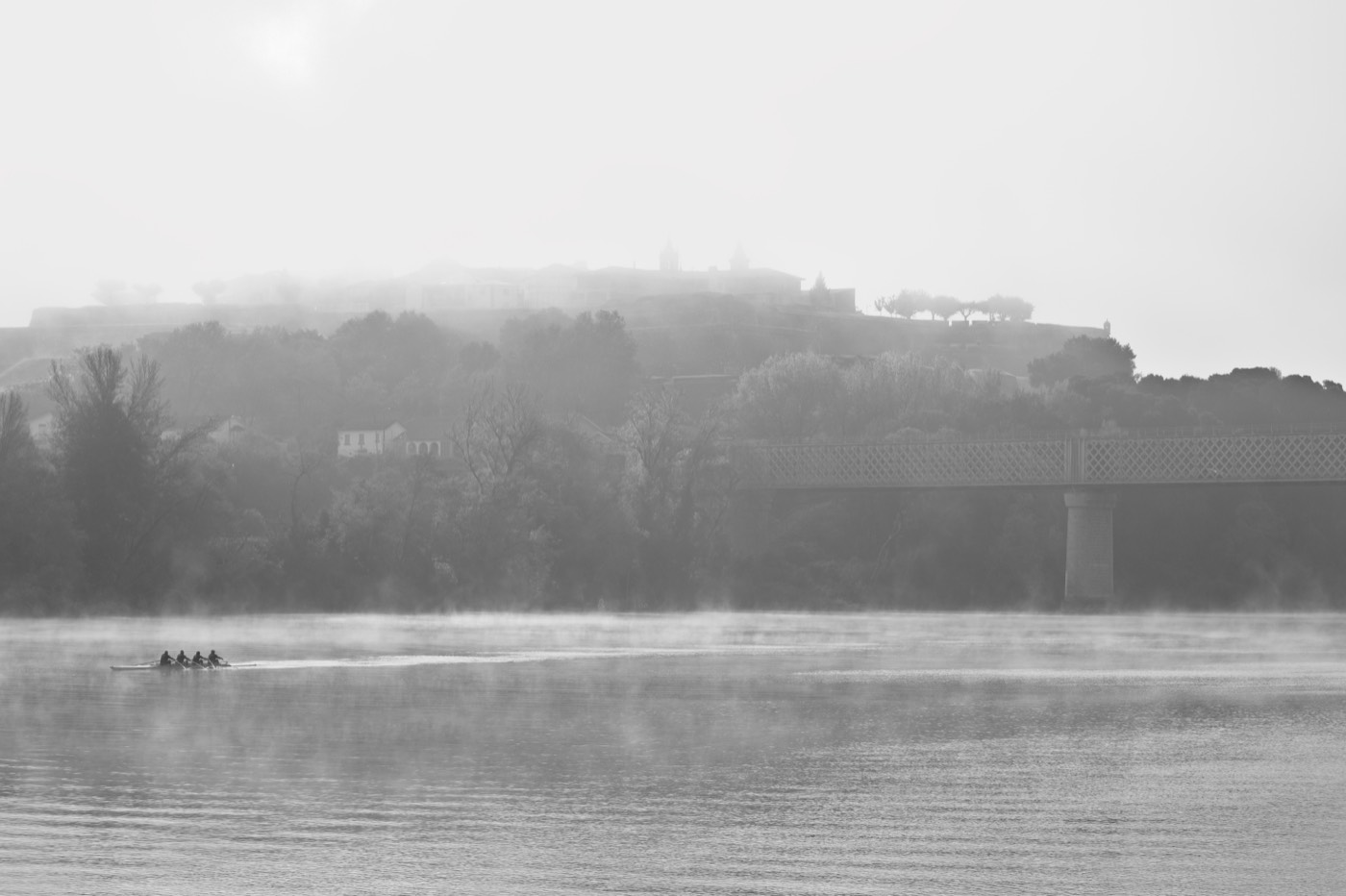
This is border country. The Minho river runs past Valença and the Galician town of Tui sits on the far bank, which is why Silva is as native to Galicia as to Portugal. The two languages were, at the time, barely distinguishable.
The House of Silva
From Paio’s line came the House of Silva, one of the great aristocratic families of the peninsula. A Castilian branch produced the Counts of Cifuentes from 1456.
It matters less than you might hope. Silva was also an ordinary descriptive word available to anyone living near trees, so thousands of unrelated families arrived at it independently. Sharing the name with a duke is a coincidence of vocabulary, not evidence of descent.
Brazil: How One Name Reached One in Six
Silva reached Brazil with Portuguese settlement from the sixteenth century, already common. What made it overwhelming came later.
Enslaved people in colonial Brazil were baptised with a given name and generally no family name at all. Some took the surname of the household that held them, and Silva, being ubiquitous among settlers, was constantly available. After the Lei Áurea abolished slavery in May 1888, roughly three quarters of a million newly freed people needed a surname for civil registration, employment and property, and many chose or were assigned Silva.
It was a practical choice. Silva carried no regional marker, no obvious link to a former owner and no signal of origin in a society that read all three closely.
The result is extraordinary. Around one in six Brazilians carries Silva today, some 34 million people, and the concentration is highest in the north-east: over 35 per cent in Alagoas and over 34 per cent in Pernambuco, the states most shaped by sugar and slavery.
Sri Lanka, Goa and the Colonial Silvas
Here is the part most surname pages skip. De Silva is one of the most common surnames in Sri Lanka, and the great majority of Sri Lankan de Silvas are not of Portuguese descent.
Portugal controlled the Sri Lankan coast from the early 1500s until 1658. Missionary work intensified after Prince Dharmapala converted in the mid sixteenth century, and Sinhalese and Tamil converts took Portuguese names at baptism. De Silva, Fernando and Perera became the three most widely adopted. The name marks a religious and administrative event, not a bloodline.
Sri Lankan practice keeps both layers visible. Many families place an inherited Sinhalese ge name, the ancestral house name, before the Portuguese one, giving forms such as Lindamulage de Silva. These Sri Lankan naming conventions matter if you are tracing such a family: the ge name is the older and more useful half.
The pattern repeats across the empire. In Goa, after the Portuguese took Bardez and Salcete in the 1540s, converts adopted D’Silva, which later spread down the coast to Mangalore. Silva is common in Cape Verde and Angola for the same colonial reasons, and reached Filipino families through the Spanish decree of 1849 that assigned surnames from a printed catalogue.
Spelling Variants and Related Names
The main variants are Silva, da Silva, de Silva, d’Silva and e Silva. All mean the same thing, and the differences lie in the particle rather than the root.
Da Silva contracts de plus the feminine article a, giving “of the forest”. This is the standard Portuguese form and the one that dominates in Portugal and Brazil.
De Silva drops the article and reads simply “of Silva”. It is the form that took hold in the colonial world, above all in Sri Lanka and among Portuguese-descended communities in India, and it is also the usual Spanish spelling.
D’Silva is the elided Goan and Mangalorean form. E Silva (“and Silva”) joins surnames from both parents in longer Portuguese and Brazilian names. Plain Silva, with no particle, is the commonest American form, since clerks and bearers alike tended to drop it.
Related but distinct names include Silveira (a bramble patch), Silvestre, and the Italian cognate Selva. Da Silveira is not a variant of Silva, though the two are often confused. Silva also appears as one element in longer compound names such as Pereira da Silva.
The Silvas in America
Silvas reached the United States along at least four routes, from four different continents. Portuguese first, then Cape Verdeans, then Brazilians, then Sri Lankans and Goans.
The oldest wave came through the New England whaling ports. Portuguese crews from the Azores and Madeira signed onto American whalers through the nineteenth century and settled where the ships tied up, which is why the Portuguese community in New Bedford, Massachusetts is among the oldest in the country. Cape Verdean crews followed the same ships and built a Cape Verdean New Bedford alongside it. On the Pacific coast, Azorean fishing families worked the tuna boats out of San Diego and clustered around Point Loma.
Brazilian Silvas are the most numerous by far, arriving mainly from the 1980s. The largest concentrations sit in the Ironbound in Newark, in Danbury, Connecticut, and in South Florida around Pompano Beach. If you are American and your surname is Silva, this is statistically the likeliest route.
The newest Silvas came from South Asia. Sri Lankan families, many of them de Silvas, settled in the New York area from the 1980s, and Staten Island’s Sri Lankan community is the largest in the country. The Ramos surname shares that habit of arriving in America from several directions at once.
Notable People Named Silva
Chica da Silva (c. 1732 to 1796) was born enslaved in the diamond district of Minas Gerais, was freed in 1753 and became one of the wealthiest women of colour in colonial Brazil. Her life has been heavily mythologised; the documentary record was reconstructed by the historian Júnia Ferreira Furtado.
Luiz Inácio Lula da Silva (born 1945) was a lathe operator and metalworkers’ union leader in São Paulo before serving as President of Brazil from 2003 to 2010 and again from 2023.
Benedita da Silva (born 1942) grew up in the Chapéu Mangueira favela in Rio de Janeiro and in 1994 became the first Black woman elected to the Brazilian Senate.
Aravinda de Silva (born 1965, Colombo) is among Sri Lanka’s greatest batsmen. He took three wickets and made an unbeaten 107 in the 1996 Cricket World Cup final, winning his country its first world title.
Marta Vieira da Silva (born 1986), known simply as Marta, is the Brazilian forward named FIFA world player of the year six times and the all-time leading scorer at World Cup finals across both tournaments.
David Silva (born 1986) is the Spanish midfielder from Gran Canaria who won four Premier League titles with Manchester City and the 2010 World Cup.
How Common Is Silva Today?
Silva ranks 163rd in the United States, carried by 161,633 Americans at the 2010 Census. Internationally it is far bigger: the most common surname in both Brazil and Portugal, where roughly one person in ten bears it.
| US rank (2010 Census) | #163 |
|---|---|
| Americans with the name | 161,633 |
| Origin | Portuguese and Galician |
| Meaning | Wood, forest (Latin silva) |
Frequently Asked Questions
What does the surname Silva mean?
Silva means wood or forest, from the Latin silva. It is a topographic surname given to families who lived beside woodland. In modern Portuguese the same word has narrowed to mean bramble, but the surname preserves the older sense.
Is Silva Portuguese or Spanish?
Chiefly Portuguese, but genuinely both. It arose on the Minho border where Portuguese and Galician were effectively one language, so it is native to Galicia too. It is far more common in Portugal and Brazil than elsewhere in Spain.
Where does the Silva family come from?
The documented origin is the Torre de Silva near Valença in northern Portugal, held by Dom Paio da Silva in the late eleventh century. Most Silvas, though, descend from unrelated families who simply lived near woodland.
How common is the surname Silva?
It ranks 163rd in the United States with 161,633 bearers. Globally it is one of the largest surnames in existence: the most common in Brazil, where around one person in six carries it, and the most common in Portugal.
Is there a Silva family crest or coat of arms?
No. In Portuguese, Spanish and British heraldry alike, arms are granted to individuals and pass to their direct descendants, never to everyone who happens to share a surname. The noble House of Silva bore arms, but that grant belongs to that lineage alone. Any site selling you a “Silva family crest” is selling a decoration, not a lineage.
Are Sri Lankan de Silvas of Portuguese descent?
Usually not. The surname was adopted by Sinhalese and Tamil converts to Catholicism during Portuguese rule of the coast, which ended in 1658, and it marks a baptism rather than an ancestor. Many families still carry an older Sinhalese ge name in front of it, and that is the half a genealogist should follow.
If your family carries the Silva name, its route from the Minho to America is traceable. Atlas of Home can follow it from the woodland border of northern Portugal, through Brazil, Cape Verde or Ceylon, to wherever your family landed and wherever you are now.