
The Lewandowski surname is Polish and habitational: it marks a family as coming from a place called Lewandów, Lewandowo or Lewandy. What that place name itself meant is where the certainty stops.
What Does the Surname Lewandowski Mean?
Lewandowski means “of Lewandów” or “from Lewandowo”, a Polish family name formed from a settlement name plus the adjectival ending -ski. The root of that settlement name is genuinely disputed, and the honest answer is that nobody has settled it.
Two readings compete. Behind the Name derives the surname from the estate name Lewandów, which it says is “possibly derived from a personal name or from lawenda, lavender”. Those are two quite different stories wearing one coat.
The lavender reading is the prettier one, and it is the one most often repeated: lawenda, or the older lewanda, gives a place name meaning something like lavender field, and the family takes its name from that. The personal-name reading is duller and possibly sturdier: a landholder called Lewand gave his name to his holding, and his tenants and neighbours took the name of the holding.
A third complication is worth stating plainly. Lewandów is today a district of Białołęka in the north-east of Warsaw, and it is regularly cited as the source of the name. But that Lewandów was only established in the nineteenth century, while the surname is recorded well before it, so the Warsaw district cannot be the origin. At most it shares a root with the places that are.
Where the Lewandowski Name Comes From
Lewandowski comes from Poland, and above all from the north-central Polish lowlands. In modern terms the name is thickest in the Kuyavian-Pomeranian voivodeship, followed by Mazovia and Greater Poland, the flat farming country either side of the middle Vistula.
A habitational name, not an occupational one
The -ski ending on a Polish surname almost always points to a place, not a trade. A Lewandowski is not someone who did something with lavender, in the way that a Kowalski descends from a smith. He is someone whose family was associated with a particular patch of ground. The same mechanism produces Wiśniewski from villages called Wiśniewo, and it is the single most common way Polish surnames were made.
From estate to everybody
Names of this shape began with the nobility, the szlachta, who were named for the estates they held. From roughly the seventeenth century onward the pattern spread downward, to tenants, to peasants on the estate, to anyone from the village. That is why -ski names became so numerous, and why a Lewandowski today has no particular reason to assume noble descent.
Multiple, unrelated origins
Because there were several settlements with the root across the Polish lands, Lewandowski families arose independently in different regions. Two Lewandowski lines from opposite ends of Poland are unlikely to share an ancestor. The surname is a category, not a clan.
Spelling Variants and Related Names
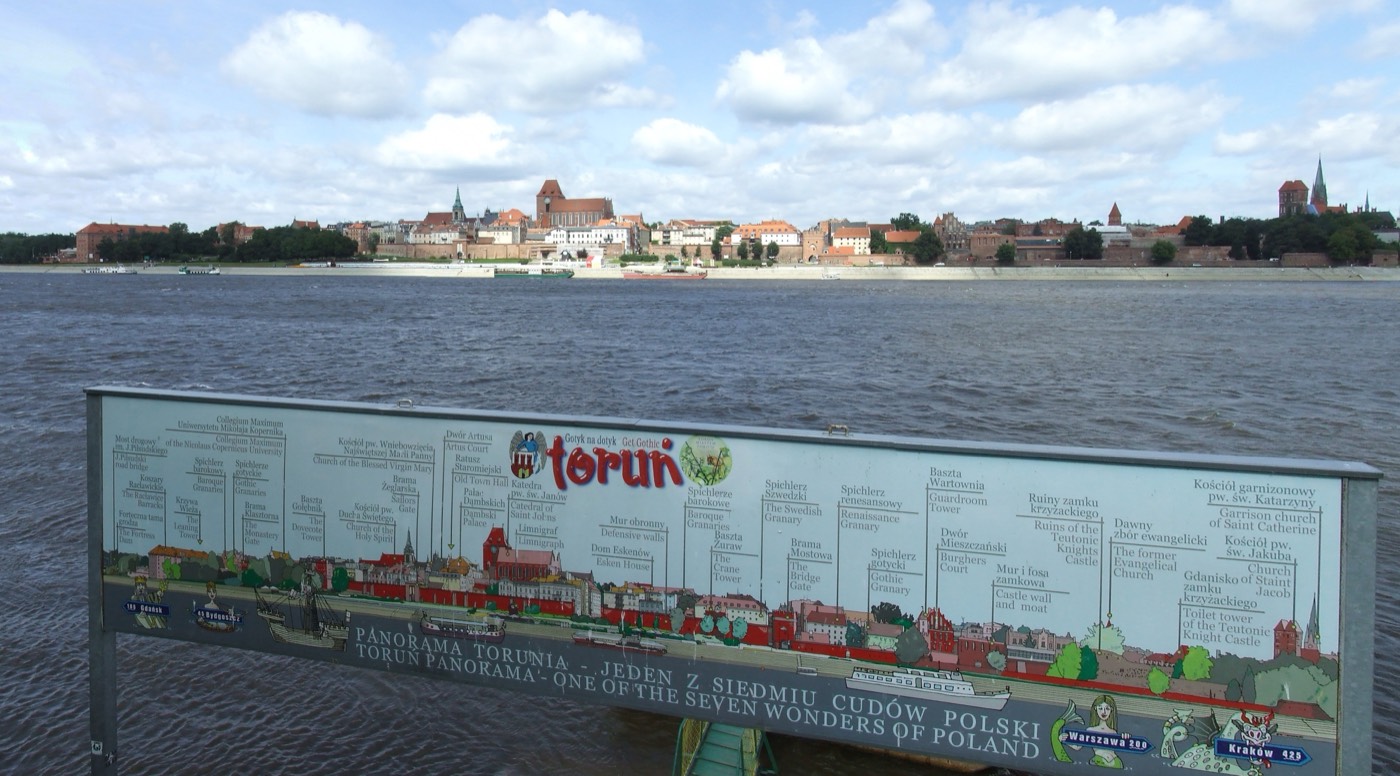
Lewandowski is one of the few big Polish surnames that needs no anglicisation, because it carries no diacritics. Kamiński loses its accent at the American border and Wiśniewski loses two. Lewandowski crosses intact, spelled in New York exactly as it was spelled in Toruń.
What changed instead was the sound. In Polish it is roughly leh-vahn-DOFF-skee: the w is a v, and -owski collapses towards “off-skee”. American mouths turned the w into an English w and the vowel into the ow of “cow”, producing the familiar lew-un-DOW-skee. Same letters, different name.
The feminine form is the other great casualty. In Poland a woman of the family is Lewandowska, not Lewandowski, and that is not a nickname but the correct legal form. American clerks, ship manifests and census enumerators had no category for a household whose women’s surnames differed from the men’s, and they flattened everyone to Lewandowski. Families who kept Lewandowska in the United States are the exception; most lost it within a generation.
Related and cognate forms include Lewandowsky, the German-record spelling; Levandowski and Levandoski, respellings that put the v the pronunciation demanded; and the Russian and Ukrainian Levandovsky and Levandovski. Lewandowicz uses -owicz, the patronymic suffix, and so means “son of Lewand” rather than “from Lewand’s place”, which is a useful reminder that the root existed as a personal name. The bare form Lewanda survives as a rare surname in its own right.
Jewish bearers of the same name
A substantial number of Lewandowskis were Jewish rather than Catholic. Jewish families across the partitioned Polish lands acquired fixed surnames under Austrian, Prussian and Russian decrees in the late eighteenth and early nineteenth centuries, and many took or were assigned Polish-form names indistinguishable from their neighbours’. Lewandowski also sat close to the Lew- and Lewin- family of names built on Levi, which made it a natural landing place. The best-known bearer of the name in the nineteenth century, the composer Louis Lewandowski, was one of them.
The Lewandowskis in America
Lewandowskis came to America in the great Polish migration between roughly 1870 and 1914, most of them from the Prussian-ruled north and west and from Russian Poland, landing at New York, Baltimore and Philadelphia and moving inland to work.
They went where the furnaces were. Detroit drew them in enormous numbers, and the Polish town of Hamtramck, Michigan was built around the Dodge plant by exactly this migration. Buffalo’s Polish east side spilled into Cheektowaga, New York, and the grain and steel towns of the lower Great Lakes filled with the same families: Erie, Pennsylvania, Toledo, Ohio, and the Studebaker parishes of South Bend, Indiana.
Milwaukee took a particularly large share, and the Polish south side there produced the painter Edmund Lewandowski, whose life’s work was the machinery and grain elevators his neighbours worked in. Chicago’s enormous Polonia later pushed north-west into the suburbs, and Niles, Illinois is where a good many second and third generation Lewandowskis ended up.
Notable People Named Lewandowski
Louis Lewandowski (1821 to 1894) was born in Września, in Greater Poland, and became the most influential composer of synagogue music of the nineteenth century. As music director of Berlin’s New Synagogue he set Ashkenazi liturgy for choir and organ, and his settings are still sung worldwide.
Janina Lewandowska (1908 to 1940) was a Polish glider pilot and parachutist, taken prisoner by Soviet forces in 1939 and shot at Katyn on her thirty-second birthday. She is the only woman known to have been murdered there.
Edmund Lewandowski (1914 to 1998) was an American Precisionist painter, born in Milwaukee to the Polish community there, exhibited alongside Charles Sheeler and Georgia O’Keeffe, and known for hard-edged paintings of American industry.
Ricardo Lewandowski (born 1948) is a Brazilian jurist who served as a justice and president of Brazil’s Supreme Federal Court, a reminder that Polish migration ran south as well as north.
Robert Lewandowski (born 1988) is the Warsaw-born striker who captains Poland and is the country’s all-time leading scorer, with spells at Borussia Dortmund, Bayern Munich and Barcelona. He is the reason most people can now pronounce the name.
Corey Lewandowski (born 1973) is an American political consultant from Massachusetts, a descendant of the same industrial-era migration.
How Common Is Lewandowski Today?
Lewandowski is the 3,110th most common surname in the United States, carried by 11,577 Americans at the 2010 Census. In Poland it is far more prominent, standing seventh nationally with roughly 93,000 bearers in 2009.
Of American Lewandowskis in 2010, 95.59 per cent recorded themselves as white and 2.06 per cent as Hispanic, with 0.54 per cent Asian or Pacific Islander, 0.41 per cent Black, 0.22 per cent American Indian or Alaska Native and 1.18 per cent two or more races. Those are self-identification proportions from a census form, not a measure of ancestry.
| US rank (2010 Census) | #3110 |
|---|---|
| Americans with the name | 11,577 |
| Origin | Polish |
| Meaning | From Lewandów or Lewandowo, a place name of disputed root |
Frequently Asked Questions
What does the surname Lewandowski mean?
It means “from Lewandów” or “from Lewandowo”, a Polish habitational name. The place name behind it is traced either to the personal name Lewand or to lawenda, lavender, and scholarly sources do not choose between them.
Is Lewandowski Polish or Jewish?
Both, and the name cannot tell you which. It is a Polish-language surname borne by large numbers of Catholic Polish families and by Jewish families from the same Polish lands, who took fixed Polish-form surnames under the partitioning powers’ decrees.
Where does the Lewandowski family come from?
From north-central Poland above all. The name is densest in the Kuyavian-Pomeranian voivodeship, then Mazovia and Greater Poland. Because several settlements shared the root, separate Lewandowski families arose independently and are not related.
How common is the surname Lewandowski?
It is the seventh most common surname in Poland, with about 93,000 bearers. In the United States it ranks 3,110th, with 11,577 people recorded at the 2010 Census.
Is there a Lewandowski family crest or coat of arms?
No. In Polish heraldry arms belonged to a clan and to specific noble families granted them, never to everyone sharing a surname, and the same is true across European heraldic traditions. Any site selling you a Lewandowski crest is selling a decoration, not a lineage.
Why is it Lewandowska for women?
Because -ski is an adjective ending and Polish adjectives agree in gender, so a woman of the family is properly Lewandowska. American record-keepers had no room for that, and most immigrant families were flattened to a single spelling within a generation.
If your family carries the Lewandowski name, its route from Poland to America is traceable. Atlas of Home can follow it from the villages of Kuyavia and Mazovia to whichever mill town your family landed in, and to wherever you are now.