
On a Friday afternoon in Roslyn Heights, the parking lot at Ravagh Persian Grill fills with cars from Great Neck and Manhasset, and the smell of saffron and grilled koobideh drifts out toward Mineola Avenue. The Persians in Roslyn are not a separate world from the famous Iranian Jewish enclave a few miles west on the Great Neck peninsula. They are an extension of it, a quieter spillover of professional and business families who wanted the same things their parents found in exile: a safe street, a strong school, and a synagogue within driving distance.
The Place
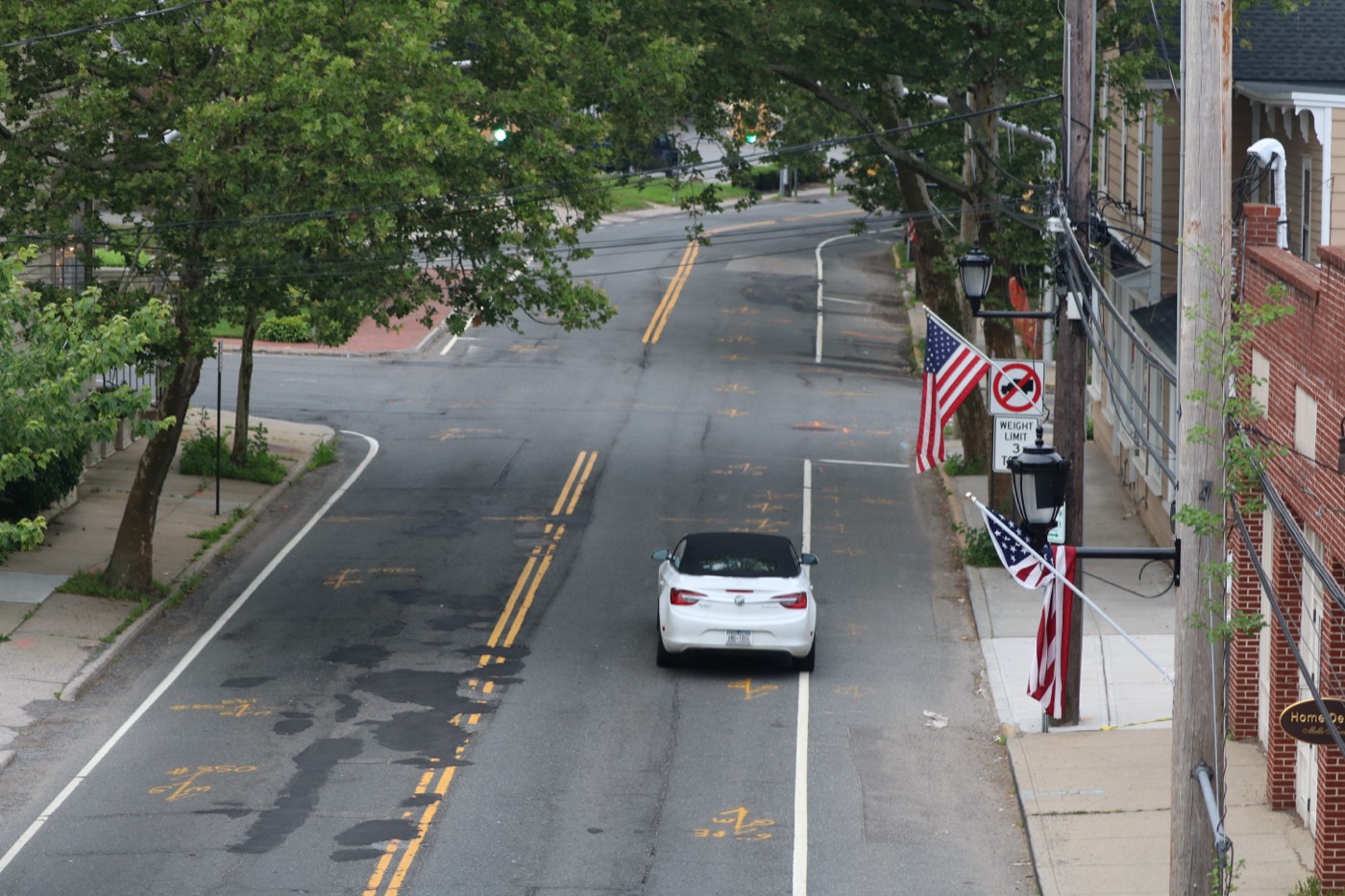
Roslyn is a small village in the Town of North Hempstead, on the North Shore of Nassau County, set in a wooded valley above Hempstead Harbour. Colonists settled it in 1643 as Hempstead Harbor, and in 1844 it was renamed Roslyn after Roslin, Scotland, which the village’s hilly setting was said to resemble.
It sits squarely within Long Island’s Gold Coast, the strip of old estates and harbour towns that gave Fitzgerald his model for the Eggs of The Great Gatsby. Today it is one of the most expensive and most educated corners of Nassau County, with a median household income above $116,000 and a population that the 2020 census counted at just under 3,000.
The wider Roslyn area, including Roslyn Heights and Roslyn Estates, is what draws families. The Asian and Middle Eastern share of the population has climbed steadily, and the school district has become a magnet that pulls newcomers across the county line.
How It Became Persian
To understand the Persians in Roslyn you have to start one peninsula over, in Great Neck, because that is where the story of Iranian Jewry on Long Island begins.
Two communities out of one country
The Persian Jews who came to New York were never a single bloc. They arrived as two distinct communities, each carrying a different history out of Iran. The Mashhadis trace their line to the city of Mashhad in the country’s northeast, where in 1839 their ancestors were attacked in pogroms and forced to convert to Islam under threat of death. They kept their Judaism in secret for nearly a century, marrying only among themselves, before emigrating.
The Tehranis came from the capital and the larger cities, a more cosmopolitan and more assimilated population. Many of them landed first in Queens before moving east. The two groups settled side by side on Long Island, but they kept their own synagogues, their own marriage circles, and their own memory of where they came from. It is the same split that defines the larger story of the Persians in Great Neck, New York.
The 1979 turning point
The decisive moment was the Iranian Revolution of 1979. As the Islamic Republic replaced the Shah, Jewish families who had built lives, businesses, and synagogues in Iran left almost everything behind. Through the 1980s, wave after wave arrived on the Great Neck peninsula, where families already there sheltered the children of relatives and friends.
Within a generation the Persians had become the defining community of Great Neck, building more than a dozen synagogues and community centres and electing their own mayors and trustees. The Mashhadis opened institutions including the United Mashadi Jewish Center; both communities planted roots deep enough that the village became, in the phrase that follows it everywhere, a Persian island in New York. That world overlapped with the older, largely Ashkenazi story of the Jews in Great Neck, New York, the two communities increasingly sharing congregations and schools.
The move east to Roslyn
Roslyn entered the story as the children of those first arrivals grew up, did well, and went looking for houses of their own. Great Neck filled in. Prices rose. Families who had made fortunes in New York City real estate and in import, jewellery, and professional practices began buying east along the North Shore, in Manhasset, Roslyn, and Roslyn Heights. It is a pattern Iranian Jews have repeated wherever they prospered, from the Persians in Beverly Hills, California to the suburbs of New York.
What pulled them specifically to Roslyn was almost always the same thing: the schools. The Roslyn Union Free School District is consistently ranked among the very best public districts in the country, and Roslyn High School sends its graduates to the most selective universities. For a community that treats education as the one asset no revolution can confiscate, that mattered more than any view of the harbour. The instinct echoes other striving suburbs, among them the storied schools that drew the Jews in Scarsdale, New York a county away in Westchester.
The Roslyn Persians stayed tethered to Great Neck. They drove back for synagogue, for the kosher butchers and bakeries, for weddings and the Iranian American Jewish Federation of New York, founded in 2001 and based in Great Neck, which has raised tens of millions of dollars for causes in Israel and the United States. Roslyn became the bedroom, Great Neck the heart.
The Landmarks
Ravagh Persian Grill, 210 Mineola Avenue, Roslyn Heights. The unofficial canteen of the North Shore Persian community, Ravagh draws diners from Great Neck to Mineola for tahdig, kabobs, and stews. On weekends the wait runs long, and the room hums with Farsi as much as English.
The Ellen E. Ward Memorial Clock Tower, Old Northern Boulevard at Main Street, Roslyn. The 44-foot tower, designed by the firm Lamb and Rich and completed in 1895, is the symbol of the village and appears on its official seal. Newcomers learn the town’s geography by the clock long before they learn its history.
The Bryant Library, 2 Paper Mill Road, Roslyn. Established in 1878, it is the oldest public library in Nassau County and home to the largest local history archive in the county. For immigrant families it has long been a free, neutral ground where children study and parents practise English.
Gerry Park, Roslyn. Opened in 1931 in the centre of the village, with its pond and willows it is where Roslyn slows down. On a spring weekend you will hear several languages along the paths, Farsi among them.
Roslyn High School, 80 Round Hill Road, Roslyn Heights. The reason many Persian families crossed the county line. Routinely ranked in the top tier of New York public high schools, it is the engine of the move east, and its honour rolls now carry a steady run of Persian surnames.
Main Street, Roslyn. The restored colonial-era shopfronts and the Roslyn Viaduct frame a downtown that has kept its scale. The Persian presence here is less a storefront district than a quiet pattern of customers, the cars in the lot, the names on the school plaques.
Where They Came From
The Roslyn Persians come, by way of Great Neck, from two Iranian roots. The Mashhadis carry the memory of a single northeastern city and of a forced conversion in 1839 that turned them inward for a century, a history that still shapes how tightly they marry and worship among themselves.
The Tehranis come from the capital and from Iran’s other large cities, often arriving in the United States through Queens and Los Angeles before consolidating on Long Island. Both fled the same event, the 1979 revolution, and both chose the same answer to exile: dense settlement, strong institutions, and an almost fierce investment in their children’s schooling.
That logic is what carried them the last few miles from Great Neck to Roslyn. The origin was Iran; the intermediate home was the Great Neck peninsula; the destination, for a growing slice of the second and third generations, is the quieter streets and top-ranked classrooms of the Roslyn district.
Roslyn Today
Roslyn does not announce its Persian community the way Great Neck does. There is no row of Iranian Jewish synagogues on Main Street, no Farsi-lettered shopping plaza. The presence is real but dispersed: families in the school district, regulars at Ravagh, names on the Roslyn High School merit lists, drivers heading west on Friday afternoons toward Great Neck’s congregations.
That is partly by design. For families who built a visible, self-contained world in Great Neck, Roslyn offers something different, a more mixed, more private suburban life where the children attend an elite public school alongside Ashkenazi, Asian, and longtime local neighbours. Nowruz, the Persian new year, is still kept in the home each spring, and the holiday calendar still bends toward Great Neck’s synagogues.
The honest picture is of a community in motion. Some Persian families are putting down deeper roots in Roslyn; others, especially among the youngest generation, are drifting toward Manhattan or Florida, the way diasporas always disperse once they are secure. What holds in Roslyn is the thing that brought them: a safe, beautiful village and a school district worth crossing a county for.
Frequently Asked Questions
Are the Persians in Roslyn the same community as in Great Neck?
Yes, essentially. The Persians in Roslyn are an eastward extension of the Iranian Jewish community centred on the Great Neck peninsula, where the synagogues, kosher businesses, and the Iranian American Jewish Federation are based. Roslyn families typically travel back to Great Neck for worship and community life.
Why did Persian Jewish families move to Roslyn?
The main draw is the Roslyn Union Free School District, ranked among the best public districts in the country. As Great Neck filled in and home prices rose, affluent professional and business families bought houses east along the North Shore, with Roslyn’s schools the decisive factor.
When did Persians come to Long Island?
Iranian Jews began arriving in significant numbers around the 1979 Iranian Revolution and through the 1980s, settling first in Great Neck. The move to Roslyn came later, as the second and third generations grew up and looked for homes of their own.
What is the difference between Mashhadi and Tehrani Jews?
Mashhadis come from the city of Mashhad and descend from Jews forced to convert to Islam in 1839, who practised in secret for a century and remain a tightly knit group. Tehranis come from Tehran and Iran’s other large cities and are generally more assimilated. Both are part of the Persians in Roslyn and Great Neck.
Is there a Persian restaurant in Roslyn?
Yes. Ravagh Persian Grill at 210 Mineola Avenue in Roslyn Heights is the best-known, drawing Persian and other diners from across Nassau County’s North Shore for traditional Iranian kabobs, rice, and stews.
Do Persians in Roslyn celebrate Nowruz?
Yes. Like the broader Iranian Jewish community on Long Island, families keep Nowruz, the Persian new year, in spring, typically as a home and family celebration alongside the Jewish holiday calendar observed at Great Neck’s synagogues.
If your family’s story passed through Roslyn, or any of the places Persians have made home in America, Atlas of Home can trace that journey. From a synagogue courtyard in Mashhad or Tehran, to the Great Neck peninsula and the quiet streets of Roslyn, to wherever you are now.