
On the first Monday of September, for the better part of a century, you could follow your nose to Thatcher Street in Brockton. Roast pork and rye bread, accordion music drifting over the picnic grounds, and as many as ten thousand people on the lawn. The Lithuanians in Brockton, Massachusetts threw the largest Lithuanian gathering in New England, and they did it every Labour Day, in a corner of a shoe city that they had quietly made their own.
The Place
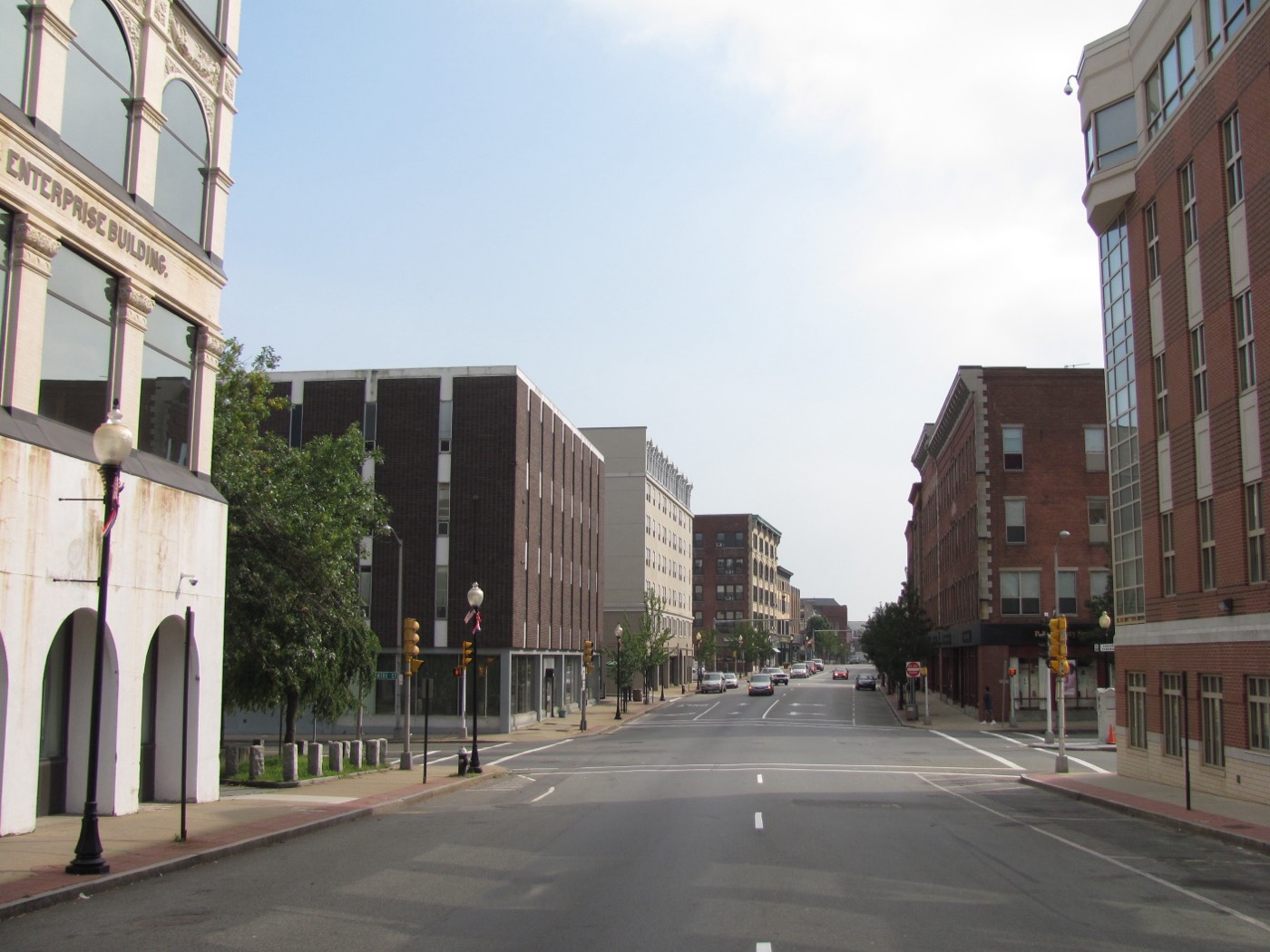
Brockton sits about twenty miles south of Boston, in Plymouth County, a city of roughly 105,000 people at the 2020 census. For decades it answered to one name above all others: Shoe City. Between about 1920 and 1935 it was one of the largest shoe manufacturing centres in the world, its factories shipping boots and dress shoes by the trainload.
It is also the City of Champions, birthplace of the undefeated heavyweight Rocky Marciano and of middleweight Marvelous Marvin Hagler. But long before the fighters, it was the factories that drew the world to Brockton.
The work needed hands, and the hands came from across the Atlantic: Irish, Italian, Polish, Swedish, and Lithuanian. Each group found its own pocket of the city. The Lithuanians found theirs in the northeastern end, in a section called Montello, in a neighbourhood they simply called the Village.
How It Became Lithuanian
The shoe city that needed hands
The Lithuanians arrived in Brockton in numbers in the late nineteenth and early twentieth centuries, drawn by the same force that pulled everyone else: work. The great shoe firms, W.L. Douglas, Geo. E. Keith, E.E. Taylor, employed thousands, and a strong back and a willingness to learn the bench were enough to get a start.
For Lithuanians this was a particular kind of escape. Their homeland was then under the rule of the Russian Empire, which had banned printing in the Lithuanian language and pressed young men into the Tsar’s army. Brockton offered a wage, a parish, and the chance to be Lithuanian out loud.
The parish on Webster Street
The community organised itself, as Lithuanian communities almost always did, around a church. The parish that became St. Casimir was founded in 1898, the first Lithuanian Catholic parish in the Greater Boston area. Its earliest home was a wooden church on Webster Street, where weddings were celebrated in the first years of the new century before the building was given over to use as a parish hall.
The parish was first dedicated to St. Roch, in the Lithuanian rendering St. Rocco, before it took the name of St. Casimir, the patron saint of Lithuania. Around it grew a parish school, where generation after generation of Village children learned their catechism and their letters before passing on to the nearby public Franklin School.
The Village takes shape
By the early twentieth century the streets around Ames Street in Montello had become a self-contained Lithuanian world. Trolley lines carried workers down to the factories in the morning and back up at night, and in between the Village ran on its own terms.
There were Lithuanian bakeries, grocers, pharmacies, barbers, funeral homes, and clubs. A resident could buy bread, fill a prescription, get a haircut, settle a funeral, and pour a glass of beer without leaving the neighbourhood or switching out of Lithuanian. That density was not an accident. It was chain migration at work, a village in Lithuania reassembling itself, street by street, in a New England factory town.
The women who came to pray
The community grew large enough to attract its own religious orders. In 1945 the Sisters of Jesus Crucified, an order founded in 1924 in Scranton, Pennsylvania by the Lithuanian-born Passionist priest Father Alphonsus Maria, moved their motherhouse to Brockton.
They settled at Our Lady of Sorrows Convent on Thatcher Street, and at their height some hundred sisters lived and prayed there. The convent ran a museum of Lithuanian heritage and a residence for the elderly, and it anchored the spiritual life of the Village alongside the parish church.
Labour Day on Thatcher Street
The great set piece of the Brockton Lithuanian year was the Labour Day picnic. Every first Monday of September, the grounds near the convent on Thatcher Street filled with thousands of Lithuanians, and plenty of curious neighbours, for a single enormous outdoor feast.
The figure that survives in the community’s memory is ten thousand people. Food, music, dancing, and the language all in the open air. The tradition ran for decades before it finally faded in the mid-1980s, and for those who remember it, nothing since has quite filled the space it left.
The Landmarks
St. Casimir Lithuanian Church, 214 Ames Street. The heart of the Village for 110 years. The present main building was raised in 1957 over the older basement church, but the parish itself dates to 1898. It held its final service in 2008, a closing that many took as the symbolic end of the Lithuanian Village.
Our Lady of Sorrows Convent, 261 Thatcher Street. The motherhouse of the Sisters of Jesus Crucified since 1945. Once home to roughly a hundred Lithuanian-American nuns, it remains an active religious community today, though far smaller, and its grounds hosted the great Labour Day picnic.
The Village memorial near St. Casimir. A red and white obelisk bearing the Vytis, the Lithuanian coat of arms, and the Columns of Gediminas. Brockton is said to hold more memorials to those who died for Lithuanian freedom than any comparable American city, and this is the most prominent.
The convent cemetery. The burial ground of the Sisters of Jesus Crucified, marked by a stone carved with the Lithuanian coat of arms and a perpetually flown Lithuanian flag. An elaborate sculpted grave honours the order’s founder.
The Avon memorial, North Street. Raised in 2011 near St. Michael Church in neighbouring Avon, it incorporates a sword taken from the original Village memorial, carrying a fragment of the old monument into a new home.
The W.L. Douglas factory sites, central Brockton. The shoe firms gave the Village its reason to exist. W.L. Douglas, Geo. E. Keith, and E.E. Taylor employed thousands, Lithuanians among them, and the wages from those benches built the bakeries and the churches and the picnic.
The Knights of Lithuania connection. The Knights of Lithuania, one of the largest Lithuanian-American organisations, was founded in 1913 in Lawrence, Massachusetts, with the motto “For God and Country.” Brockton’s St. Casimir parish was an early stronghold of the movement, and its members were woven through the life of the Village for generations.
Where They Came From
The Lithuanians who settled in Brockton were part of the great wave of emigration that left the country under Russian imperial rule in the decades around 1900. They came from a homeland where their language had been banned in print, where Catholic practice was pressured, and where land hunger pushed sons of farming families to look west.
What pulled them specifically to Brockton was the same mechanism that built every immigrant enclave: someone arrived, found work in the shoe shops, wrote home, and sent for a brother, a cousin, a neighbour. The Village filled not with strangers but with people who already knew one another, or knew of one another, from the old country.
That is why the neighbourhood could function entirely in Lithuanian. It was not a random gathering of immigrants. It was, in large part, the transplantation of specific Lithuanian villages and parishes onto the streets of Montello, with the same names, the same faiths, and the same Labour Day instinct to gather.
Brockton Today
The Lithuanian Village survives more in memory and monument than in daily life. St. Casimir closed in 2008. The Labour Day picnic ended in the 1980s. The bakeries and the pharmacies that once made the neighbourhood self-sufficient have long since shut their doors, and the Sisters of Jesus Crucified are now a small community where once there were a hundred.
At the 2000 census, around two thousand Brockton residents, roughly 1.4 per cent, claimed Lithuanian ancestry, a fraction of what the Village once was. The neighbourhood’s centre of gravity has shifted, and Brockton today is a strikingly diverse city, home to one of the largest Cape Verdean populations in the United States and to growing Haitian and Latino communities.
Yet the markers remain. The memorials still stand, the flag still flies over the convent cemetery, and the Sisters of Jesus Crucified still keep their motherhouse on Thatcher Street. For the descendants scattered across the suburbs of Greater Boston, those stones are the proof that the Lithuanians in Brockton, Massachusetts were here, in force, and built something that outlasted the factories that first drew them.
To trace these threads further, you can read about the Lithuanians in Lemont, Illinois, the coal-country Lithuanians in Shenandoah, Pennsylvania, and Chicago’s great Lithuanian heartland in Marquette Park. Closer to Brockton, the Bay State holds other immigrant stories worth knowing, from the Portuguese in Taunton to the Greeks in Peabody and the Finns in Fitchburg.
Frequently Asked Questions
Why did Lithuanians settle in Brockton, Massachusetts?
The Lithuanians in Brockton, Massachusetts came chiefly for work in the city’s shoe factories in the late nineteenth and early twentieth centuries. Firms such as W.L. Douglas and Geo. E. Keith employed thousands, and steady wages drew immigrants escaping Russian imperial rule over Lithuania.
Where was the Lithuanian Village in Brockton?
The Lithuanian Village was in the Montello section, in Brockton’s northeastern end, centred on Ames Street and its surroundings. It was so densely Lithuanian, with its own bakeries, grocers, pharmacies, and clubs, that residents could live there without speaking English.
What was St. Casimir Church in Brockton?
St. Casimir was the Lithuanian Catholic parish at 214 Ames Street, founded in 1898 as the first Lithuanian parish in Greater Boston. Originally dedicated as St. Rocco, it served the Village for 110 years before holding its final service in 2008.
What was the Brockton Lithuanian Labour Day picnic?
Every first Monday of September, thousands of people, by tradition as many as ten thousand, gathered on Thatcher Street for an enormous Lithuanian picnic with food, music, and dancing. It was the largest Lithuanian gathering in New England and ran for decades before ending in the mid-1980s.
Are there still Lithuanians in Brockton today?
The community is much smaller than it once was. At the 2000 census about two thousand Brockton residents, roughly 1.4 per cent, claimed Lithuanian ancestry, and many descendants now live across Greater Boston. The memorials, the convent on Thatcher Street, and the convent cemetery still mark the Lithuanian presence.
What happened to Brockton’s Lithuanian community?
As the shoe industry declined and later generations moved to the suburbs, the Lithuanians in Brockton, Massachusetts dispersed. St. Casimir Church closed in 2008, the Labour Day picnic ended in the 1980s, and the old Village businesses shut, though monuments, the convent, and the cemetery keep the heritage visible.
If your family’s story passed through Brockton, or any of the places Lithuanians have made home in America, Atlas of Home can trace that journey. From a village under Russian rule to a shoe bench in Montello, to the Labour Day lawn on Thatcher Street, to wherever you are now.