
On a Saturday morning along Pleasant Hill Road, the parking lot at H Mart fills before nine. Shopping carts roll past tanks of live fish and refrigerated walls of kimchi, and the food court griddles begin to smoke with the first orders of soft tofu stew. A few miles away, families file out of all-night saunas, hair still damp, and the bakeries set out trays of red bean buns. This is suburban Atlanta, but every sign is in Hangul, and the soundtrack is Korean.
The Koreans in Duluth, Georgia, have built one of the largest and fastest-growing Korean communities in the United States, a place that locals and the county tourism office alike now call the “Seoul of the South.” It did not happen overnight, and it did not happen here first.
Duluth: The Place
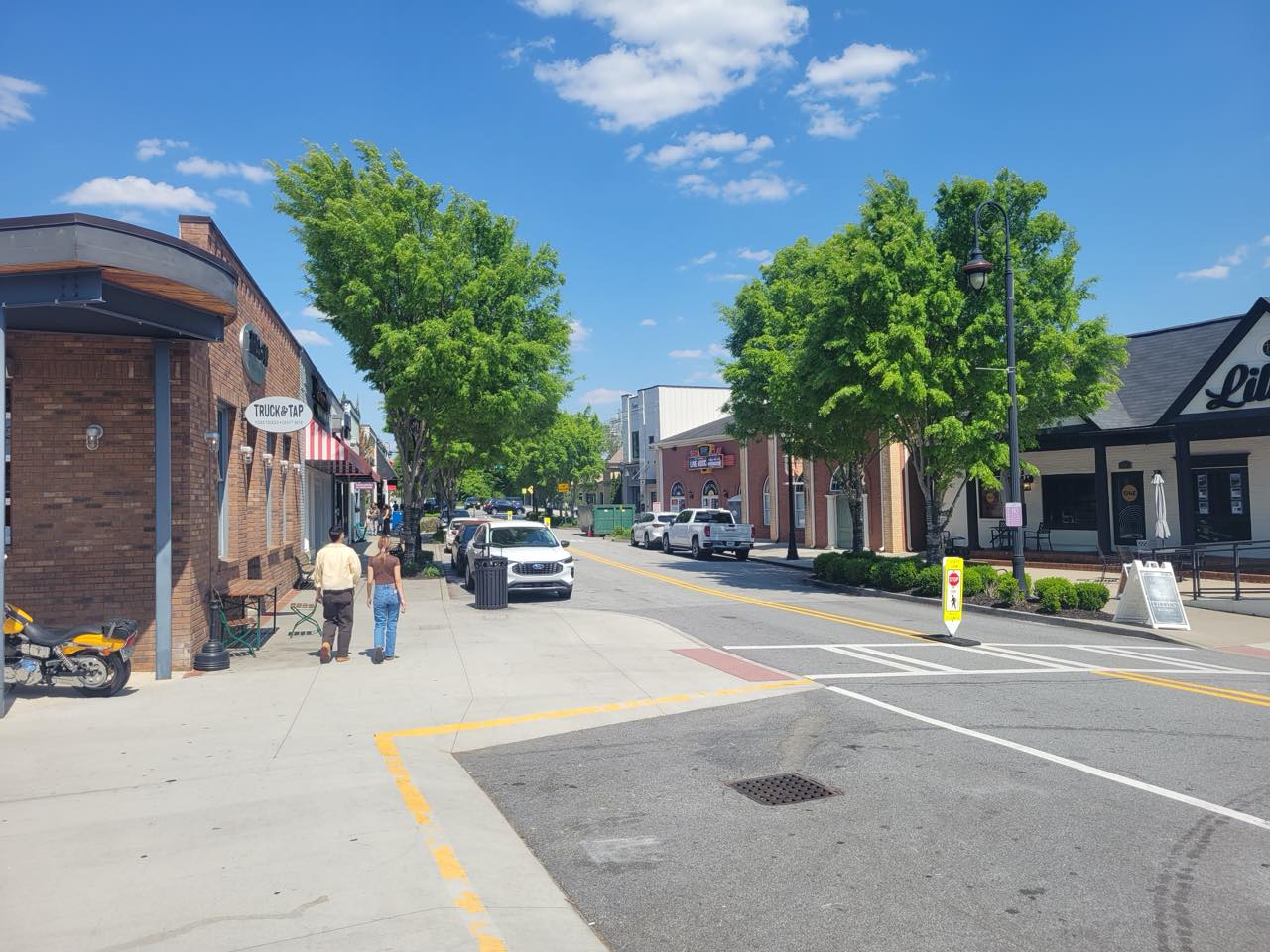
Duluth sits in southwestern Gwinnett County, roughly 27 miles northeast of downtown Atlanta along Interstate 85. The commercial spine of the Korean community runs through the Pleasant Hill Road corridor, a dense stretch of strip malls, plazas, and big-box stores near the old Gwinnett Place Mall. Housing ranges from 1980s ranch subdivisions to newer townhome clusters and large homes in nearby Suwanee and Johns Creek. The historic downtown, with its restored brick storefronts and town green, sits a couple of miles north of the retail sprawl.
How Duluth Became the Seoul of the South
Before the Koreans
Long before the first Korean grocery opened, this was cotton country and then railroad country. A North Carolina farmer named Evan Howell settled near the Chattahoochee River around 1821, and by the 1830s the crossroads he helped create was known as Howell’s Cross Roads. When the railroad arrived in 1871, the town reorganized around the depot.
In 1873 residents renamed the place Duluth, borrowing the name of the Minnesota city as a wink at a famous mocking speech delivered in Congress by Kentucky’s J. Proctor Knott. The Georgia General Assembly granted Duluth its charter in 1876. For the next century it stayed a small farm-and-rail town, and as late as the 1970s Gwinnett County was largely rural and overwhelmingly white.
The Koreans Arrive
Korean migration to the United States surged after the Immigration and Nationality Act of 1965 ended the old national-origin quotas. The national Korean population jumped from around 11,000 in 1960 to nearly 290,000 by 1980, drawn from urban, middle-class, largely Christian backgrounds, many of them sponsoring relatives once they gained a foothold.
In metro Atlanta, that foothold formed not in Duluth but along Buford Highway in Doraville, closer to the city. Through the 1980s and 1990s Korean grocers, restaurateurs, and clothiers filled the low-slung shopping centers there, and Georgia signaled its interest by opening a trade office in Seoul in 1985. The 1996 Olympics drew still more attention and investment.
Then the community began to move. Over the past two decades, Korean families and businesses pushed about ten to twelve miles north, up I-85 into Gwinnett County and especially into Duluth and Suwanee. The reasons were practical and repeated in interview after interview: cheaper and larger commercial space, lower taxes, safer suburbs, and above all the schools, with much of the state’s top-ranked public high schools clustered in and around Gwinnett.
Duluth at Its Peak
By the 2010s the transformation was unmistakable. Gwinnett County now counts close to 30,000 Korean Americans, roughly 47 percent of all Korean residents in Georgia, and the state as a whole is home to an estimated 150,000. Korean is the third most spoken language in Georgia, behind only English and Spanish.
Duluth holds the highest concentration of Korean Americans in the state and ranks among the densest Korean communities in the entire country. Banks, dentists, law offices, hagwons, or after-school cram academies, K-beauty shops, and karaoke rooms all carry Korean signage along Pleasant Hill Road. The community that began as a Buford Highway outpost had become the anchor of Korean life across the Southeast.
Churches held it all together. As in most American Korean communities, Presbyterian and other Protestant congregations served as the first social network, the youth program, the business-referral hub, and the cultural school all at once. Korean Community Presbyterian Church of Atlanta has gathered worshipers since 1977, and the Gwinnett area today supports dozens of Korean congregations across denominations, many with separate English-language ministries for the children who grew up here.
The Change
The growth has not stopped, but it has shifted shape. The food and culture that were once aimed squarely at Korean immigrants now draw the whole of Atlanta, and Korean barbecue in particular has gone fully mainstream across Gwinnett. A second generation, raised in Duluth and Suwanee schools, runs many of the newer businesses and moves easily between Korean and American worlds.
South Korean corporate investment, from Hyundai’s enormous electric-vehicle plant near Savannah to SK’s battery operations in Commerce, has reinforced Georgia’s ties to the peninsula and kept new families arriving. Older Doraville restaurants have closed or broadened their menus, while the gravity of the community has settled firmly to the north.
The Landmarks of Korean Duluth
H Mart, 2550 Pleasant Hill Road. The Duluth branch of the national Korean grocery chain anchors the corridor, its food court and bakery as much a gathering place as a store. H Mart began in 1982 as a single shop in Queens, New York, and its arrival in Gwinnett helped turn Pleasant Hill Road into the community’s main street.
Mega Mart, former Gwinnett Place Mall. In 2010 the first United States location of this Korean supermarket opened inside a former Davison’s department store at the mall, a striking reuse of a fading American retail anchor. The choice signaled how thoroughly Korean commerce had moved into spaces that suburban Atlanta had left behind.
Honey Pig, 3473 Old Norcross Road. Opened in 2007, Honey Pig is widely remembered as the first Korean barbecue restaurant in the area, grilling pork belly on its signature domed cast-iron lid. It helped set the template for the all-you-can-eat barbecue houses that now line the corridor.
Iron Age, Mall Corners shopping center, Pleasant Hill Road. Iron Age started as a tiny do-it-yourself barbecue spot in Duluth in late 2009, fewer than ten tables cooking marinated meats at the table. From that single Pleasant Hill Road room it grew into a chain with locations across several states and abroad.
Jeju Sauna, 3555 Gwinnett Place Drive. This 24-hour jjimjilbang is the community’s most famous spa, a sprawling bathhouse with hot pools, body scrubs, and nine themed saunas built like little huts of jade, charcoal, gold, and salt. It draws Korean families and curious first-timers from across the city, some of whom stay the whole night.
Gwinnett Place Mall, off I-85 at Pleasant Hill Road. Opened in 1984 as a gleaming suburban anchor, the mall declined for years before Gwinnett County bought it for redevelopment. Today its parking lots host the annual Korean Festival, a two-day celebration of food, music, and K-pop that has drawn crowds well past 70,000.
Where the Duluth Koreans Came From
The Koreans who built this community came overwhelmingly from South Korea after 1965, and disproportionately from its cities. They tended to be educated and middle class, the product of an industrializing nation whose own government encouraged emigration to relieve population pressure and bring money home. Many were Christian before they ever left, which is why Korean churches, especially Presbyterian congregations, became the first and strongest institutions wherever Koreans settled.
Few came straight to Duluth. The classic path ran through an earlier American gateway or through Doraville’s Buford Highway corridor, then north into Gwinnett once children, careers, and the search for good schools pulled families to the suburbs. That suburban, second-stage settlement is what sets Duluth apart from older urban enclaves like Koreatown in Los Angeles and the dense East Coast hubs in Palisades Park, New Jersey and Annandale, Virginia.
Duluth Today
Korean Duluth is not a relic to be mourned; it is still growing. The Pleasant Hill corridor stays busy day and night, the supermarkets expand, and new cafes, dessert shops, and barbecue houses keep opening for an audience that now includes much of metro Atlanta.
Paris Baguette traces the same arc the people did. The Korean bakery-cafe chain opened its first Georgia store in Doraville in 2013, expanded to Duluth in 2016, and then pushed on to Suwanee, following its customers north step by step. That northward drift, repeated across hundreds of businesses, is the clearest map of where the community went.
The community has also stepped into public life. Sam Park, who grew up in Gwinnett as the grandson of Korean War refugees, was elected to the Georgia House in 2016 as the first Asian American Democrat in the state’s General Assembly, entering politics after his mother’s cancer diagnosis exposed the stakes of health care access. His rise tracks a second generation that is confident, rooted, and unmistakably local.
What began as an overflow from Buford Highway is now a destination in its own right, the place suburban Atlanta drives to for a sauna, a barbecue dinner, or a festival. The story of the Koreans in Duluth is still being written, one storefront and one graduating class at a time.
If your family’s story passed through Duluth or any of the Korean communities that grew across America, the names, dates, and journeys behind it are worth preserving before they fade.
Frequently Asked Questions
Why did Koreans settle in Duluth, Georgia?
The Koreans in Duluth largely moved north from the older Korean business district along Buford Highway in Doraville. Gwinnett County offered cheaper and larger commercial space, lower taxes, safer suburbs, and some of the highest-ranked public schools in the state, which drew Korean families up Interstate 85 into Duluth and Suwanee.
Is Duluth still a Korean community today?
Yes, and it is still growing. Gwinnett County is home to nearly 30,000 Korean Americans, about 47 percent of the state total, and Duluth has the highest concentration in Georgia. The Koreans in Duluth keep the Pleasant Hill Road corridor as the heart of Korean shopping, dining, and worship in the metro area.
What are the most famous Korean landmarks in Duluth?
The best known include H Mart on Pleasant Hill Road, the 24-hour Jeju Sauna on Gwinnett Place Drive, and Korean barbecue institutions like Honey Pig and Iron Age. Gwinnett Place Mall, once a struggling shopping center, now hosts the annual Korean Festival that draws tens of thousands.
Where did the Duluth Koreans come from?
They came overwhelmingly from South Korea, mostly from its cities, after the 1965 Immigration and Nationality Act opened the door to large-scale Korean immigration. Many arrived as educated, middle-class, and Christian families, often settling first elsewhere in metro Atlanta before moving to the Gwinnett suburbs.
When did Koreans first arrive in the Atlanta area?
Koreans began arriving in metro Atlanta in meaningful numbers from the 1960s onward, concentrating along Buford Highway in Doraville through the 1980s and 1990s. The shift north into Duluth and the broader Korean community in Gwinnett County gathered force over the following two decades.