
On a Friday evening in Jericho, you can still trace the shape of a vanished Brooklyn. The Jews in Jericho, New York are largely the grandchildren of families who once davened in Flatbush storefronts and bought rye on Kings Highway, and who in the 1950s loaded their lives into station wagons and drove east, past Queens, out along the new parkways, to a Quaker hamlet in Nassau County where the schools would become the best in the state. They came for the lawns and the test scores. They stayed long enough to build synagogues, and to grow nostalgic for the boroughs they left.
The Place
Jericho is an unincorporated hamlet in the Town of Oyster Bay, in the affluent heart of Nassau County on Long Island. It sits just north of the Long Island Expressway, where Route 106 and Route 107 cross old Jericho Turnpike, roughly twenty-five miles from Midtown Manhattan by Long Island Rail Road.
It is a small place that punches far above its size. The 2020 census counted about 14,808 residents, with a median household income near $171,743 and an average home price that crossed a million dollars by the mid-2020s.
What draws people here, above all, is the Jericho Union Free School District, repeatedly ranked the number one public school district in New York State. For a certain kind of striving suburban family, Jewish and otherwise, that ranking has functioned as a magnet for three generations.
How It Became Jewish
To understand the Jews in Jericho, you have to start with the Quakers, because they got there first and shaped the land the newcomers would inherit.
A Quaker farm town
The area was part of the Robert Williams plantation as early as 1648, and the English families who settled here became Friends, members of the Society of Friends. The name changed from Lusum to Jericho in 1692, a biblical borrowing that would acquire a second meaning centuries later. The hamlet’s long recorded history runs from that Quaker founding straight through to the present.
Its most famous resident was Elias Hicks, the Quaker preacher and abolitionist who married into the Seaman family and farmed here from the 1770s. Hicks helped lead Long Island Quakers to manumit their enslaved people, and Jericho became a quiet station on the conscience of early America. That inheritance of moral seriousness and tidy farmland was the stage onto which, much later, a very different community arrived.
The postwar drive east
After the Second World War, the great Jewish neighbourhoods of Brooklyn and Queens began to empty outward. Returning veterans, the new highways, cheap mortgages and the automobile made the suburbs suddenly reachable, and Nassau County filled up with developments almost overnight. Levittown, a few miles south, became the template for the whole phenomenon.
Jericho’s turn came in the 1950s, when Phebe Underhill Seaman sold a large piece of her family’s land to real estate developers. Out of the old potato fields rose the subdivisions that would define the modern hamlet: Oakwood, then the Birchwood developments, East and West Birchwood, ranch houses and split-levels on curving streets with new sidewalks. The same wave reshaped much of the North Shore, from the Jewish families who settled around Roslyn to the dense Orthodox world of the Five Towns on the South Shore.
Forty families and a house on a hill
The Jewish families who bought into Oakwood and Birchwood were mostly young, mostly first-generation suburbanites, and almost immediately they wanted a synagogue. In 1955 a small group of Long Island Rail Road commuters, many of them from the new Oakwood development, decided Jericho needed a congregation of its own. Forty families turned that idea into reality.
When the next wave moved into East Birchwood in 1956, membership swelled past what living rooms could hold. That spring the congregation rented a large old frame house on a steep grade at the northeast corner of Old Jericho Turnpike and Route 106, a building they affectionately called the House on the Hill. Services and Hebrew school ran out of its rooms while the founders raised money for something permanent.
Building the Jericho Jewish Center
In 1957 the congregation bought the parcel on North Broadway where its synagogue still stands. Ground was broken on 28 June 1959, and the building was completed in 1960. The Jericho Jewish Center received its charter from the United Synagogue of America, the body of the Conservative movement, and a Conservative shul became the spiritual anchor of suburban Jewish Jericho.
For decades that pattern held. Families joined the Center, sent their children through its religious school, celebrated bar and bat mitzvahs in its sanctuary, and treated the synagogue as the natural centre of communal life. Around it, smaller institutions gathered: a Chabad presence, neighbouring congregations in Syosset, Plainview and Woodbury, and the dense web of Jewish suburban Long Island.
This was, by the measures of the day, an arrival. Families who in their parents’ time could not have imagined owning a quarter-acre of Long Island now hosted Passover seders in dining rooms with sliding glass doors onto the backyard. The Jewish story in Jericho is, at heart, a story about that single generational leap from tenement to lawn.
The Landmarks
Jericho Jewish Center, 430 North Broadway. The Conservative synagogue that began with forty commuting families in 1955 and opened its current building in 1960. For more than half a century it was the institutional heart of the community, a place of weddings, funerals, Hebrew school and High Holiday crowds spilling into folding chairs.
Chabad of Brush Hollow, 425 North Broadway. Just up the same stretch of Broadway, the local Chabad House offers an intimate Friday-night Shabbat and the outreach style that has, in recent decades, kept many less affiliated families tethered to Jewish practice when membership at the larger synagogues thinned.
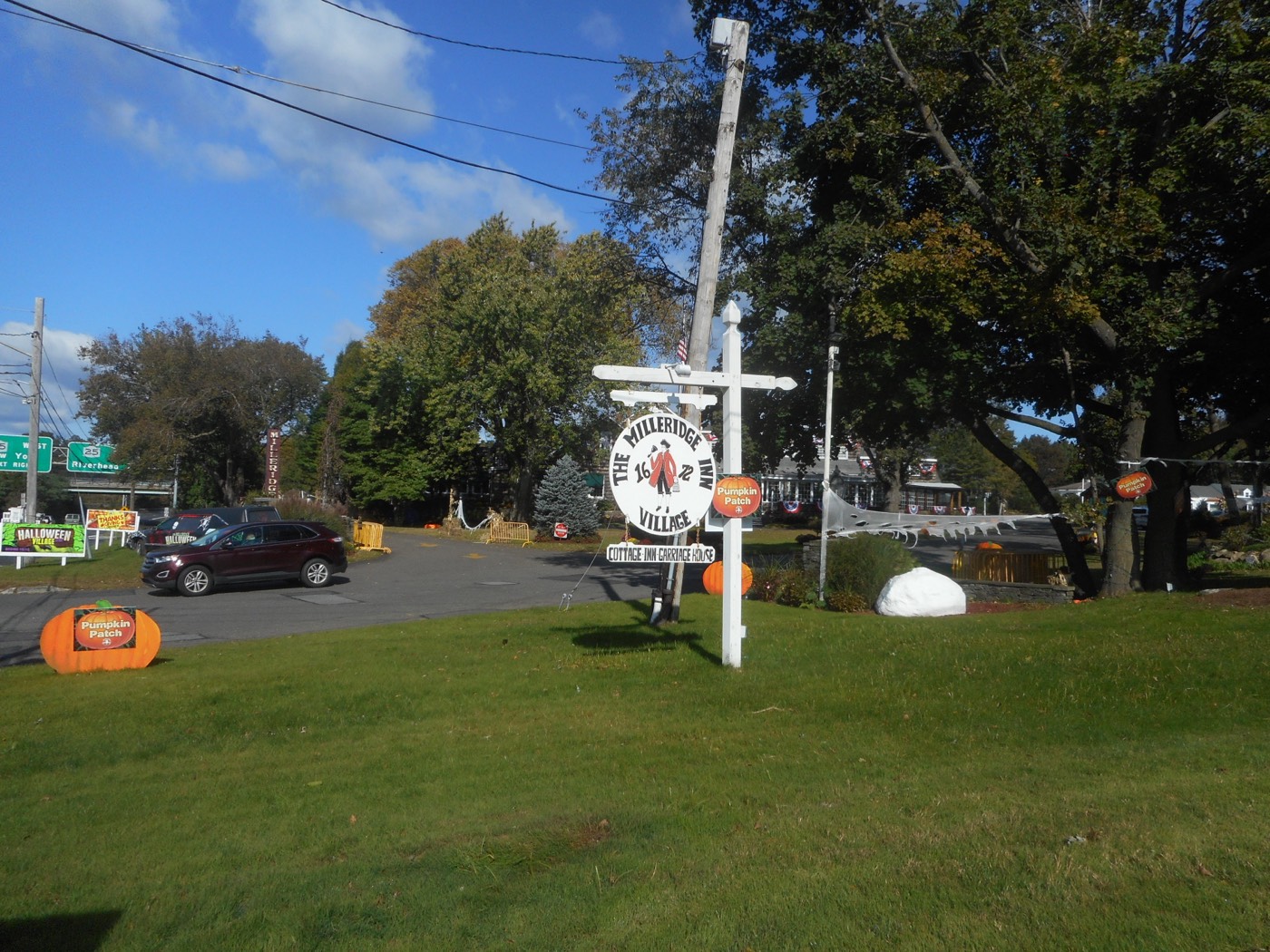
The Milleridge Inn, 585 North Broadway. A roughly three-century-old colonial inn and village complex that has long served as Jericho’s communal landmark, the backdrop for engagement dinners, anniversary parties and bar mitzvah celebrations across generations of local families, Jewish and gentile alike.
The Maine Maid Inn, 4 Jericho Turnpike. A landmarked building dating to the late 1700s, once home to the Hicks family and a stop on the Underground Railroad. Its survival as a restaurant tied the hamlet’s Quaker abolitionist past to its present, a reminder that this corner of Long Island had a moral history before it had a school ranking.
Jericho Senior High School, North Broadway corridor. The flagship of the district that drew so many families here, repeatedly named the top public high school in New York. For Jewish parents of the postwar generation, education was not a luxury but the whole point, and Jericho’s schools delivered on the promise that justified the move east.
Cantiague Park, West John Street. The county park where local families spent summers at the pool and winters on the ice, a shared outdoor commons that did for suburban Jericho what the candy store and stoop had done for the old Brooklyn block.
Broadway Commons, North Broadway. The shopping centre that anchors everyday life in the hamlet, the place where the practical rhythms of suburban living, the errands and the Sunday crowds, replaced the street markets of the boroughs the founders left behind.
Where They Came From
The Jews of Jericho are, overwhelmingly, a Brooklyn and Queens diaspora. Their families had themselves arrived a generation or two earlier from Eastern Europe, from the shtetls and cities of Poland, Russia, Lithuania and Ukraine, settling first in the immigrant Jewish neighbourhoods of New York City.
Flatbush, Borough Park, Brownsville, Bensonhurst, Forest Hills, Kew Gardens: these were the places the Jericho founders grew up, and the places they were leaving when they bought into Oakwood and Birchwood. The move was short in miles and enormous in meaning, a passage from apartment to house, from sidewalk to driveway, from the dense Jewish street to the dispersed Jewish suburb.
That origin still colours the community’s self-image. Long Island’s Jewish suburbs were built by people who carried the boroughs with them, in their cooking, their humour, their politics and their abiding sense that a good school district was the surest inheritance a parent could leave.
Jericho Today
Jericho today is a hamlet in transition, and the Jewish community there is honest about it. The demographic balance that once tilted heavily toward postwar Jewish and white families has shifted markedly. By 2020 the population was nearly evenly split, with Asian residents making up roughly 48 percent and non-Hispanic white residents about 43 percent, a near-complete reversal from a generation earlier when the hamlet was overwhelmingly white.
That change has been driven, fittingly, by the same thing that drew the founders: the schools. Families of East Asian background have arrived in large numbers for the Jericho district’s reputation, and the student body has transformed accordingly. The mechanism is identical to the one that brought the Jews in the 1950s, even as the faces have changed.
For the older Jewish institutions, this has meant reckoning with a smaller, ageing membership. The Jericho Jewish Center, which last led by Rabbi Matthew Abelson before he stepped down in 2022, saw a proposed merger with the nearby Woodbury Jewish Center fail that same year, leaving questions about long-term sustainability that echo across many suburban Conservative congregations. The synagogue endures, and a preschool now operates inside it, but the days of overflow High Holiday crowds are part of the community’s memory rather than its present.
What remains is real. There are still synagogues and a Chabad on Broadway, still families whose roots in Jericho run three generations deep, still seders and Shabbat tables and the particular Long Island Jewish cadence that came east from Brooklyn and never quite left. The community is smaller and older than it was, but its story, the leap from the boroughs to the lawn, is woven permanently into the hamlet it helped build. Earlier waves of suburban Jewish settlement across Nassau followed the same arc, from the older established Jewish enclave of Great Neck to the Westchester reaches around Armonk.
Frequently Asked Questions
When did Jews first settle in Jericho, New York?
The Jews in Jericho, New York arrived mainly in the 1950s, part of the great postwar migration out of Brooklyn and Queens into Nassau County. The founding wave settled in new developments like Oakwood and East Birchwood, and in 1955 forty families organised what became the Jericho Jewish Center.
Why did Jewish families move to Jericho?
They came for the classic postwar suburban promise: a house with a yard, new parkways for the commute to Manhattan, and above all top-tier public schools. The Jericho Union Free School District, repeatedly ranked number one in New York State, has been the single strongest draw for the Jews in Jericho, New York for three generations.
What is the main synagogue in Jericho?
The Jericho Jewish Center, a Conservative congregation at 430 North Broadway, has been the community’s institutional anchor since its building opened in 1960. A Chabad House on the same stretch of Broadway also serves local families, alongside neighbouring congregations in Syosset, Plainview and Woodbury.
Where did Jericho’s Jewish families originally come from?
Most trace their roots to the Jewish neighbourhoods of Brooklyn and Queens, places like Flatbush, Borough Park and Forest Hills, where their own parents and grandparents had settled after emigrating from Eastern Europe. The move to Jericho was a short drive east and an enormous change in way of life.
Is Jericho still a Jewish community today?
It remains a Jewish community, though a smaller and older one than at its postwar peak. The hamlet’s demographics have shifted substantially, with a large Asian population arriving for the schools, and Jewish institutions have had to adapt, but synagogues, a Chabad and multigenerational Jewish families remain.
What are the historic landmarks near Jericho’s Jewish community?
Beyond the Jericho Jewish Center, the hamlet is known for the centuries-old Milleridge Inn and the landmarked Maine Maid Inn, the latter tied to the Quaker abolitionist Elias Hicks and to the Underground Railroad. Cantiague Park and Broadway Commons anchor everyday suburban life.
If your family’s story passed through Jericho, or any of the places Jews have made home in America, Atlas of Home can trace that journey. From a tenement block in Brooklyn to a split-level in East Birchwood, to wherever you are now.