
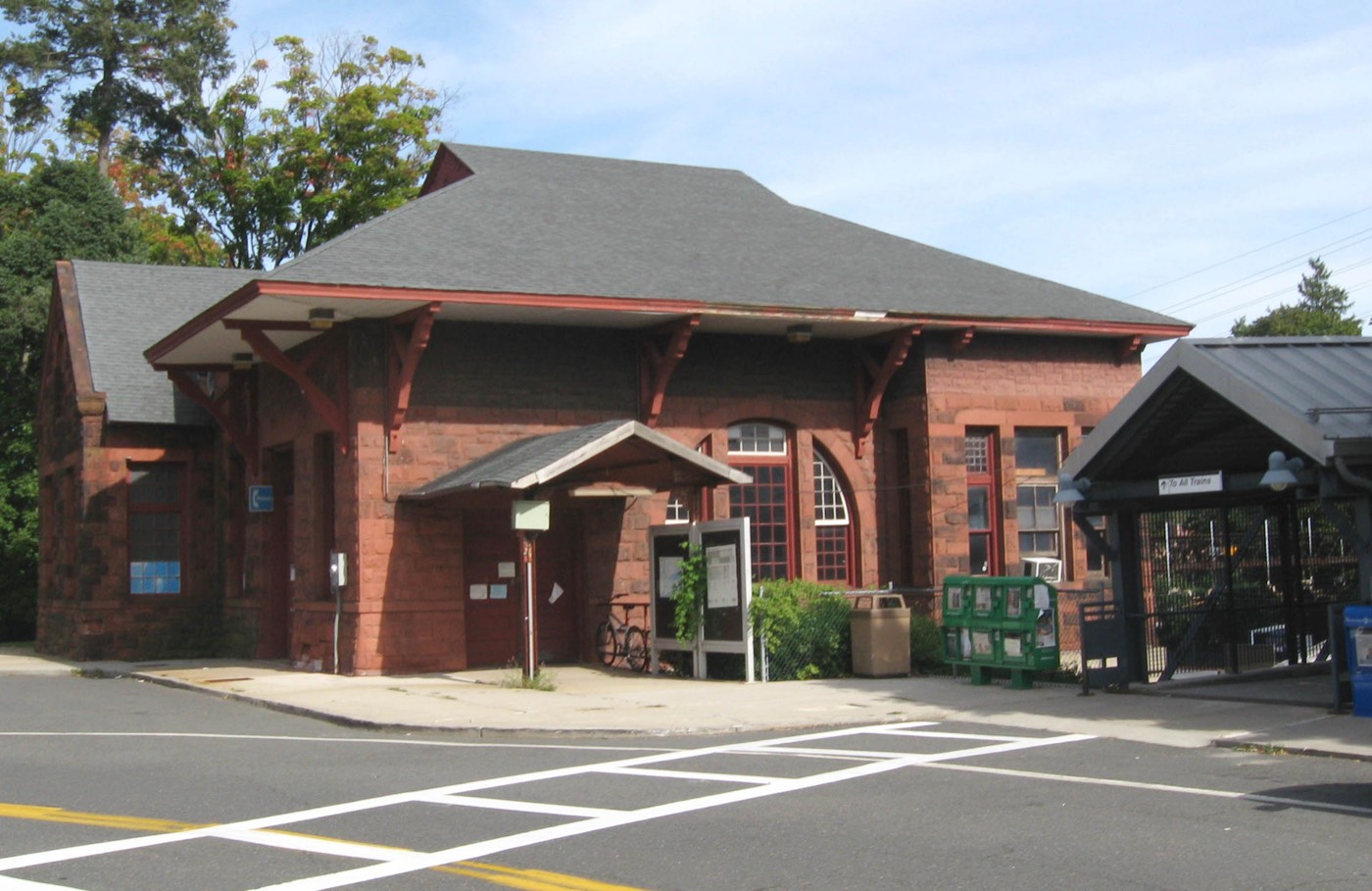
The first time many of them saw Harrison, it was through the window of a New Haven Line train, twenty-seven miles and thirty-five minutes from the noise of Grand Central. By the 1950s and 1960s, a generation of Jewish families who had grown up in the Bronx and on the Upper West Side were stepping off at the Harrison platform with a real-estate listing in hand. The story of the Jews in Harrison, New York is, at its heart, the story of that train and the lives people built at the end of the line.
The Place
Harrison sits in central Westchester County, a figure-eight of a town that joins a walkable downtown in the south to the green, estate-laced hamlet of Purchase in the north. It was founded in 1696 on land John Harrison, a Quaker from Flushing, bought from the local Siwanoy, and for two centuries it stayed farmland and Quaker meeting houses.
That changed when the railroad came through. After the station opened in 1870, wealthy New Yorkers bought up the farms for country estates, and Harrison began its long turn toward affluence. Today the median household income tops $160,000, and the town’s northern edge along Interstate 287 holds the corporate headquarters of PepsiCo and Mastercard.
It is a town of good schools, big trees, and quiet streets, close enough to the city to commute and far enough to forget it for a weekend. For Jewish families leaving the five boroughs after the war, that combination was the whole point.
How It Became Jewish
There was no single Jewish founding moment in Harrison, no ship or tenement block that everyone traces back to. Instead there was a slow, deliberate migration, family by family, out of the city and up the New Haven Line. To understand the Jewish community here, you have to start with why anyone left New York at all.
The City They Came From
New York City’s Jewish population peaked at roughly two million in the 1950s, when Jews made up about a quarter of the city. Most of those families lived in dense, walk-up neighbourhoods in the Bronx, Brooklyn, and Manhattan, the children and grandchildren of Eastern European immigrants who had arrived between 1880 and 1920.
After the Second World War, that geography came undone. Between 1945 and 1965, roughly one in three American Jews left the big cities for the suburbs, a rate higher than the country as a whole. The G.I. Bill made mortgages cheap for returning veterans, the car made commuting possible, and the baby boom made a backyard suddenly feel necessary.
Why Westchester, Why Harrison
Westchester County, immediately north of the city, became one of the great destinations for this migration. By 2002 it held the eighth-largest Jewish community in the United States, around 129,000 people. The earliest postwar arrivals concentrated in the older small cities, New Rochelle, Mount Vernon, Yonkers, and White Plains, places already on the commuter rail.
Harrison sat right in the middle of that belt, one stop up the line from Mamaroneck and a few minutes from White Plains. It offered something its better-known neighbour Scarsdale did too, but at a slightly gentler price and a slightly quieter key: a real downtown, a strong public school district, and an easy ride to a Midtown desk. Families who might have looked at the established Jewish community in Scarsdale often found their way to Harrison instead.
Building Institutions
A community becomes a community when it builds a place to pray. In 1960 a group of Conservative families founded the Jewish Community Center of Harrison, a congregation meant to anchor Jewish life in a town that had never had a synagogue of its own.
The JCCH grew into a full-service Conservative congregation of around 250 member families, drawing not only from Harrison but from Rye, Mamaroneck, Scarsdale, and White Plains nearby. It built a religious school, an adult-education programme, and the ordinary weekday rhythms of yoga and Mah Jongg that turn a synagogue into a second living room.
Decades later a smaller Orthodox community took root as well. Young Israel of Harrison began with services held in a rabbi’s home, a combined kitchen and dining room that did duty as a sanctuary for some fifteen years. Under Rabbi Yaakov Bienenfeld, who has led it for more than two decades, the congregation of roughly thirty-five mostly Harrison families finally built a 7,000-square-foot synagogue on Union Avenue, completed around 2010.
Purchase and the Corporate North
While downtown Harrison drew commuting families, the northern hamlet of Purchase took a different shape. PepsiCo moved its headquarters there in 1970, and Mastercard built its I. M. Pei-designed global headquarters nearby in the early 1980s, anchoring the “Platinum Mile” of corporate campuses along Interstate 287.
Those companies, together with SUNY Purchase and Manhattanville University, drew exactly the professional class, lawyers, executives, finance and consulting families, in which many Westchester Jewish households had come to sit by the late twentieth century. Purchase added a layer of wealth and a wider professional reach to a community that had begun, a generation earlier, with commuters and a single shared rabbi.
The Landmarks
Jewish Community Center of Harrison, 130 Union Avenue. Founded in 1960, the JCCH is the oldest Jewish institution in town and its Conservative heart. Around 250 families belong, many of them the children and grandchildren of the first postwar arrivals, and its religious school has carried Jewish education in Harrison for more than sixty years.
Young Israel of Harrison, 91 Union Avenue. A warm, modern Orthodox congregation that spent its first fifteen years meeting in a rabbi’s home before opening a purpose-built sanctuary around 2010. Small and tightly knit at roughly thirty-five families, it gives Harrison’s observant households a shul within walking distance.
Harrison Metro-North Station, Halstead Avenue. The 1870 station and the New Haven Line it sits on are the reason any of this exists. For three generations of Jewish commuters, the morning platform here was the daily seam between suburban home and city office.
Harrison High School, 255 Union Avenue. The flagship of a Harrison Central School District whose superintendent was named New York State Superintendent of the Year in 2010. Strong public schools were the single biggest draw for the families who moved north, and this is where many of their children grew up.
The Platinum Mile, Purchase, along Interstate 287. Home to the headquarters of PepsiCo on Anderson Hill Road and Mastercard on Purchase Street, this corridor of corporate campuses employed the professional class that filled out Harrison’s Jewish households in the closing decades of the century.
Congregation Emanu-El of Westchester, Rye. The Reform synagogue just over the line in neighbouring Rye that has long served Harrison, Purchase, and Rye Brook families, rounding out the denominational map for Jewish residents who prefer Reform worship.
Manhattanville University, Reid Castle, Purchase. The Gilded Age mansion at the centre of Manhattanville’s campus is a reminder of the estate era that preceded the suburb, and of the educational institutions that made Purchase a magnet for professional families.
Where They Came From
Trace most Jewish families in Harrison back two or three generations and you land in the same place: the immigrant Jewish neighbourhoods of New York City, and behind them, the towns and shtetls of Eastern Europe, Poland, Lithuania, Ukraine, Russia, that their forebears left between roughly 1880 and 1920.
The move to Harrison was not an immigration but a second migration, an internal one, from the dense Jewish Bronx and the Upper West Side out to the lawns of Westchester. It was the suburban chapter of a much older journey, the one that began in steerage and passed through the Lower East Side.
That shared origin is why Harrison’s Jewish life feels of a piece with the rest of the county. The same arc that filled the Jewish community in nearby Armonk and the families who settled in Chappaqua ran through Harrison too, a single postwar tide breaking across the whole of central and northern Westchester.
Harrison Today
Harrison today is a comfortable, mixed town of around 28,000 people, more diverse than the postwar suburb that drew those first Jewish families. The largest growth in recent decades has come from Hispanic and Asian residents, and Jewish households now share the town with a broad cross-section of professional Westchester.
The Jewish institutions remain, smaller and steadier than in their building-boom years. The JCCH still anchors Conservative life, Young Israel still gathers its Orthodox families on Union Avenue, and Congregation Emanu-El in Rye still serves the Reform-leaning households of Harrison and Purchase. None is large, but together they keep a continuous Jewish presence in a town that had none before 1960.
What Harrison offers now is what it always offered: good schools, a real downtown, a train to the city, and the room to raise a family. For the Jewish families who came up the New Haven Line two generations ago, and for the ones who still arrive today, that has been enough.
Frequently Asked Questions
Is there a Jewish community in Harrison, New York?
Yes. The Jews in Harrison, New York are anchored by two congregations in town, the Conservative Jewish Community Center of Harrison and the modern Orthodox Young Israel of Harrison, both on Union Avenue, with many families also belonging to the Reform Congregation Emanu-El of Westchester in neighbouring Rye.
When did Jewish families move to Harrison?
Most arrived during the great postwar suburban migration between roughly 1945 and 1965, when one in three American Jews left the big cities for the suburbs. The Jewish Community Center of Harrison was founded in 1960, marking the point when the community was large enough to support its own synagogue.
What synagogues serve Harrison?
The Jewish Community Center of Harrison at 130 Union Avenue is Conservative and has about 250 member families. Young Israel of Harrison at 91 Union Avenue is modern Orthodox with around 35 families. Congregation Emanu-El of Westchester in Rye serves Harrison’s Reform community.
Why did Jewish families choose Harrison over Scarsdale or White Plains?
Harrison offered the same draws as its neighbours, strong public schools and an easy commute, often at a slightly gentler price. Sitting one stop up the New Haven Line from Mamaroneck and minutes from White Plains, it was squarely inside the central Westchester belt that drew Jewish families north after the war.
Where in Westchester is Harrison?
Harrison is in central Westchester County, about twenty-seven miles northeast of Grand Central Terminal on Metro-North’s New Haven Line. It includes the downtown area in the south and the affluent hamlet of Purchase in the north, home to the PepsiCo and Mastercard headquarters.
Are the Jews in Harrison part of the larger Westchester Jewish community?
Very much so. The Jews in Harrison, New York are one piece of a county that by 2002 held the eighth-largest Jewish community in the United States, around 129,000 people. Harrison’s congregations draw members from Rye, Mamaroneck, Scarsdale, and White Plains, and its history mirrors that of nearby towns like Armonk and Chappaqua.
If your family’s story passed through Harrison, or any of the places Jews have made home in America, Atlas of Home can trace that journey. From a walk-up in the Bronx to a platform on the New Haven Line, to wherever you are now.