
On the first Sunday of October, the Italian flag climbs the pole outside Everett City Hall on Broadway, and a procession steps off behind a brass band. The Italians in Everett have been gathering like this for a century, ever since a few stubborn families decided that this crowded little city north of the Mystic River would be their America. It still is.
The Place
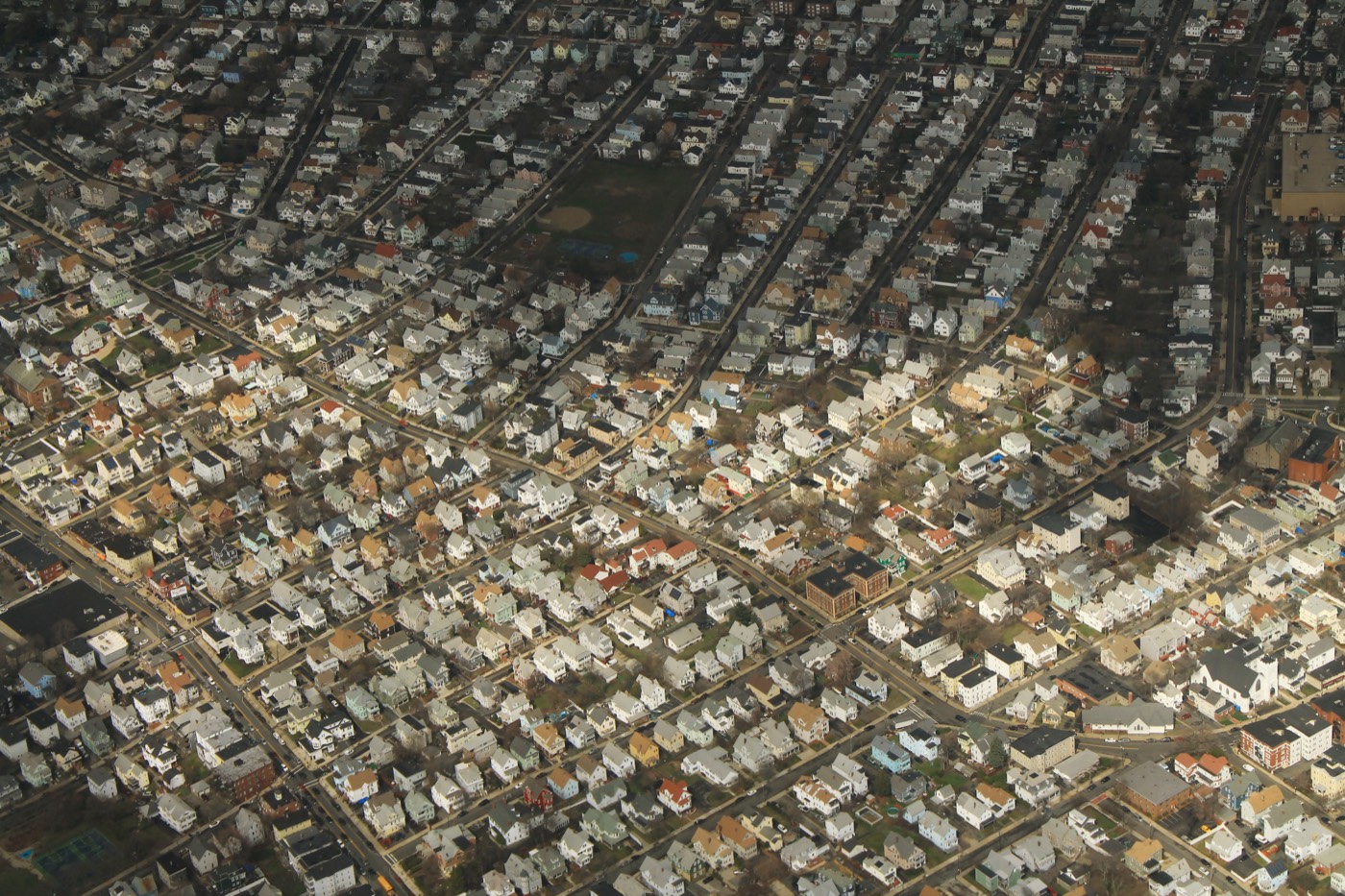
Everett is a dense, working four square miles wedged between Boston, Chelsea and Malden, with the Mystic River along its southern edge. It broke away from Malden in 1870 as a town and incorporated as a city in 1892, with Alonzo H. Evans as its first mayor.
For most of a century it was an industrial place, defined by the refineries and tank farms that crowded the riverfront. Today roughly 49,000 people live here, a remarkable share of them born abroad: by 2024 nearly half of Everett residents were immigrants. Among American-born families, two heritages still loom largest in the city’s memory, Brazilian and Italian.
How It Became Italian
Everett grew up fast and grew up working. During the late industrial decades its population was among the fastest expanding in Massachusetts, doubling between 1870 and 1880, nearly tripling in the following decade, and doubling again by 1900. That growth needed hands, and many of them came from southern Italy.
The factory years
The first Italians who came to Everett came for work. The city’s proximity to Boston turned it into an industrial centre between roughly 1885 and 1915, the same window in which the great wave of Italian emigration crested in the United States.
Italian labourers based across the river in East Boston, then the region’s emerging Little Italy, travelled to the factories and shops of neighbouring towns including Everett, Winthrop and Chelsea. Some stayed. By the 1920s a settled Italian-speaking population had taken root in Everett’s tenement streets, close enough to the riverfront jobs to walk to them.
A parish of their own
What Italians wanted, almost everywhere they settled, was a parish that spoke their language. In the 1920s a group of Italian-speaking laymen in Everett, led by Orazio Rocco, Antonio Dragone and Celestino Pierotti, appealed to William Cardinal O’Connell, the Archbishop of Boston, for an Italian parish of their own.
The answer came in 1927. The nascent parish rented Everett’s Broadway Theatre, and Pierotti, along with Accurzio Indelicato, led the work of renovating the old playhouse into a church. The first Mass was said on Palm Sunday, the first of April, 1928.
That parish became St. Anthony of Padua, and it anchored Italian Everett for the rest of the century. The founding was an act of will by working people who had crossed an ocean and were determined to worship in their own tongue, in their own neighbourhood, under a saint they had carried with them from home.
The move from East Boston
The second great wave into Everett came not directly from Italy but from across the harbour. After the Second World War, suburbanisation and rising prosperity let younger Italian Americans move out of the cramped tenements of East Boston into nearby towns. Revere, Winthrop, Saugus and Everett all absorbed them.
These were second and third generation families, born in America, leaving the old Little Italy for streets with a little more air and the chance to own a house. Everett, near enough to keep the family ties to East Boston and the North End, was a natural landing place. The pattern that built Italian Everett, like the one that built nearby Italian Revere, was less a single migration than a slow outward drift from the Boston waterfront.
By the time those families arrived, the parish, the bakeries and the social clubs were already waiting. The newcomers slotted into a community that the factory-era immigrants had spent a generation building.
From refineries to a casino
The Everett those families knew was a hard industrial city. Beacon Oil built a refinery near the Mystic River in 1919 and 1920; Standard Oil of New Jersey, the future ExxonMobil, bought it in 1929. The riverfront was a landscape of tanks and stacks, and Italian Everett worked in its shadow for decades.
The refinery closed in 1965, and in 1971 a liquefied natural gas terminal opened on the same stretch of river, the first of its kind in the country. The hard, smoky version of Everett held on for a long time. Its most dramatic change would not arrive until the twenty-first century, when a casino rose on the old industrial shore.
The Landmarks
St. Anthony of Padua Parish, 38 Oakes Street. The spiritual heart of Italian Everett, founded in 1927 for the city’s Italian-speaking faithful. The parish still offers Mass in Italian alongside English, Spanish and Portuguese, a fair reflection of the immigrant city around it. Its elementary school sits a few doors down on the same Oakes Street block.
Everett City Hall, 484 Broadway. Each October the Italian tricolour is raised here to open Italian American Heritage Month. The flag-raising is the formal start of a day that ends with food, music and a procession, and it has become one of the city’s most reliable annual rituals.
Il Pastificio, 328 Broadway. A family pasta shop, bakery and Italian grocer all in one, opened in 1985 and run since by the same family. It began with a few cuts of fresh pasta and grew into a counter selling homemade ravioli and tortellini, gelato, biscotti and cakes, the kind of place that keeps a neighbourhood’s Sunday table stocked.
The Connolly Center. The community hall where the city now holds its main Italian American Heritage Month celebration each autumn, an afternoon of Italian food, music and dancing. It is the indoor successor to years of festivities at Meadows Park, and the place where the city’s older Italian families still come together.
Fratelli, at Encore Boston Harbor, One Broadway. A 135-seat southern Italian restaurant from Boston restaurateurs Frank DePasquale and Nick Varano, opened with the casino in 2019. DePasquale’s cooking draws on the coasts of southern Italy, the same regions most of Everett’s Italian families came from, now plated in a five-star resort on the old refinery shore.
Meadows Park. For years the open-air home of the heritage festival, with espresso, music and food spread across the grass. It remains a touchstone in the community’s calendar, the green space where the procession and the celebration have long landed.
Encore Boston Harbor, One Broadway. Not an Italian landmark, but the one that reshaped the city Italian Everett built. Wynn Resorts’ casino opened on the 23rd of June, 2019, on the old riverfront, the largest private single-phase construction project in the history of the Commonwealth. It put Everett’s industrial shore to an entirely new use.
Where They Came From
Everett’s Italians, like the wider Italian migration to Boston, came overwhelmingly from the south. Between 1876 and 1930, roughly four in five of the five million Italians who left for the United States came from the southern regions: Sicily, Calabria, Campania, Apulia and Basilicata, with Abruzzo close behind.
They came from agricultural provinces where land was thin and futures thinner, and they followed family. Italian migration ran on chains: a brother who found work in the factories of greater Boston sent for cousins, who sent for neighbours, until whole stretches of a southern village had reassembled across the Mystic.
Many of Everett’s Italian families took the extra step of crossing first to East Boston and only later to Everett, so the city’s Italian roots run through the North Shore’s Little Italy as much as straight back to Naples or Palermo. The mix that resulted was thoroughly Boston-Italian: southern in origin, harbour-shaped in route, and bound together by the same parishes and feast days that knit the whole region’s Italians together.
Everett Today
Everett is no longer an Italian city in the way it was in 1950, and it would be dishonest to pretend otherwise. It is now one of the most immigrant-dense places in Massachusetts, with a large Brazilian community and a Hispanic population approaching a third of residents. Broadway today carries as many Portuguese and Spanish signs as Italian ones.
But the Italian thread has not been cut. Mayor Carlo DeMaria, a lifelong Everett resident and the son of Italian immigrants, presides over the heritage celebrations he calls particularly close to his heart. State Senator Sal DiDomenico speaks at them. The flag still goes up the City Hall pole every October.
And the everyday institutions endure. St. Anthony’s still says Mass in Italian. Il Pastificio still rolls fresh pasta on Broadway. The annual feast still draws the families who built the place, even as their grandchildren scatter to the suburbs and the city around them turns ever more global. Italian Everett has become a heritage rather than a majority, but it is a heritage the city protects, much as nearby Irish Quincy guards its own.
For families whose story passed through these streets, the connection to other New England Italian enclaves, to the close-knit Italian streets of Bristol, Rhode Island, and to the older waterfront communities of Boston is part of the same long arc, from a southern Italian village to a refinery city on the Mystic, and onward to wherever the family went next.
Frequently Asked Questions
When did Italians first settle in Everett, Massachusetts?
Italians began arriving during Everett’s industrial boom between roughly 1885 and 1915, drawn by factory and riverfront work. By the 1920s the Italians in Everett were numerous enough to petition for their own parish, which became St. Anthony of Padua in 1927.
What is the main Italian church in Everett?
St. Anthony of Padua, founded in 1927 and now on Oakes Street, is the historic Italian parish. It was created so Everett’s Italian-speaking residents could worship in their own language, and it still offers Mass in Italian today.
Where did Everett’s Italian immigrants come from?
Like most Italians in greater Boston, they came overwhelmingly from southern Italy, including Sicily, Campania, Calabria and Abruzzo. Many reached Everett by way of East Boston’s Little Italy rather than directly from Italy.
Why did Italians move from East Boston to Everett?
After the Second World War, prosperity and suburbanisation let younger Italian American families leave East Boston’s crowded tenements for more space. Everett, along with Revere, Winthrop and Saugus, absorbed many of these second and third generation households.
How does Everett celebrate its Italian heritage today?
Each October the city marks Italian American Heritage Month with a flag-raising at City Hall on Broadway and a celebration of food, music and dancing, recently held at the Connolly Center. Mayor Carlo DeMaria, himself the son of Italian immigrants, hosts the event.
Are there still Italian businesses in Everett?
Yes. Il Pastificio on Broadway, a family pasta shop and bakery open since 1985, remains a fixture, and Fratelli at Encore Boston Harbor brings upscale southern Italian cooking to the city’s riverfront. The Italians in Everett still keep their food traditions visible on Broadway.
If your family’s story passed through Everett, or any of the places Italians have made home in America, Atlas of Home can trace that journey. From a hill town in Campania or a fishing village in Sicily, to a parish on Oakes Street and a pasta counter on Broadway, to wherever you are now.