
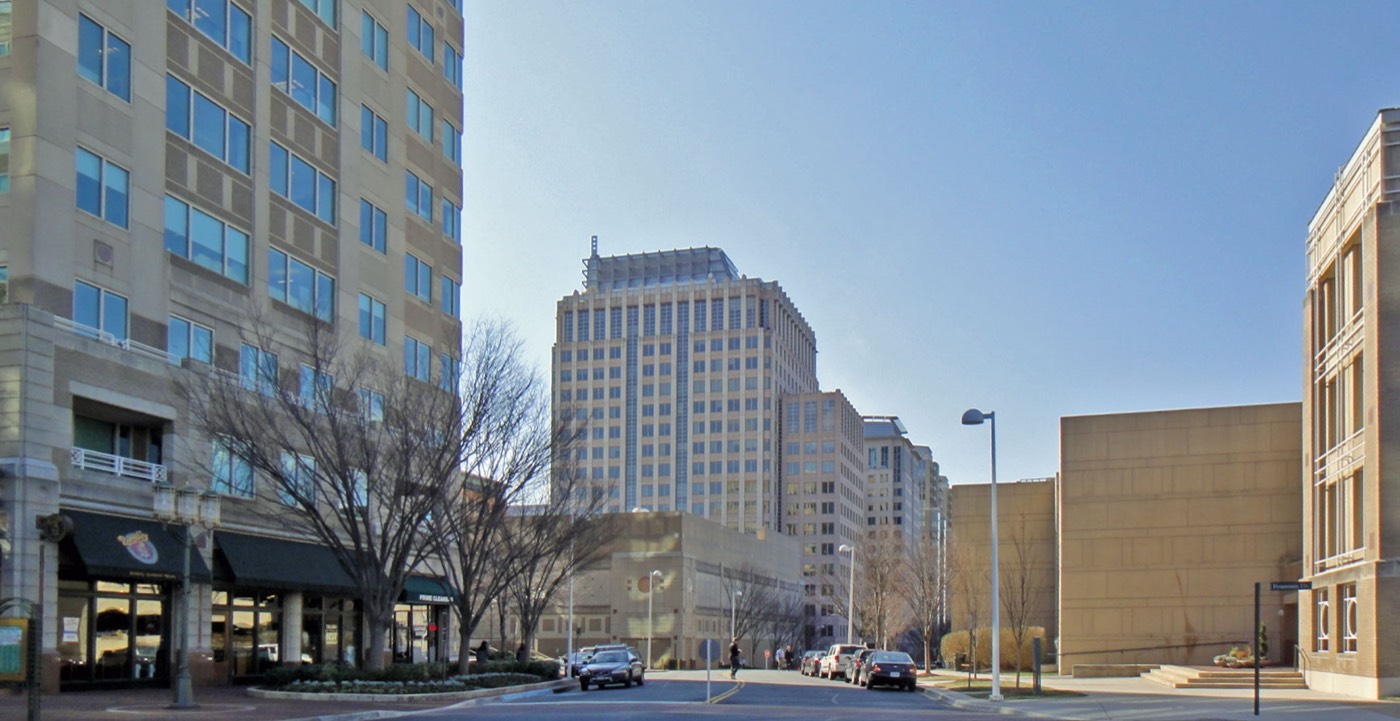
On a Saturday morning at Reston Town Center, the plaza fills with a particular kind of crowd: software engineers nursing pour-over coffees, parents steering strollers between the fountain and the bookshop, and a steady current of conversation that slides between English, Telugu, Tamil, and Hindi without anyone noticing the switch. The Indians in Reston, Virginia did not arrive to build a Little India. They came for the jobs along the Dulles corridor, stayed for the schools, and quietly made one of America’s first planned towns into one of its most Indian.
The Place
Reston sits in western Fairfax County, roughly twenty miles from Washington, a stretch of lakes, wooded paths, and clustered village centres that was farmland until the 1960s. It is unincorporated, which means it has no mayor and no city hall, just a founding idea that has outlasted its founder.
That idea was density with greenery, work near home, and neighbours of every background living side by side. Today the Silver Line runs straight through it, the office towers of Leidos and Google look down on the Town Center, and the median household income sits comfortably in six figures.
For an Indian family weighing Northern Virginia, Reston offers a specific bargain: a walkable downtown, an International Baccalaureate high school, and a commute measured in Metro stops rather than highway misery.
How It Became Indian
A town built on an idea, then on contracts
Robert E. Simon launched Reston on 10 April 1964, his fiftieth birthday, using money from his family’s sale of Carnegie Hall to buy roughly seven square miles of Fairfax County. He named it for his initials, R.E.S., and insisted from the start that it be open to people of every race, income, and age. It was, by most accounts, the first racially integrated community in Virginia.
Simon’s vision of seven villages around man-made lakes was ahead of its market. Sales lagged, Gulf Oil took control in 1967, and for two decades Reston grew slowly as a leafy bedroom community. What changed everything was not housing but employment.
Through the 1980s and 1990s, the land along the Dulles Toll Road filled with technology firms and federal contractors. The corridor from Tysons west toward Dulles airport became one of the densest concentrations of IT and government-services work in the country, and Reston sat in its heart.
The H-1B generation
The arrival of large numbers of Indians tracked that corridor almost exactly. As American firms hired engineers and consultants on H-1B visas through the 1990s and 2000s, Reston and its neighbours became natural landing places. The work was here, the offices were here, and the apartments around Lake Anne and the Town Center were close enough to walk.
Many of those first arrivals were single men in their twenties, sharing flats and saving aggressively. As they married, brought spouses over, and had children, the calculus shifted from rent to schools, and from a temporary posting to a permanent home.
This is the quiet engine behind Reston’s Indian growth. It was not a single wave but a rolling one, renewed every year by the next cohort of arrivals filling the next set of contracts at the next firm down the toll road.
The pattern was self-reinforcing. A new engineer arriving from Hyderabad in 2005 already had a cousin in a Wiehle Avenue condo, a temple a short drive away, and a grocery aisle that carried the right lentils. Each settled family lowered the cost of arriving for the next, and the corridor’s reputation travelled back to Indian campuses long before the workers did.
From renters to homeowners
Reston today counts roughly 11 percent of its residents as Asian, a share above the Virginia average, and Indians make up the largest single group within that figure across Northern Virginia. The community is not concentrated in one tower or one street. It is spread through the townhouse clusters of North Point, the condominiums near Wiehle Avenue, and the single-family neighbourhoods feeding South Lakes High School.
That dispersal is itself a kind of arrival. The families who once shared apartments now own homes, sit on homeowner-association boards, coach youth cricket and soccer, and send their children through the same school pyramid year after year.
It also marks Reston as distinct from its neighbours. Where Herndon to the west has older Indian commercial strips and Ashburn and Sterling in Loudoun County have absorbed the newest, fastest growth, Reston occupies a middle ground: established, walkable, and built around its Town Center rather than a strip mall.
The Landmarks
Reston Town Center, 11900 Market Street. The open-air heart of Reston, with its fountain, ice rink, and grid of restaurants and offices, opened its first phase in 1990 and has become the default gathering place for Indian families on weekends. It is where engagement dinners spill onto the plaza and where a new wave of Indian restaurants has opened to meet the demand.
Masti, Reston Town Center. A modern Indian restaurant and bar that arrived in the Town Center itself, Masti reflects how the cuisine has moved from suburban strip malls into the centre of Reston’s social life. Craft cocktails and regional plates sit a short walk from the offices where many of its diners work.
Pista House, Hunters Woods Plaza, Reston. Built on Hyderabadi cooking, Pista House is known across the metro for its dum biryani, a dish with deep roots among the Telugu families who have settled here in large numbers. On a Friday evening the takeaway queue is a roll call of the neighbourhood.
South Lakes High School, 11400 South Lakes Drive. The anchor of Reston’s most prized school pyramid, South Lakes offers the full International Baccalaureate Diploma Programme, one of relatively few schools in Northern Virginia to do so. For Indian parents who weigh academics above almost everything, the IB track is a decisive draw.
Durga Temple, 8400 Durga Place, Fairfax Station. A short drive south, Durga Temple was the first temple dedicated to the goddess Durga built in the United States, and it serves as a spiritual anchor for Hindu families across western Fairfax, Reston included. Major festivals here draw worshippers from the whole corridor.
Rajdhani Mandir, 4525 Pleasant Valley Road, Chantilly. West of Reston, Rajdhani Mandir is one of the largest Hindu temples in the region and a regular destination for Reston families marking weddings, pujas, and the festival calendar from Navratri to Diwali.
Wiehle-Reston East Metro Station. When the Silver Line reached Reston in 2014, it changed the daily geometry of the community, linking the Dulles corridor’s offices to downtown Washington by rail. For Indian professionals it turned a car-bound suburb into a transit town and reinforced Reston’s pull over its highway-only neighbours.
Where They Came From
Reston’s Indian community leans heavily toward the south of the subcontinent. Telugu speakers from Andhra Pradesh and Telangana, and Tamil families from Tamil Nadu, form a large share, a pattern common across the Dulles tech corridor where IT recruitment drew disproportionately from Hyderabad, Chennai, and Bengaluru.
That southern weight shows up on the plate. The prominence of Hyderabadi biryani and South Indian breakfast staples in local restaurants is no accident; it follows the people. North Indian and Gujarati families are here too, but the centre of gravity tilts south.
The common thread is profession rather than region. Whether from Hyderabad or Pune, most came through the same door: a degree in engineering or computer science, a job at a contractor or a tech firm, and a visa tied to the work that built this corridor.
Reston Today
Reston in 2026 is no longer the experimental new town of Simon’s blueprints, nor the sleepy bedroom community of the 1970s. It is a maturing transit suburb where the children of H-1B arrivals are now graduating from South Lakes, heading to university, and in some cases circling back to work along the same corridor their parents did.
The Indian presence has become structural rather than novel. It is visible in the grocery aisles stocked with curry leaves and toor dal, in the temple parking lots full on festival weekends, in the cricket games on Reston’s fields, and in the new restaurants betting that the Town Center crowd wants regional Indian food, not a generic buffet.
What Reston is not is a self-contained enclave. Its Indian residents move easily into the surrounding fabric of Indians in Herndon next door, the older and larger community of Indians in Fairfax, and the booming newer suburbs of Indians in Sterling and Indians in Ashburn out in Loudoun, and the families gathering near the temples of Indians in Chantilly. Reston is one node in a corridor that stretches the length of the Dulles toll road, distinct in its walkability and its planned-town bones but bound tightly to its neighbours.
For a family deciding where in this corridor to land, Reston still makes its old promise, only now with a southern Indian accent: work nearby, good schools, lakes and trails, and neighbours who will recognise the smell of a tempering pan from down the hall. According to the town’s own history, that was always the point.
Frequently Asked Questions
How large is the Indian community in Reston, Virginia?
Reston counts roughly 11 percent of its residents as Asian, a share above the Virginia average, and Indians are the largest single group within that figure across Northern Virginia. The Indians in Reston, Virginia are spread through the town’s villages rather than concentrated in one enclave.
Why did so many Indians settle in Reston?
The main draw was work. Reston sits in the Dulles Technology Corridor, one of the densest concentrations of IT and government-contracting jobs in the country, and waves of engineers and consultants on H-1B visas settled here from the 1990s onward, then stayed for the schools.
Which Indian regions are most represented in Reston?
The community leans southern. Telugu families from Andhra Pradesh and Telangana and Tamil families from Tamil Nadu form a large share, mirroring the IT recruitment that drew heavily from Hyderabad, Chennai, and Bengaluru, though North Indian and Gujarati families are present too.
Where do Indian families in Reston worship?
Many drive to Durga Temple in Fairfax Station, the first Durga temple built in the United States, or to Rajdhani Mandir in nearby Chantilly. Both serve Hindu families across western Fairfax County, including the Indians in Reston, Virginia.
What schools draw Indian families to Reston?
The South Lakes High School pyramid is the major draw. South Lakes offers the full International Baccalaureate Diploma Programme, one of relatively few Northern Virginia schools to do so, and feeds from Langston Hughes Middle School, which runs the IB Middle Years Programme.
How is Reston different from Herndon, Ashburn, or Sterling?
Reston is an older planned community built around the walkable Reston Town Center and served directly by the Silver Line Metro, where its neighbours grew up around highways and strip malls. Herndon has the older Indian commercial strips, while Ashburn and Sterling in Loudoun County have seen the fastest recent growth.
If your family’s story passed through Reston, or any of the places Indians have made home in America, Atlas of Home can trace that journey. From Hyderabad and Chennai to the lakes and offices of the Dulles corridor, to wherever you are now.