
On a Sunday afternoon at four o’clock, the Mass at St. Leo’s on Myrtle Avenue is said in Creole. Outside, along Springfield Avenue and Union Avenue, the bakeries have been selling pâté since seven in the morning. The Haitians in Irvington, New Jersey have built the largest Haitian community in the state inside a township of under three square miles, and they did it without a Little Haiti, without a welcome arch, without much notice from anyone outside Essex County.
The Place
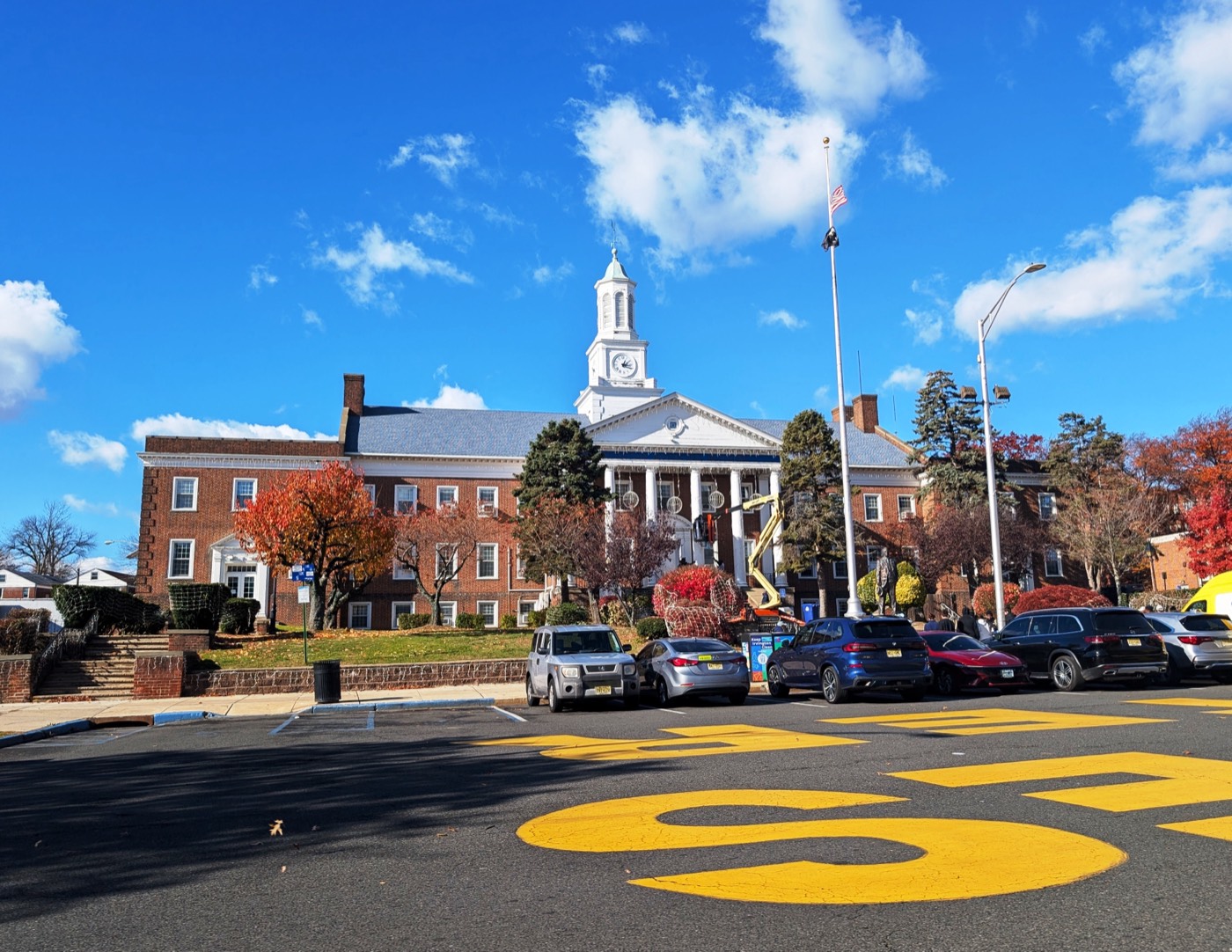
Irvington is a township of 2.92 square miles wedged between Newark to the east and Maplewood to the west, with Hillside and Union Township along its southern edge. The Elizabeth River runs through it, passing Civic Square and the municipal building at its centre.
It is dense, walkable and almost entirely built out. The Garden State Parkway cuts through the middle at exits 143 and 144, and the Irvington Bus Terminal is one of the busiest NJ Transit hubs in Essex County, with express service into Manhattan.
This is not an affluent suburb. Irvington is a working town that lost its industry and never fully replaced it, and much of what has kept its main streets occupied over the last thirty years has been immigrant money.
How It Became Haitian
Camptown, and What Came After
The place was called Camptown until around 1850, when residents grew tired of the association with Stephen Foster’s “Camptown Races” and renamed the village for the author Washington Irving. It was incorporated as an independent village on 27 March 1874.
The electric trolley arrived in 1890 and turned a farming settlement into a commuter suburb for men working in Newark factories. From 1887 to 1965, Olympic Park spread across forty acres straddling the Irvington and Maplewood line, drawing crowds from across north Jersey. Its carousel eventually went to Walt Disney World in Florida.
The township filled up in ethnic layers. Germans dominated the East Ward from the 1880s through the 1950s. A Jewish community that barely existed in 1900 numbered over nine thousand by the 1970s. Polish Americans became the largest single group by that same decade.
Then it emptied. Until 1965 Irvington was almost exclusively white. By 1980 it was close to forty per cent Black, and by 1990 it was seventy per cent. The manufacturing jobs left, the crack epidemic of the 1980s hit hard, and between 2000 and 2010 the population fell by 11.2 per cent, from 60,695 to 53,926.
The First Arrivals
Haitians began arriving in the United States in real numbers only in the 1960s. Fewer than 4,500 came in the whole of the 1950s. Around 34,500 came in the decade that followed, most of them fleeing the dictatorship of François Duvalier and then his son Jean-Claude.
The first Haitians in Essex County came to Newark and East Orange, drawn by the same thing that drew everyone else: hospital work, factory work, and rent that a new arrival could actually pay. Irvington was the next street over, and by the 1980s it was cheaper than either.
That is the whole mechanism, and it is not romantic. As Irvington’s older residents left, a two-family house on Union Avenue or Stuyvesant Avenue could be bought by a nurse’s aide and her husband, with the upstairs floor rented to a cousin still saving for a deposit. The Haitian settlement of Irvington was assembled one two-family house at a time.
The Coup Years and the Great Wave
The 1991 coup that removed Jean-Bertrand Aristide seven months into his presidency pushed a new wave out to sea and into the American courts. Through the 1990s, and again after the earthquake of January 2010 and the Temporary Protected Status designation that followed it, Essex County kept absorbing people.
Charnette Frederic’s family arrived in the middle of that. She grew up in Cazale, a village roughly forty-five miles north of Port-au-Prince known for the Polish soldiers who settled there after the revolution. She came to the United States at seventeen and joined her father in Irvington in 1996, along with her mother and twin brothers.
Her route through is a good map of the community’s own. Essex County College for an associate degree in biology, then Rutgers for a bachelor’s in biology and chemistry, then Seton Hall for a master’s in health care administration, and after that a doctorate in biochemistry, all of it around a full-time job.
Building Institutions
By the 2000s the churches had multiplied. St. Leo Parish on Myrtle Avenue is one of six parishes in the Archdiocese of Newark that celebrate Mass in Haitian Creole, alongside Our Lady of Mount Carmel in Orange, Holy Spirit in East Orange, Holy Rosary in Elizabeth, St. Peter Claver in Montclair and the Jersey City parishes. Roughly seventy-two per cent of New Jersey’s Haitian population lives inside the archdiocese.
But Irvington’s Haitian religious life is mostly Protestant and mostly small. First Haitian Baptist Church on Orange Avenue, a Haitian Pentecostal congregation on Harrison Place, an Assembly of Christ church on Clinton Avenue, a Haitian Seventh-day Adventist youth congregation: storefronts and converted houses rather than cathedrals, each with its own choir and its own Wednesday prayer night.
In 2012 the community produced something New Jersey had never had. Charnette Frederic was elected to Irvington’s West Ward council seat on 8 May 2012 and sworn in that July, becoming the first Haitian American woman elected to office in the state. She won an at-large seat in May 2014 and later served as second vice president of the council. She has spent much of the job doing voter education in Creole, and telling people, in her own phrase, that it is all right to speak Creole.
The Landmarks
St. Leo Parish, 103 Myrtle Avenue. The Creole Mass is at four o’clock on Sunday afternoon, deliberately late so that people finishing weekend shifts can still make it. There is a Haitian charismatic prayer service on Tuesday nights. The parish has had to run its life in three languages at once, English, Spanish and Creole, for over two decades.
First Haitian Baptist Church, 109 Orange Avenue. One of the oldest Haitian Protestant congregations in the township and a fixture of the Orange Avenue corridor. Baptist churches did much of the practical settlement work in Irvington that no agency was doing: housing leads, job leads, translation, funerals.
Haitian Mini Market, 402 Union Avenue. Between Paine Avenue and Chancellor Avenue, this is where you go for epis, pikliz, cassava bread, Barbancourt and the frozen goat that a Saturday recipe requires. It is a grocery, a noticeboard and an informal remittance desk in the way that immigrant corner shops always are.
Marcky’s Restaurant, 527 Stuyvesant Avenue. Counter service, styrofoam containers, griot with fried plantain and pikliz, poul nan sòs, legim, rice and djon djon on the right day. The portions assume you have been on your feet since six in the morning, which most of the customers have.
Cynthia’s Caribbean Bakery, 1191 Springfield Avenue. Springfield Avenue is Irvington’s commercial spine, running west out of Newark, and this stretch of it is where the Haitian and wider Caribbean businesses cluster. The bakery works the same hours as the people it feeds.
Au Bon Pâté Bakery, 6 Ball Street. The name says exactly what it sells. Haitian pâté, the flaky pastry parcel filled with beef, chicken, cod or herring, is the breakfast that holds a shift together, and this is one of the places in Essex County that people drive to for it.
Civic Square, 1 Civic Square. Every 18 May, the anniversary of the creation of the Haitian flag in 1803, the bicolour goes up outside the municipal building and hundreds of people gather. Community health groups set up tables with material in Creole. It is the one day a year the township’s Haitian presence is entirely public.
Where They Came From
Irvington’s Haitians came overwhelmingly from the west of Haiti: Port-au-Prince and the towns of the Ouest department, with the Artibonite valley and the villages of the Cabaret area, Cazale among them, well represented.
This is not accidental. Chain migration runs along the lines that the first person laid down, and Essex County’s early arrivals were urban and educated, people with the paperwork and the connections to leave through an airport rather than a beach. They sponsored siblings, who sponsored cousins, who rented from each other.
The result is a community with a heavy Port-au-Prince accent in its Creole and a strong provincial memory underneath it. People will tell you they are from the capital and then, a sentence later, name the commune their mother was born in.
The same pattern built the Haitian community in Mattapan, Boston and, on a much larger scale and with a different origin mix, Little Haiti in Miami. Irvington’s version is the quietest of the three.
Irvington Today
The township counted 61,176 residents in the 2020 census, up 13.4 per cent on 2010, one of the few Essex County municipalities to reverse a long decline. Around 78.8 per cent of residents are Black and 14.7 per cent Hispanic or Latino. Haitians are the largest single national-origin group inside that Black majority, roughly six thousand people by the most commonly cited count, which makes Irvington the largest Haitian settlement in New Jersey ahead of Orange, East Orange and Newark.
Haitian Creole is spoken at home in nearly eight thousand households across the Irvington statistical area, about eight per cent of all households. New Jersey has the fourth largest Haitian population of any state, after Florida, New York and Massachusetts.
An enormous share of that population works in care. Nurses, licensed practical nurses, certified nursing assistants, home health aides: more than forty per cent of CNAs in New Jersey are foreign born, and Haitians are a disproportionate part of that figure. When Temporary Protected Status for Haitians was allowed to lapse in July, the anxiety in Irvington was not abstract. It was about mortgages, about work authorisation letters, about who was going to show up for the Tuesday shift.
Irvington is not a showcase. The commercial strips are patchy, the schools are underfunded and the tax base is thin. What it has is an immigrant community that took a township other people were leaving and made it work, which is what Colombians did in Elizabeth and what Dominicans did in Paterson. Ten miles west, in the Essex County towns of West Orange, Livingston and Tenafly up in Bergen, other communities did the same thing with more money and better press. The work was not different.
Frequently Asked Questions
How many Haitians live in Irvington, New Jersey?
The most commonly cited figure is around 6,090 Haitian residents, which makes Irvington the largest Haitian community in New Jersey, ahead of Orange and East Orange. Haitians are estimated at roughly fourteen per cent of the township’s population, though the true figure including the second generation is likely higher.
Why did Haitians settle in Irvington rather than Newark?
Haitians first came to Newark and East Orange for hospital and factory work in the 1970s and 1980s. Irvington was adjacent, and as its older white and then middle-class Black residents left, its two-family houses became the cheapest route to ownership in the county. The Haitians in Irvington bought where they could afford to buy.
Where can you eat Haitian food in Irvington?
Marcky’s Restaurant at 527 Stuyvesant Avenue is a long-standing counter-service spot for griot, legim and poul nan sòs. For pâté and Haitian bakery goods, try Au Bon Pâté Bakery on Ball Street and Cynthia’s Caribbean Bakery at 1191 Springfield Avenue. Haitian Mini Market at 402 Union Avenue stocks the groceries.
Is Mass said in Haitian Creole in Irvington?
Yes. St. Leo Parish at 103 Myrtle Avenue celebrates a Creole Mass on Sunday afternoons and hosts a Haitian charismatic prayer service on Tuesday evenings. It is one of six parishes in the Archdiocese of Newark with a Creole liturgy.
Who was the first Haitian American woman elected to office in New Jersey?
Charnette Frederic, who won Irvington’s West Ward council seat in May 2012 and was sworn in that July. Born in Cazale and resident in Irvington since 1996, she later won an at-large seat and served as second vice president of the township council.
When is Haitian Flag Day celebrated in Irvington?
On 18 May each year, the anniversary of the flag’s creation in 1803. The township marks it at Civic Square, with the bicolour raised outside the municipal building and community organisations running outreach tables in Creole for the Haitians in Irvington and the surrounding Essex County towns.
If your family’s story passed through Irvington, or any of the places Haitians have made home in America, Atlas of Home can trace that journey. From a village in the Artibonite or a street in Port-au-Prince to a two-family house on Union Avenue, to wherever you are now.