
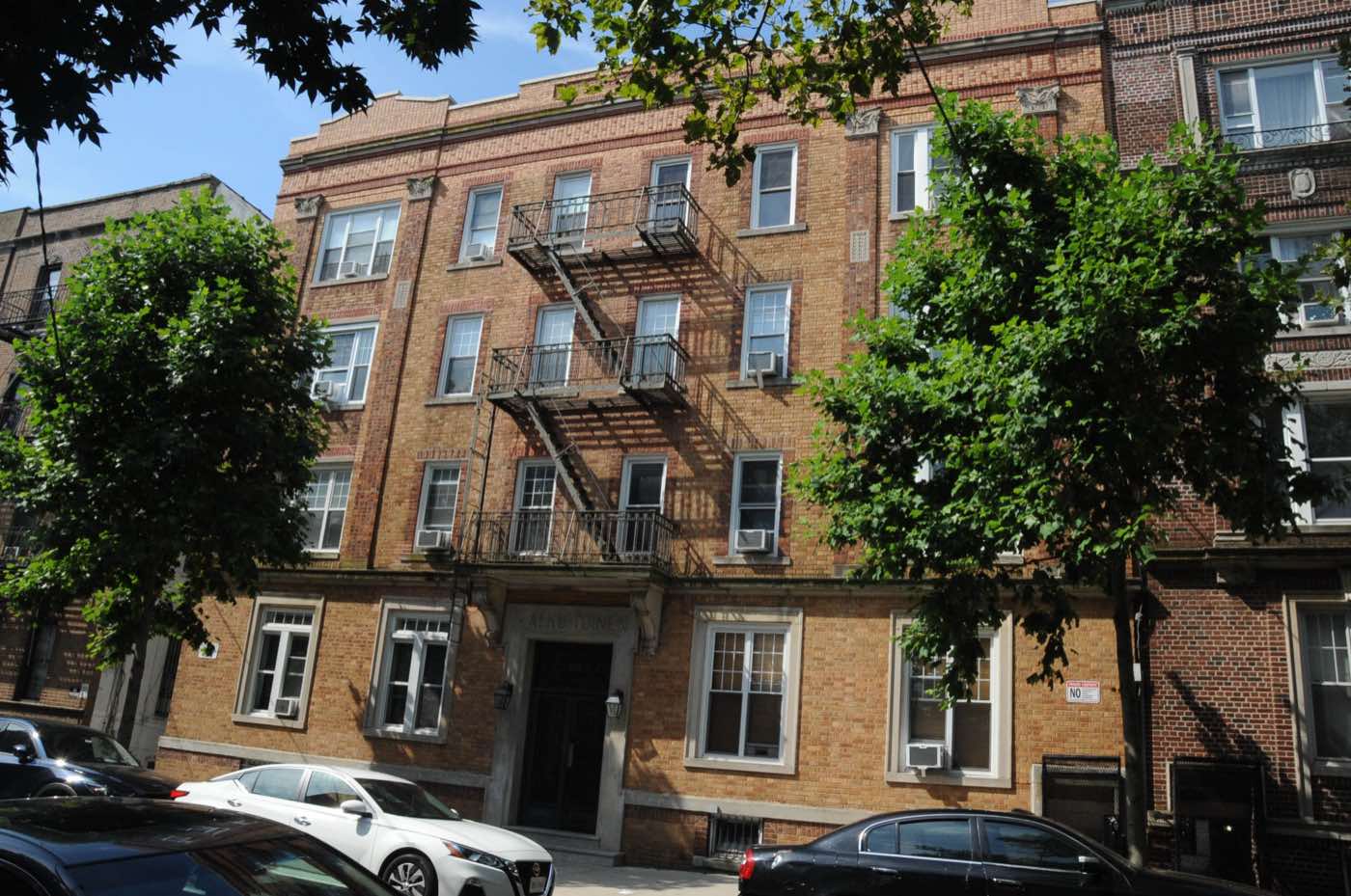
On a quiet block of 43rd Street between Eighth and Ninth Avenues, two four-story brick buildings stand shoulder to shoulder, their carved stone entrances reading Alku and Alku Toinen. The words are Finnish for “Beginning” and “Second Beginning.” A small bronze plaque mounted beside one doorway makes a startling claim for so modest a street: that here, in 1916, sixteen immigrant families invented a form of American home ownership that did not yet have a name. Walk the surrounding blocks and you will find more of these plaques, twenty-one in all, bolted to handsome brick co-ops that most passersby take for ordinary apartment houses.
This was Finntown, and for half a century it was the largest Finnish settlement in New York. The carpenters who built these blocks have been gone for two generations. The buildings they raised are still occupied, still cooperatively owned, still standing exactly as planned.
Sunset Park: The Place
Sunset Park sits on the southwestern edge of Brooklyn, a grid of brownstones and brick rowhouses climbing a low hill above the waterfront between Greenwood Cemetery and Bay Ridge. The neighborhood takes its name from the 24-acre park at its crest, where the view runs west across the harbor toward the Statue of Liberty. Today the D and N trains run beneath Fourth Avenue, and the R train along Fourth, connecting the area to lower Manhattan in twenty minutes. The housing is dense and durable: walk-up flats, row houses, and the purpose-built cooperative buildings that are the neighborhood’s quiet architectural signature.
How Sunset Park Became Finntown
Before the Finns
Before it was Finntown, the high ground above Brooklyn’s docks was farmland and quarry, slow to fill in compared with the wharves below it. Locals called the slope “Buck Hill.” The neighborhood was thinly built into the 1880s, a fringe of southwestern Brooklyn waiting for the streetcar lines and the el to reach it. When they did, the empty lots near Eighth Avenue became some of the cheapest building land within reach of the waterfront jobs, and that combination of open space and proximity to work is what drew the first Finns up the hill.
The Finns Arrive
Finnish emigration to America surged after a catastrophic crop failure and famine struck Finland in the late 1860s, and the largest share of those who left came from Ostrobothnia, the agricultural region along the country’s western coast. Many landed first in the mining and timber country of Michigan and the Pacific Northwest. Those who came to New York gravitated at first to Harlem, where Finnish maids, carpenters, and tailors clustered around 125th Street.
The shift to Brooklyn began in earnest around 1908, the year the Finnish Gloria Dei Evangelical Lutheran congregation opened on 44th Street between Seventh and Eighth Avenues. A church was the kind of anchor that turned a scattering of newcomers into a neighborhood. Word traveled back along the chain to Ostrobothnia and across town from Harlem: there was cheap land, dock work, and now a Finnish-speaking parish on the hill above the harbor. The men found work in the building trades and on the docks and merchant ships; the women, very often, went into service as housekeepers in Manhattan’s wealthy homes.
One of them, Anja Laurila, would spend years working in the household of John D. Rockefeller Jr. She and her husband Mauno later helped record the community’s memory, but their story was a common one: a Finnish woman keeping a rich family’s house by day, returning at night to a co-op flat among her own people.
Sunset Park at Its Peak
By the 1920s the Finnish presence in New York numbered in the thousands, clustered most densely on the blocks around Eighth Avenue just south of the park. Estimates of the peak vary widely depending on how broadly the count is drawn: the late 1920s co-ops alone are said to have housed roughly 10,000 Finns, while community memory and some accounts put the wider Finnish population of the area as high as 20,000 at its height. Whatever the exact figure, the streets around 40th and Eighth carried Finnish on shop signs and in conversation for decades.
The neighborhood’s masterstroke was cooperative housing. The idea, by one well-sourced account, was hatched over evening conversations at the Finnish Socialist Club’s storefront on Eighth Avenue. Rather than rent tenement flats, sixteen families pooled their money, formed the Finnish Home Building Association, and in 1916 broke ground on Alku and Alku Toinen at 816 to 826 43rd Street. Designed by architect Eric O. Holmgren in a restrained Arts and Crafts style, each apartment had five rooms with hot water, gas stoves, and bathrooms. A member paid a $500 share and a monthly charge of roughly $25 to $33, at a time when comparable rents in the area ran $75 to $85.
It worked, and it multiplied. The Finns applied the same model to commerce, opening a cooperative bakery at 43rd and Eighth Avenue, then a restaurant, a meat market, a grocery, a poolroom, and a mechanics’ garage, several of them strung along the same handful of Eighth Avenue blocks. By the mid-1920s the neighborhood held something like twenty-five Finnish housing cooperatives, the carpenters laying their own brick on evenings and weekends in what amounted to sweat-equity socialism.
The Change
The decline was set in motion from outside. In 1929 federal law cut Finnish immigration to fewer than 600 people a year, and the Great Depression arrived close behind, scattering families in search of work. The community had always been split between two temperaments, and that division now sapped its strength: the temperance societies on one side, the labor-left “Red Finns” of the Finnish Socialist Federation on the other, with churches, sports clubs, and rival halls multiplying along the fault line. After the Second World War, assimilation finished what immigration limits had begun. The American-born children married out, moved to the suburbs of Long Island, Connecticut, and New Jersey, and stopped speaking Finnish. A 1972 account found only about 1,500 Finnish Americans left in Sunset Park, many of them elderly women living alone.
The Landmarks of Finntown
Alku and Alku Toinen, 816 to 826 43rd Street. The twin co-ops are Finntown’s crown jewels and the reason the neighborhood appears in housing-history books. Built in 1916 by the Finnish Home Building Association, they are recognized as the first nonprofit cooperative apartment buildings in New York, and the plaque on the building claims they were the first in the nation. They were added to the National Register of Historic Places in 2019, and in 2021 the visiting President of Finland, Sauli Niinisto, made a point of touring them.
Imatra Hall, near 40th Street. The Imatra Society was founded in December 1890 by a building engineer named John A. Koski, the first Finnish workers’ association in America. It opened its own hall in 1908 and ran it dry: temperance rules barred drink from the premises. For generations the hall hosted dances, dinners, and an ambitious theater troupe that staged Finnish-language plays. Membership thinned over the decades, and the hall was sold in 1997, the closing bell for organized Finntown.
The cooperative bakery, 43rd Street and Eighth Avenue. This was the first business the co-op model spawned beyond housing, and a Library of Congress photographer documented its Finnish-born bakers and managers at work. The bakery anchored a small cooperative shopping district that put bread, meat, and groceries under collective ownership, with a 1922 federal report crediting the Finnish co-ops with revenues worth several million dollars in today’s money.
Gloria Dei Evangelical Lutheran Church, 44th Street. The 1908 opening of this Finnish Lutheran congregation is what tipped the migration toward Sunset Park. The church served as the spiritual anchor for the religious, temperance-minded wing of the community, the counterweight to the socialist halls a few blocks away.
Finnish Golgotha Congregational Church, 44th Street. Founded by Brooklyn Finns in 1912, it was one of several Finnish-language congregations that dotted the neighborhood. Like nearly all of them, it eventually outlived its flock: the building today houses the Brooklyn Baptist Church, a congregation drawn from the neighborhood’s newer arrivals.
Finlandia Street, 40th Street at the avenue. In the early 1990s, around the centennial of the Imatra Society, the city co-named a block of 40th Street as Finlandia Street, the first official marker of the community’s history. It later inspired the wider plaque project, twenty-one bronze markers identifying the surviving Finnish co-ops one building at a time.
Where the Sunset Park Finns Came From
The great majority traced back to Ostrobothnia, the flat farming region on Finland’s western coast that sent more emigrants to America than any other part of the country. The exodus began after the famine years of the late 1860s and continued for decades, pushed by scarce land and pulled by the promise of work abroad. Many Sunset Park families arrived by a two-step route, landing first in the Finnish mining and logging settlements of the upper Midwest and the Northwest before moving east to the city.
That same migration built Finnish communities across the continent, from the copper country of Michigan’s Upper Peninsula to the salmon canneries of the Oregon coast. The Sunset Park story belongs to a network that also produced the Finnish enclaves of Hancock, Michigan and Astoria, Oregon, all of them seeded by the same coastal Finnish stock and the same hunger for land and steady wages.
Sunset Park Today
The Finns are gone as a community, but Finntown is not exactly a ghost. The co-ops still stand, fully occupied and still run on the cooperative principles their builders wrote down, and a flat in Alku now sells for hundreds of thousands of dollars to buyers who may never learn what the carved word over the door means. The twenty-one plaques do that work instead, and the Finlandia Foundation’s New York chapter, marking its seventieth anniversary in 2024, keeps the Finnish school and the memory going.
The neighborhood around the old halls has changed hands more than once. By the 1990s the blocks along Eighth Avenue had become the heart of Brooklyn’s Chinatown, the Finnish bakeries replaced by dumpling shops and bubble-tea counters, while the western side of Sunset Park grew into one of the city’s largest Latino communities. It is a working-class immigrant neighborhood still, which is exactly what it was when the Finns climbed Buck Hill.
That continuity is the real monument. The Finns who poured the foundations on 43rd Street built for permanence and for one another, and a century later their bricks still shelter families who arrived from somewhere else with very little and stayed.
Frequently Asked Questions
Why did the Finns settle in Sunset Park?
Finnish immigrants came to Sunset Park for cheap building land near the Brooklyn waterfront jobs they worked as carpenters, dockhands, and merchant sailors. The 1908 opening of a Finnish Lutheran church on 44th Street anchored the community, and word spread through chain migration from Harlem and from Ostrobothnia in Finland. By the 1920s the Finns in Sunset Park were dense enough to fill whole blocks around Eighth Avenue.
Is Sunset Park still a Finnish neighborhood today?
No. The Finnish community largely dispersed to the suburbs after World War II as the American-born generation assimilated, and by the 1990s the area had become Brooklyn’s Chinatown alongside a large Latino population. The Finnish legacy survives in the co-op buildings, twenty-one commemorative plaques, the co-named Finlandia Street, and the active Finlandia Foundation New York chapter.
What are the most famous landmarks of Finntown?
The most celebrated are Alku and Alku Toinen at 816 to 826 43rd Street, recognized as the first nonprofit cooperative apartment buildings in New York and listed on the National Register of Historic Places. Other landmarks include Imatra Hall, the Finnish cooperative bakery on Eighth Avenue, and the former Gloria Dei and Golgotha churches.
Where did the Sunset Park Finns come from?
The great majority came from Ostrobothnia, the farming region on Finland’s western coast that sent the most emigrants to America after the famine years of the late 1860s. Many Finns in Sunset Park first settled in the mining and timber towns of Michigan or the Pacific Northwest before moving east to Brooklyn for waterfront and building-trade work.
When did the Finns first arrive in Sunset Park?
Finns began moving from Harlem to Sunset Park around 1908, when a Finnish Lutheran congregation opened on 44th Street. The community grew quickly over the next two decades and built its first cooperative apartments, Alku and Alku Toinen, in 1916. The neighborhood remained a Finnish stronghold from the early 1900s into the 1950s.
If your family’s story passed through the brick blocks of Sunset Park, or any of the Finnish settlements that immigrants carried across America, their journey is worth tracing. You can follow the same threads that connect Brooklyn to the harbor towns of Finland and to neighbors like Brooklyn’s own Norwegians in Bay Ridge just down the shore.