
By the time the morning fog lifted off the LA Harbor, the docks were already moving. Purse seiners with names half-painted in Croatian. Crews shouting in the lilting cadence of the Adriatic. Lunch pails packed with sardines, brown bread, and a thumb of homemade prosciutto. From the Fish Harbor wharves to the steam-fogged kill floors of the canneries, this small spit of land at the bottom of Los Angeles ran on Dalmatian hands.
They called it Pedro. Not San Pedro. Just Pedro. And for most of the twentieth century, if you were Croatian and you fished, this was where you came.
San Pedro, The Place
San Pedro sits at the southern tip of the City of Los Angeles, about 25 miles down the 110 from downtown, wrapped around the western edge of the largest container port in the western hemisphere. The Vincent Thomas Bridge arcs over the main channel to Terminal Island. Behind it, narrow streets climb the bluff above the harbor, lined with bungalows, stucco duplexes, and the occasional Spanish Revival house with a fig tree out front.
It is technically Los Angeles. It does not feel it. People here still call themselves Pedro before they call themselves Angelenos, and that distinction has always been part of the story.
How San Pedro Became Croatian
Before the Croatians
San Pedro Bay was Tongva country long before the Spanish came. The harbor took its name in 1602 from Sebastian Vizcaino, who anchored on the feast day of Saint Peter of Alexandria. For more than two centuries afterward, it stayed a dusty stop on the cattle road from the missions, used mostly to load hides for the New England traders.
The town itself was incorporated in 1888 as a separate city, then absorbed into Los Angeles in 1909 so the railroads could push a harbor through. By then a few Portuguese, Italian, and Norwegian families had already settled along the waterfront. The harbor was still being dredged. The fish were everywhere.
The Croatians Arrive
The first Dalmatians turned up in the 1880s, ones and twos at first, mostly young men from the islands off the central Adriatic coast. They came because the wine country at home was collapsing. A vine louse called phylloxera had walked through Dalmatia in the late nineteenth century and stripped the vineyards bare, and Dalmatia had been the poorest province of the Austro-Hungarian Empire to begin with.
What these men had instead was the sea. Boys on Brač and Vis and Hvar learned to read wind off a sail before they learned to read a book. When the news travelled back along the chain that California had a coast like home and a port hungry for fishermen, they came in numbers.
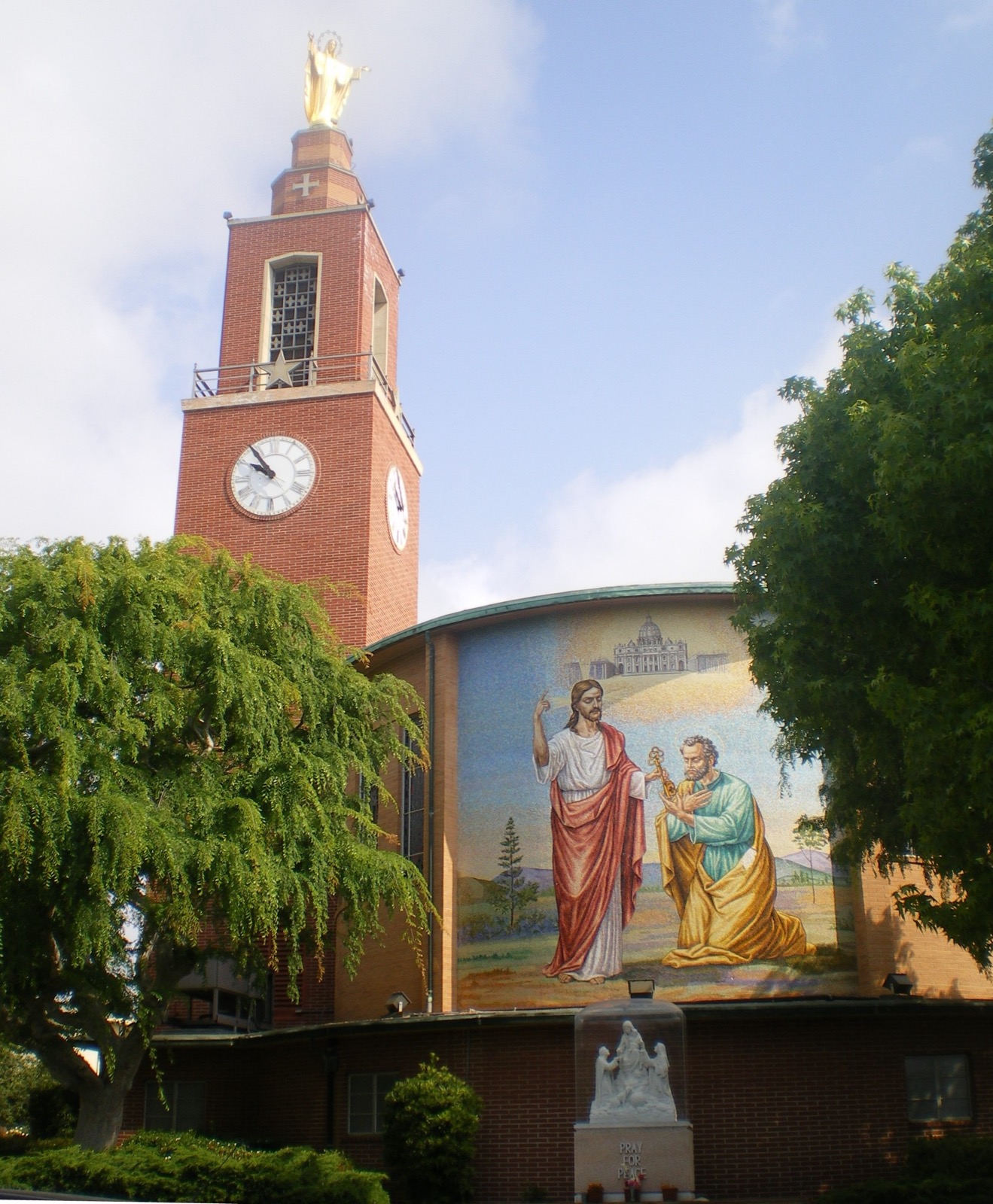
By 1900 there were enough Croatians in San Pedro to fill a parish. Mary Star of the Sea, founded as a Catholic mission for the harbor in 1889, became the unofficial Croatian church almost from the start. The Italians shared the pews. Everybody fished.
Then came the boats. In 1917, five Croatian immigrants put their savings together at Fish Harbor and founded the French Sardine Company of California. The names on the founding papers read like an Adriatic phone book. Martin J. Bogdanović, Ivo and James Mirković, Joseph P. Mardešić, and Nick Vilicich.
Bogdanović, born in Komiža on the island of Vis, had figured out how to pack a hold with crushed ice so a boat could stay out longer and bring fish home alive. In 1942 the company renamed its tuna product Star-Kist. A Croatian fisherman’s idea ended up on every grocery shelf in the United States.
San Pedro at Its Peak
By 1930, 40 percent of all the tuna landed in California came across the docks at San Pedro. By 1939 the harbor employed more than 6,000 fishermen and cannery workers, with a payroll that approached seven million dollars a year. Almost every third resident of the town traced back to the Dalmatian islands of Brač, Vis, Hvar, or Korčula.
Daily life folded around the harbor. The men went out for two weeks, three weeks, sometimes months at a time chasing albacore down the Pacific coast as far as Peru. The women worked the cannery lines on Terminal Island and Fish Harbor, gutting, packing, sealing. Children came home from Mary Star of the Sea school speaking English, then sat at their grandmother’s table and switched into the soft “ča” dialect of the islands.
The Dalmatian-American Club opened on Palos Verdes Street in 1926, founded by twenty-five immigrants who wanted a hall of their own. It was first called the Jugoslav Club. The Croatian American Club followed three decades later on what is now Croatian Place, the block of Ninth Street that the city renamed by ordinance in 2003. On any given Sunday, the kitchens of both clubs poured out brodet, octopus salad, stuffed cabbage rolls, soparnik, and lamb on the spit.
Klapa singing carried out into the parking lots. Five or six men, no instruments, voices stacked in tight harmony, the sound a transplant from coves on the Dalmatian coast where this music had been sung at funerals and weddings for hundreds of years. In Pedro it was sung after the fish dinner, the wine half drunk, the children asleep on coats in the back room.
The Change
The first crack was the sardines. They had been the engine of the wartime cannery boom, and by the late 1950s they were simply gone, fished out and warmed out of the Pacific. Mackerel followed. Tuna held on longest, but by the 1970s the canneries were quietly relocating their packing lines to American Samoa, where labour was cheaper and the regulations lighter.
Star-Kist closed its Terminal Island plant in 1984. Chicken of the Sea closed the last operating tuna cannery in the continental United States in 2001, also at San Pedro. The fishing fleet that had powered an entire neighbourhood shrank from hundreds of boats to a few dozen.
Some Croatian families followed the work to American Samoa. Some retired up the hill to Rancho Palos Verdes or sideways into Lomita and Torrance. A handful kept their boats. Many sold them. The Dalmatian community did not vanish. It thinned, dispersed, and aged.
The Landmarks of Croatian San Pedro
Mary Star of the Sea Catholic Church, 870 W 8th Street. Founded in 1889 as a mission for harbor families, known locally as the Fisherman’s Parish, this is the spiritual centre of Croatian San Pedro. The current church was built in 1958 with a bronze statue of Mary on the roof, raised arms over the port below. Mass is still offered every Sunday in Croatian at 1:30 in the afternoon. Mary Star of the Sea High School opened in 1951 next door and continues today.
The Dalmatian-American Club, 1639 South Palos Verdes Street. Founded May 6, 1926 by twenty-five Dalmatian immigrants as the Jugoslav Club. The current hall opened in 1935. The name changed to Yugoslav-American Club in 1944 and finally to Dalmatian-American Club in 1992. The kitchen still serves Sunday lunch in the old way. In 2026 the club celebrated its hundredth anniversary.
The Croatian American Club, 631 West 9th Street. The other half of the community’s social life, sitting on the block of Ninth Street that the City of Los Angeles officially named Croatian Place in 2003. Wednesday lunches between late September and June still draw a line down the sidewalk. The hall hosts the annual Croatian Independence Day celebration every May.
Croatian Place, 9th Street between Grand and Gaffey. A short ceremonial stretch of street that holds the Croatian American Club, a Croatian travel agency, and the historical memory of a working-class neighbourhood that for a century read as Adriatic on the inside. The street signs are still up.
The old Star-Kist cannery, Terminal Island. The largest tuna cannery in the world when it opened in 1952, designed by John K. Minasian, who would later design the Space Needle. Idle for forty years, threatened with demolition in 2022, and still standing as of this writing. Walk to the end of Fish Harbor and you can see it across the channel, faded, enormous, the white whale of the Croatian tuna century.
Bogdanovich Recreation Center, 1920 Cumbre Drive. Named for Martin J. Bogdanović and his son Joseph, with a bronze bust of the elder Bogdanović at the entrance. A park on the bluff over the harbor where Croatian San Pedro buries its dead and raises its grandchildren in roughly equal measure.
Ante’s, Ante Perkov Way, formerly 729 South Ante Perkov Way. A ghost landmark. Ante Perkov, born in Tribunj on the Dalmatian mainland in 1921, arrived in San Pedro in 1941 and opened his restaurant in 1951. The City of Los Angeles renamed that stretch of Palos Verdes Street in his honour in the 1990s. Ante died in 2001, his son Tony in 2012, and the restaurant closed soon after. The street sign remains.
Where the San Pedro Croatians Came From
The Croatian San Pedro story is, almost without exception, a Dalmatian story. The pull was strongest from the central Adriatic islands. Brač produced the largest single contingent, with Sutivan, Bol, and the stone-quarry villages on the north coast sending generations of fishermen. Vis, and especially the fishing town of Komiža, sent the founding partners of Star-Kist. Hvar, Korčula, Lastovo, Šolta, and the long Pelješac peninsula each sent their own clusters.
The coastal mainland filled in the rest. Families came from Split, Trogir, Šibenik, Zadar, and the smaller villages between. Some, like Ante Perkov, came from Tribunj. They did not come because California was glamorous. They came because phylloxera had finished the vines, the Austro-Hungarian state had finished off what was left, and somebody from the village had written home from Pedro to say there was a boat hiring on Monday.
San Pedro Today
The harbour still runs. Container ships replace the tuna seiners, and the lights at the Port of Los Angeles burn around the clock. The fishing fleet that defined Croatian San Pedro has dwindled to a handful of working boats, mostly squid and rockfish now, mostly run by sons and grandsons rather than founders. Mary Star of the Sea still offers Croatian Mass on Sunday afternoons. The Dalmatian-American Club marked its centennial in 2026.
Estimates of San Pedro residents with Croatian ancestry sit around 30,000 out of a population of about 80,000. Many of the third and fourth generation have moved up to Rancho Palos Verdes, out to Long Beach, into Lomita and Torrance. They drive back for the Croatian Independence Day celebration in May. They drive back for a funeral at Mary Star. They drive back when their mother makes brodet and tells them to come for Sunday lunch.
In 2026 the Los Angeles County Board of Supervisors proclaimed May as Croatian American Heritage Month, and Los Angeles ran its inaugural Croatian Culture Week. Heritage in San Pedro is no longer a daily life. It has become a calendar event, a hall to host, a Mass to attend, a song the grandchildren still half remember. That is not nothing. In a city as wide and as forgetful as Los Angeles, that is most of what remains anywhere.
Frequently Asked Questions
Why did Croatians settle in San Pedro?
Croatians settled in San Pedro because the fishing economy of the Port of Los Angeles, opening up in the 1880s and 1890s, gave Dalmatian fishermen a place to use the only trade most of them knew. The Mediterranean climate, the abundant Pacific fishery, and the chance to send for cousins and brothers along the chain pulled people from the islands of Brač, Vis, Hvar, and Korčula across two oceans to a harbor that felt like home.
Are Croatians still in San Pedro today?
Yes. Around 30,000 of San Pedro’s roughly 80,000 residents are estimated to have Croatian ancestry, and the community remains one of the largest concentrations of Croatian-Americans in the western United States. Many families have moved up the hill into Rancho Palos Verdes, Lomita, and Torrance, but Mary Star of the Sea, the Croatian American Club, and the Dalmatian-American Club still anchor the community.
What are the most famous Croatian landmarks in San Pedro?
The most famous Croatian landmarks in San Pedro are Mary Star of the Sea Catholic Church on West 8th Street, the Dalmatian-American Club on South Palos Verdes Street, the Croatian American Club on Croatian Place at 9th Street, the Bogdanovich Recreation Center on the bluff, and the old Star-Kist cannery on Terminal Island. Ante Perkov Way is named for the founder of the long-running Ante’s restaurant.
Where in Croatia did the San Pedro Croatians come from?
The San Pedro Croatians came overwhelmingly from Dalmatia, especially the central Adriatic islands of Brač, Vis, Hvar, Korčula, Lastovo, Šolta, and the Pelješac peninsula. The coastal mainland towns of Split, Trogir, Šibenik, Zadar, and villages like Komiža on Vis and Tribunj near Šibenik sent the founding families, including the immigrants who built the Star-Kist tuna empire.
When did Croatians first arrive in San Pedro?
Croatians first arrived in San Pedro in the 1880s, with young Dalmatian fishermen drawn to the Pacific tuna and sardine fishery and the growing Port of Los Angeles. By 1900 the community was large enough to fill the pews at Mary Star of the Sea, and by the 1920s San Pedro was home to one of the largest Croatian-American populations in the western United States.
If your family’s story passed through San Pedro, or any of the Dalmatian islands and ports that sent people to it, Atlas of Home can trace that journey. From a stone village on Brač to a tuna seiner at Fish Harbor, to wherever you are now.