
On a Sunday morning in Princeton Junction, the parking lot at West Windsor-Plainsboro High School North fills not with athletes but with families carrying workbooks. Inside, children recite Mandarin tones in classrooms that on weekdays teach AP Calculus. The Chinese in West Windsor have built a community measured less in storefronts than in test scores, soup dumplings, and a famous, painful argument about how hard a childhood should be.
The Place
West Windsor is a township of roughly 33,400 people in Mercer County, New Jersey, a flat stretch of former farmland between Princeton and the New Jersey Turnpike. It was incorporated in 1797 and takes its name, by way of an older Windsor Township, from Windsor in England.
For most of its history it was potato fields and a railway junction. Today its median household income sits near $197,000, more than 82 percent of adults hold a bachelor’s degree or higher, and just over half the population is Asian. West Windsor is, by most measures, one of the wealthiest and most educated suburbs in America.
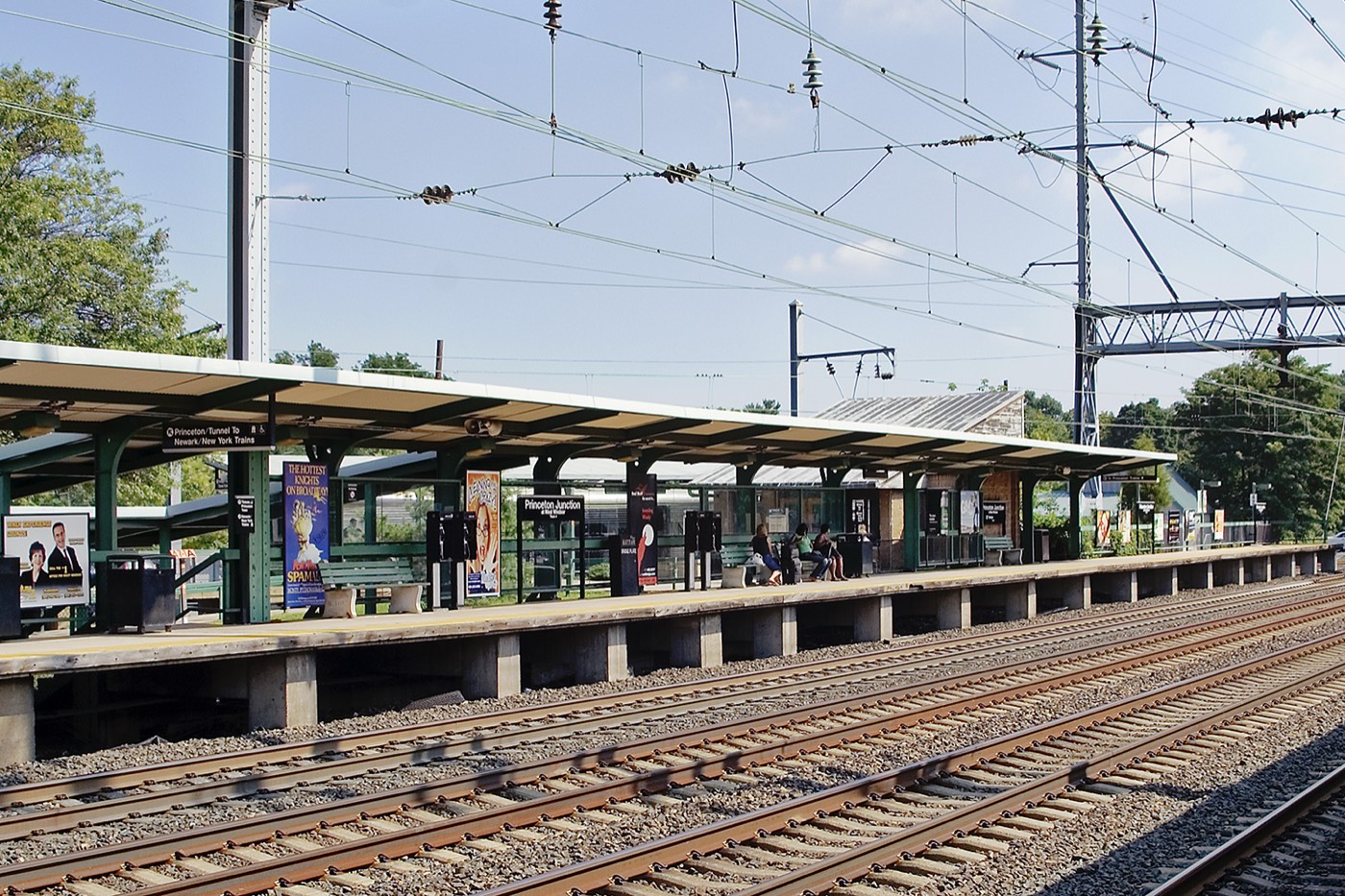
The engine is geography. The township straddles the U.S. Route 1 corridor, lined with the pharmaceutical, finance, and research firms that draw the professionals who live here, and Princeton Junction station puts Manhattan inside a 50-minute express ride.
How It Became Chinese
West Windsor did not have a Chinese community in any meaningful sense until the late twentieth century. It had soil, a train station, and a name borrowed from England. What turned it Chinese was a single combination that the right families recognised immediately: a fast commute, jobs along Route 1, and a school district that would soon be ranked among the best in the country.
The professionals arrive
The first wave came in the 1980s and 1990s, scientists and engineers who had arrived from mainland China and Taiwan to do graduate work at American universities and stayed for the jobs. The Route 1 corridor was thick with them: pharmaceutical labs, telecom research, the financial back offices that fed New York.
A chemist at a Princeton-area drug company did not need to live in Manhattan. He needed a good commute, an affordable lab-adjacent suburb, and above all a school that would not waste his children’s years. West Windsor offered all three at once.
These were not refugees or laundry workers, the older American image of Chinese migration. They were PhDs and visa holders who had won a hard competition to be here, and they brought the assumption that the next competition, the academic one, was simply how life worked.
Their West Windsor was a different country from the historic Chinatowns of the East Coast. There was no dense block of red-awning shops, no association halls. There were cul-de-sacs and good schools and a long commercial road where, slowly, the Chinese businesses opened one by one. It was the suburban template that families would later recognise in places like Cupertino, California: assimilation by professional achievement rather than by enclave.
Chain migration by reputation
What followed was chain migration of an unusual kind. It travelled less through family sponsorship than through reputation. A Chinese engineer who bought a house in West Windsor told colleagues, cousins, and college classmates that the schools were extraordinary, and they followed.
By 2000 the township was already transforming. Over the next two decades the non-Hispanic white share of the population fell sharply while the Asian share climbed past half, split chiefly between Chinese and the equally large community of Indians in West Windsor. The pattern echoed across central New Jersey, in places like the Chinese in nearby Edison. West Windsor became one of the few American suburbs where being Asian was not a minority experience at all.
The argument that made the front page
The defining moment in the community’s history was not a festival or a ribbon-cutting. It was a fight over homework.
In 2015 the West Windsor-Plainsboro superintendent, David Aderhold, sent parents a 16-page letter warning that students were overburdened and anxious, and proposed reforms: fewer exams, more no-homework nights, and the removal of an accelerated maths track in the lower grades. The school district’s student body was by then roughly 65 percent Asian-American.
The reaction split the town along a cultural line, and the New York Times put it on the front page that December. Many longer-settled families welcomed the change. Many first-generation Chinese and other Asian parents saw it as a “dumbing down.” One father, Mike Jia, told the paper the reforms reflected “a national anti-intellectual trend that will not prepare our children for the future.”
The sociologist Jennifer Lee, who studies Asian-American achievement, explained the gap as one of confidence rather than values: recent immigrant parents, less sure their children would be judged fairly, pushed harder to build a margin of safety. The episode became a national parable about ambition, race, and what school is for, and it happened here, in West Windsor, because here the Chinese community was large enough to set the terms of the debate.
From debate to institutions
Out of that intensity grew institutions. Chinese weekend schools, Mandarin immersion, tutoring centres, and a dense network of restaurants and grocers along the Princeton Hightstown Road appeared to serve a population that now numbered in the thousands. The community had moved from arriving to belonging.
The Landmarks
Shanghai Bun, 33 Princeton Hightstown Road, Princeton Junction. Tucked into a shopping centre near the train station, this small Shanghainese kitchen built a regional reputation on its soup dumplings and pan-fried buns. For many commuters it is the first stop after the evening train, a taste of home eaten standing up.
First Wok, 295 Princeton Hightstown Road, Southfield Shopping Center, West Windsor. A neighbourhood Chinese restaurant in one of the township’s main strip centres, the kind of unpretentious place that anchors the everyday life of a community rather than its special occasions. It has fed West Windsor families for years from the same corner.
Woori Mart, 64 Princeton Hightstown Road, Princeton Junction. A family-run pan-Asian grocery with a fish counter, a prepared-food section, and aisles of Chinese, Korean, and Japanese staples. It is where the week’s cooking begins, the place that makes living in West Windsor feel less like exile from a city Chinatown.
Hua Xia Chinese School, West Windsor-Plainsboro High School North, 90 Grovers Mill Road. Every Sunday the district’s high school turns into a Chinese school, with hundreds of children studying Mandarin, calligraphy, and Chinese dance in borrowed classrooms. It is one of the largest weekend Chinese programmes in central New Jersey.
YingHua International School, 25 Laurel Avenue, Kingston. Just up the Route 1 corridor, YingHua is central New Jersey’s only International Baccalaureate school offering full Mandarin immersion, teaching children from toddlerhood almost entirely in Chinese before English is added. It draws West Windsor families who want fluency, not just weekend exposure.
Princeton Junction station. The reason the town exists in its modern form. The express to New York and the shuttle to Princeton made West Windsor liveable for two-income professional households, and the daily flow through this platform is the rhythm the whole community is built around.
MarketFair, U.S. Route 1. The corridor mall on the township’s edge, a default weekend gathering point where the bookstores, restaurants, and shops reflect the customers who actually live nearby. It is the commercial commons of an affluent, heavily Asian suburb.
Where They Came From
West Windsor’s Chinese residents are overwhelmingly mainland Chinese and Taiwanese, with roots in the coastal and metropolitan regions that sent so many graduate students abroad: Shanghai and the Yangtze delta, Beijing, Guangdong, and Taipei.
They are, demographically, a self-selected elite. They came as students and skilled-visa workers rather than through family chains or labour recruitment, which is why the community skews so heavily toward scientists, engineers, doctors, and finance professionals.
The Shanghainese influence shows on the menus, in the soup dumplings and pan-fried buns that anchor the township’s best-known kitchens, while the Cantonese and northern dishes turn up on the same strip. It is a pan-Chinese suburb rather than a regional one, knit together by class and ambition more than by a single home province.
That origin story shapes everything downstream, from the soup dumplings of Shanghai Bun to the fierce defence of an accelerated maths track. The families who chose West Windsor had already won one demanding competition to get to America, and they organised their new suburb around winning the next one.
West Windsor Today
West Windsor today is a quiet, prosperous township where the Chinese community is not a neighbourhood you can point to on a map but a presence woven through the whole place: in the schools that top state rankings, the groceries on Princeton Hightstown Road, the Sunday classrooms full of Mandarin.
It shares the township with an equally large Indian community, and the two together have made West Windsor a national example of the affluent Asian-American suburb, of a piece with Chinese enclaves from Cupertino in Silicon Valley to Bayside in Queens. The relationship is mostly one of parallel lives and shared schools rather than friction, families chasing the same things from different starting points.
The strains are real and honest. The academic-pressure debate never fully resolved, racism complaints have surfaced in the schools, and some longtime residents mourn a township that changed faster than they expected. But for the Chinese families who built their American lives around this commuter town, West Windsor delivered exactly what it promised: a short train ride, a good job down Route 1, and a school worth fighting over.
Frequently Asked Questions
How many Chinese people live in West Windsor, New Jersey?
West Windsor has about 33,400 residents and is just over half Asian, with the Chinese forming one of the two largest groups alongside Indians. The Chinese community in West Windsor numbers in the thousands and is one of the most prominent in central New Jersey.
Why did so many Chinese families move to West Windsor?
The combination of a fast Princeton Junction commute to New York, professional jobs along the Route 1 corridor, and the top-ranked West Windsor-Plainsboro schools drew Chinese scientists, engineers, and finance professionals starting in the 1980s and 1990s. Word of the schools spread by reputation, pulling more families in.
What was the 2015 New York Times controversy about?
The superintendent proposed reducing exams and homework to ease student stress, and many first-generation Asian-American parents, including much of the Chinese community, objected that it amounted to lowering standards. The dispute, covered on the front page of the New York Times, became a national debate about academic pressure.
Where do Chinese residents shop and eat in West Windsor?
Most Chinese dining and grocery shopping in West Windsor clusters along Princeton Hightstown Road, including Shanghai Bun for Shanghainese soup dumplings, First Wok, and the pan-Asian grocer Woori Mart in Princeton Junction.
Is there a Chinese school in West Windsor?
Yes. The Hua Xia Chinese School meets on Sundays at West Windsor-Plainsboro High School North, and the nearby YingHua International School in Kingston offers full Mandarin immersion. Both serve the West Windsor Chinese community.
How good are the West Windsor schools?
The West Windsor-Plainsboro Regional School District is consistently ranked among the best in New Jersey, with its two high schools placing near the top of state rankings. Roughly two-thirds of the district’s students are Asian-American.
If your family’s story passed through West Windsor, or any of the places Chinese families have made home in America, Atlas of Home can trace that journey. From a coastal Chinese city to a Princeton Junction commuter platform, to wherever you are now.