
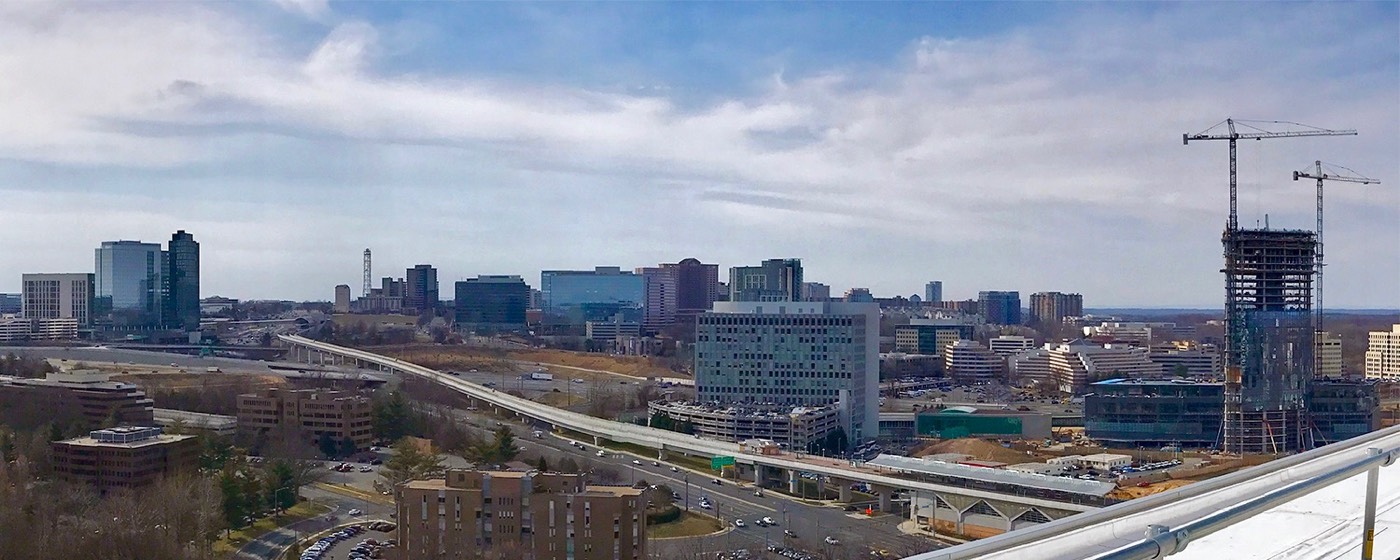
Drive west along Old Dominion Drive on a Saturday afternoon, past the embassies-in-waiting and the hedges that hide houses you will never see from the road, and somewhere between a grocery run and a kabob lunch you will hear it: the soft, rolling cadence of Farsi. The Persians in McLean, Virginia are not loud about belonging here. They simply do. In one of the wealthiest corners of the country, a few miles from the gates of the CIA, an Iranian community of doctors, lawyers, engineers and entrepreneurs has built a quiet second homeland, measured not in storefronts but in dinner tables, school rankings and the smell of saffron rice drifting out of suburban kitchens.
The Place
McLean is an unincorporated community in Fairfax County, Virginia, hugging the Potomac just across the river from Washington. It takes its name from John Roll McLean, the publisher of The Washington Post, and was formally established around 1910 along a streetcar line that has long since vanished.
What turned a rural crossroads into one of America’s most expensive addresses was government. When the Central Intelligence Agency built its headquarters in the Langley section in 1961, it pulled a generation of officials, diplomats and contractors into the surrounding hills. Today McLean’s median household income sits at roughly a quarter of a million dollars, and its name is shorthand for the place senators, spy chiefs and tech founders go home to sleep.
It is, in other words, an unlikely backdrop for an immigrant story. And that is precisely what makes the Persian one so striking.
How It Became Persian
Before the Revolution: students and diplomats
Iranians were arriving in the Washington area long before they came as exiles. From the late 1940s through the 1970s, the people leaving Iran for the United States were mostly students and professionals, drawn by American universities with the world’s best engineering and technical programmes.
The capital was a natural magnet. It held the Iranian embassy, the diplomatic apparatus of the Shah’s government, and the kind of graduate schools that produced exactly the credentials Tehran wanted in its rising middle class. These early arrivals tended to be cosmopolitan, English-fluent and confident they would one day go home.
Most never did.
1979 and the great rupture
The Islamic Revolution of 1979, and the Iran-Iraq War that followed through 1988, turned a trickle into a flood. The people who left in those years were different from the students who came before: upper- and middle-class families, professionals with established careers, and members of religious and ethnic minorities, including Baha’is, Jews and Armenians, who had real reason to fear what was coming.
Many of them already had a foothold in Washington. A relative finishing a degree, a colleague at a federal agency, a cousin who had bought a house in the suburbs. Chain migration did the rest. The number of Iranian physicians in the United States, to take one telling measure, climbed from around 1,600 before the revolution to roughly 5,000 three decades later, and the Washington region absorbed a generous share of that brain drain.
Choosing the suburbs
Where Los Angeles built a visible Persian downtown in Westwood, Washington’s Iranians scattered across the affluent suburbs that ringed the city: Rockville and Potomac in Maryland, and McLean, Vienna, Great Falls and Fairfax in Virginia. The logic was the same logic that drew everyone else with money to McLean. Proximity to professional jobs, leafy lots, and above all the schools.
For a community that arrived carrying medical degrees, law degrees and engineering doctorates, education was never negotiable. McLean fed into Langley High School and McLean High School, two of the highest-ranked public schools in the state, and that single fact organised where Iranian families bought.
By the time the second generation came of age, the pattern had hardened. McLean was where you raised Iranian-American children who would go to good universities, and Vienna and Falls Church, a few minutes south, were where you bought the bread, the sweets and the herbs that made a house smell like Iran.
A community measured in census tracts
The numbers are modest by the standards of California but remarkable for the East Coast. Fairfax County is home to roughly 10,000 residents of Iranian ancestry, the largest concentration in Virginia, and Iranian ancestry accounts for close to four percent of McLean’s population. The wider Washington metropolitan area is estimated to hold around 85,000 people of Persian descent, one of the largest such communities in the country.
Virginia ranks third among all states for Iranian population, behind only California and Texas. Much of that weight sits in this single county, in towns most Americans have never heard of.
The Landmarks
Amoo’s Restaurant, 6271 Old Dominion Drive, McLean. Amoo means uncle in Farsi, and the name fits. This is the McLean dining room where Persian families mark birthdays and where the koobideh and barg kabobs arrive over saffron rice the colour of late sun. It serves not just McLean but Tysons, Great Falls and Potomac, a one-restaurant map of where the community lives.
Moby Dick House of Kabob, 6854 Old Dominion Drive, McLean. Founded in 1989 by the late Mike Daryoush, Moby Dick grew from a single counter into a regional institution across Maryland, Virginia and the District. Its McLean branch sits minutes from the CIA, slinging flame-grilled kabobs and slow-braised stews to a lunch crowd that has been known to include people who cannot tell you where they work.
Yas Bakery & Supermarket, 137 Church Street NW, Vienna. A family business opened in 1986 on Vienna’s historic Church Street, Yas is where McLean’s Iranians come for fresh sangak and barbari bread, pistachios, dried limes and the pastries no supermarket can fake. For many families the Saturday trip to Yas is a small ritual of continuity.
Assal Market, 112 Glyndon Street NE, Vienna. Assal opened in 1982, when it was one of the only Iranian and Middle Eastern grocers in all of northern Virginia. Part bakery, part halal butcher, part pantry of home, it served the first wave of revolution-era families and still anchors the community’s weekly shopping.
Langley High School, 6520 Georgetown Pike, McLean. Less a landmark than a destination, Langley consistently ranks among the top high schools in Virginia and the nation, with reading proficiency near 99 percent. For Iranian parents who crossed an ocean partly so their children could be educated freely, it is the reason the house cost what it cost.
The Nowruz Festival, Tysons Corner area. Founded in 2012 by Shohreh Assemi at Reston Town Center, the region’s Nowruz Festival has grown into one of the largest Persian New Year celebrations on the East Coast, with bazaars, music and dance drawing thousands each spring to venues around Tysons and Reston. For a community that lives quietly the rest of the year, it is the one weekend the suburbs turn unmistakably Persian.
Pars Place, the Iranian-American Community Center. Formed in 2010 with the goal of building a permanent Iranian-American hub for the Washington metro area, the centre runs cultural and educational programmes that knit together a community spread thinly across two states and the District.
Where They Came From
The McLean community is overwhelmingly the product of two waves out of one country. The first, before 1979, was a self-selecting elite of students and professionals from Tehran and the major cities. The second, after the revolution, was broader and more anxious: doctors, academics, business owners and persecuted minorities who left because the country they knew had ceased to exist.
That history explains the community’s character. These are not, by and large, economic migrants from a single village. They are urban, highly educated Iranians, and they are strikingly diverse in faith.
Iranian Americans are one of the most religiously varied diaspora groups in the United States and far more secular than the national average. Surveys find the community split among Muslims, Christians, the non-religious, Zoroastrians, Jews and Baha’is, with a large share describing their religious identity as not very strong. In McLean that pluralism is lived rather than debated: families differ in faith and gather all the same around the Nowruz table, a holiday older than any of the religions that divide them.
McLean Today
The Persian presence in McLean is, by design, easy to miss. There is no Persian high street, no neon corridor of restaurants the way Los Angeles has in Tehrangeles. The community expresses itself through professional life, through schools and through food, and it shares its commercial heart with neighbours just down the road in Vienna and Falls Church. It is the East Coast counterpart to the more visible Persian enclaves of Tehrangeles in Los Angeles and Great Neck, New York, sharing their ambition while shunning their flash.
That restraint is partly the wealth and partly the era. Many of these families arrived already established, assimilated fast, and chose to fold into McLean rather than stand apart from it. The result is a diaspora that is prosperous and confident but understated, more likely to be found at a Langley parent-teacher night than at a festival.
It is also a community that has learned to live with the weather of geopolitics. When tensions between Washington and Tehran flare, as they periodically do, the DC-area Iranian community feels the chill directly, navigating distrust, family worry and the strange position of being deeply American and deeply tied to a country at odds with their own government. McLean’s Persians carry that doubleness quietly, the way they carry most things, and then they put on a kettle, brew the tea, and set out the dates.
Frequently Asked Questions
How many Persians live in McLean, Virginia?
Iranian ancestry accounts for close to four percent of McLean’s population, a significant share for an East Coast suburb. The Persians in McLean, Virginia are part of a larger Fairfax County community of roughly 10,000 people of Iranian ancestry, the largest in the state.
Why did Iranians settle in McLean and northern Virginia?
Most came as students and professionals before 1979 or as exiles after the Islamic Revolution, drawn to Washington’s universities, federal jobs and embassies. They chose McLean and nearby Vienna, Great Falls and Fairfax for the affluence and, above all, for some of the best public schools in Virginia.
Where can I find Persian food and groceries near McLean?
Amoo’s Restaurant and Moby Dick House of Kabob, both on Old Dominion Drive in McLean, serve Persian cuisine. For groceries and fresh Persian bread, families shop at Yas Bakery on Church Street and Assal Market on Glyndon Street, both in nearby Vienna.
Is the Persian community in McLean Muslim?
Not predominantly. Iranian Americans are one of the most religiously diverse diaspora groups in the country, including Muslims, Jews, Baha’is, Zoroastrians, Christians and a large secular population. The Persians in McLean, Virginia reflect that pluralism, often within a single extended family.
How does McLean’s Iranian community relate to Rockville and Potomac?
They are two halves of one regional community. The Washington area’s roughly 85,000 Persians are split across the affluent Maryland suburbs of Rockville and Potomac and the Virginia suburbs of McLean, Vienna and Fairfax, connected by family, faith and festivals like Nowruz.
What is the Nowruz Festival near McLean?
Nowruz is the Persian New Year, marking the spring equinox in late March. The region’s Nowruz Festival, founded in 2012 by Shohreh Assemi, is held around Tysons and Reston and is one of the largest such celebrations on the East Coast, drawing thousands of Iranian families each spring.
If your family’s story passed through McLean, or any of the places Persians have made home in America, Atlas of Home can trace that journey. From a graduate scholarship or a hurried departure from Tehran, to a quiet house above the Potomac and a Saturday loaf of sangak in Vienna, to wherever you are now.