
Drive west out of Washington on Interstate 66, past the Beltway, past Fairfax, and the suburbs keep unspooling until the exit signs read Centreville. Here, where Lee Highway runs through a landscape of newer subdivisions and strip plazas, you find one of the densest gatherings of Koreans in Virginia. The Koreans in Centreville did not arrive in a single wave or build a downtown with a name. They came quietly, family by family, drawn west by affordable houses and good schools, until a town that barely existed before the 1980s had become a Korean heartland.
The Place
Centreville sits in western Fairfax County, an unincorporated community wrapped around the junction of Interstate 66 and Route 29, the old Lee Highway. Its roots are colonial. Residents petitioned the Virginia Assembly to charter a town here in 1792, and the area became part of Fairfax County in 1798.
For most of two centuries it stayed small. The Civil War scarred it, the decades after left it stagnant, and then the 1980s arrived. Developers laid out housing tracts and shopping centres at speed, and the population exploded.
By the 2020 census Centreville counted 73,518 residents, making it the most populous community in all of Fairfax County. Roughly three in ten of those residents are Asian, and a large share of them are Korean.
How It Became Korean
A community that began near the soldiers
The Korean presence in the Washington region is older than Centreville’s suburbs. Around 1960 only a few hundred ethnic Koreans lived in the metropolitan area, and most of them were tied to the American military and government: wives of former U.S. servicemen, students, and embassy staff. They were the seed.
What followed was decades of steady growth. The Korean population of Fairfax County more than doubled between 1990 and 2011, climbing by almost fifty percent in the single decade after 2001. By the time the U.S. Census measured it, Fairfax County alone held tens of thousands of Koreans, and the Washington metro had become the third largest Korean community in the United States, behind only Los Angeles and New York.
Annandale first, then the move west
The story of Centreville cannot be told without Annandale. From the late 1980s, Annandale’s Little River Turnpike grew into the commercial Koreatown of Northern Virginia, a corridor of restaurants, banks, churches and grocers serving Korean signage to a Korean clientele. For a long while Annandale was the centre of gravity. You can still read that older chapter in the story of the Koreans in Annandale, Virginia.
Then families began moving further out. By the mid 2000s the shift was unmistakable. As one elder at a large Korean church put it in 2005, Annandale had usually been the second biggest Korean community in the area, but Centreville had taken second place a year or two earlier. Annandale stayed the commercial Koreatown. Centreville became the residential one.
Why Centreville
The reasons were the reasons Korean families have always given for moving in America: a home you can afford and schools you can trust. Centreville was newly built, and its housing was cheaper than the inner suburbs. It sat conveniently between Annandale to the east and the growing Korean presence around Manassas to the south.
And the schools were excellent. The Fairfax County system that serves Centreville and neighbouring Chantilly, with high schools like Centreville, Chantilly and Westfield, drew families who treated their children’s education as the whole point of the move. Today almost a quarter of all the ethnic Koreans in Fairfax County live in Annandale and Centreville, and Fairfax County holds more than sixty percent of all the Koreans in Virginia.
Business owners, not just professionals
The Korean community split slightly across the river. In the Maryland suburbs, Koreans leaned toward salaried professions: banking, government, law, science. On the Virginia side, where Centreville sits, Koreans were more likely to be in business, running the grocers, restaurants, dry cleaners and service firms that gave the community its commercial backbone. That entrepreneurial tilt is part of why western Fairfax filled with Korean-owned plazas rather than simply Korean households.
The Landmarks
Korean Central Presbyterian Church, 15451 Lee Highway, Centreville. Founded in 1973 by Rev. Myung Ho Yoon with twenty families, this is the spiritual anchor of Korean Centreville. The congregation moved from its old Vienna campus to a sprawling Centreville site in July 2010. With roughly 5,400 members and weekly attendance averaging in the thousands, it is among the largest Korean churches in the country.
H Mart, 13818 Braddock Road, Centreville. The Centreville branch of the Korean-American grocery chain is the everyday heart of the community, a place to buy banchan, fresh tofu, short ribs and Korean pears under one roof. Its aisles double as a meeting point, the suburban equivalent of a village market.
Lotte Plaza Market, 5900 Centreville Crest Lane, Centreville. Lotte is H Mart’s great rival and the other pillar of Korean grocery life out here. A second, larger Lotte sits just up the road at 13955 Metrotech Drive in Chantilly, the two markets bracketing the community to its north and south.
Korean Community Service Center of Greater Washington, Centreville office at 15451 Lee Highway. The KCSC runs immigrant services, elder programmes and citizenship help from a Centreville office on the church campus, with its headquarters back on Little River Turnpike in Annandale. It is the practical safety net for newcomers learning to navigate American paperwork.
SGD Tofu House and BBQ, 14015 Lee Jackson Memorial Highway, Chantilly. Just over the line in Chantilly, this soondubu and barbecue house is the kind of place that fills on a Sunday after church, the soft-tofu stews arriving still bubbling in their stone bowls. It is one of a cluster of Korean restaurants that ring the residential community.
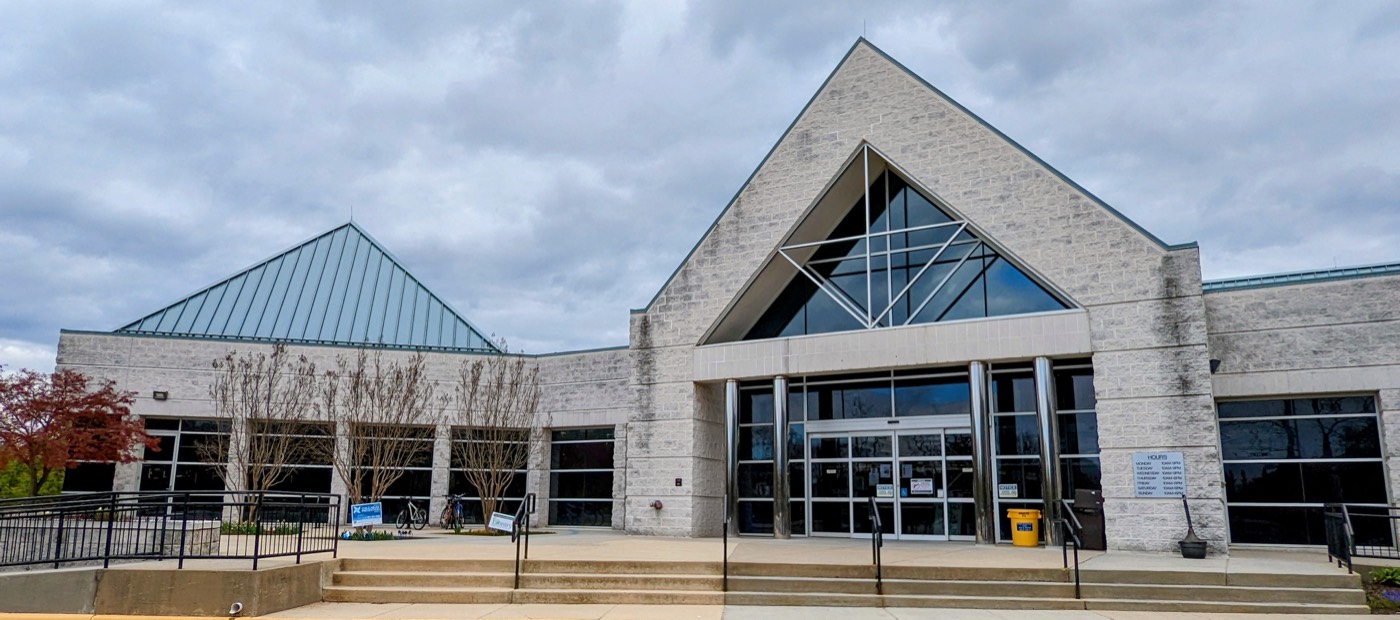
Centreville Regional Library, Lee Highway, Centreville. The county library here keeps a Korean-language collection and hosts programmes for a population that reads in two languages, a small civic acknowledgement of who actually lives in Centreville now.
Thomas Jefferson High School for Science and Technology, 6560 Braddock Road, Alexandria. Not in Centreville, but central to its imagination. The Fairfax County magnet school, founded in 1985 and routinely ranked among the best high schools in America, is the target many Korean families set their sights on. The academic pressure that defines so much of Korean Centreville points, in part, toward this one address.
Where They Came From
The Koreans of Centreville arrived through the long arc of Korean migration to America that began after the Second World War and accelerated through the later twentieth century. The earliest local Koreans came as military spouses, students and embassy workers, and later arrivals followed family already established here, the classic pattern of chain migration that fills a single suburb with the relatives and acquaintances of those who came first.
On the Virginia side they came with a particular bent toward business. Many opened the shops, markets and service firms that now define the Korean commercial landscape of western Fairfax. Others were professionals who chose Centreville for the same reasons everyone did: the houses were affordable and the schools were strong.
Where exactly in Korea these families originated is harder to pin down from the public record, and an honest account leaves that detail open rather than inventing it. What is certain is that they arrived as part of one continuous migration and then clustered, the way Korean immigrants have clustered across America, close to one another, close to a church, close to a Korean grocer where the language of the aisles is their own.
Their story rhymes with Korean communities elsewhere along the East Coast, from the Koreans in Fort Lee, New Jersey to the Koreans in Englewood Cliffs, New Jersey, suburban enclaves built on the same combination of good schools and upward striving. The roots, though, run back to the original American Koreatown in Koreatown, Los Angeles.
Centreville Today
Centreville today is the newer, residential Korean hub of Northern Virginia, the quiet suburban counterpart to Annandale’s older commercial strip. There is no single Korean main street to walk down. The community lives instead in subdivisions and shopping plazas spread along Lee Highway and Braddock Road, anchored by its grocers, its restaurants and above all its enormous church.
It is a community organised around two things: faith and education. The church draws thousands every Sunday morning, its parking lots filling and emptying in waves. The schools draw families across the country to rent or buy within a particular district line, the academic ambition that runs through Korean Centreville pointing, as much as anything, toward the magnet doors of Thomas Jefferson.
Korean-language newspapers like the Washington editions of Korea Daily and the Korea Times, both based over in Annandale, still circulate out here, binding the dispersed suburb together in print. The wider regional community also gathers each year at events like the KORUS Festival and the Chuseok celebrations the Korean Cultural Center stages with the Smithsonian, occasions where the scattered households of western Fairfax become, briefly, a visible crowd.
Centreville does not announce itself. There is no archway, no festival street, no neon Koreatown sign. What it has instead is the weight of numbers and the depth of institutions, a Korean community that built itself house by house and chose to be visible in its churches and its children rather than its skyline. Northern Virginia’s other immigrant suburbs, from the Vietnamese in Falls Church to the Indians in Ashburn, tell versions of the same story.
Frequently Asked Questions
How many Koreans live in Centreville, Virginia?
There is no precise Korean-only count for Centreville itself, but the surrounding picture is clear. Fairfax County held more than 41,000 ethnic Koreans as of the 2010 census, over sixty percent of all the Koreans in Virginia, and almost a quarter of the county’s Koreans live in Annandale and Centreville. Roughly three in ten Centreville residents are Asian.
Why did Koreans move to Centreville instead of Annandale?
Annandale was the original commercial Koreatown of Northern Virginia, but by the mid 2000s families were moving west to Centreville for cheaper, newer housing and excellent Fairfax County schools. Annandale stayed the place to shop and do business, while Centreville became the place to live and raise children.
What is the main Korean church in Centreville?
Korean Central Presbyterian Church at 15451 Lee Highway is the community’s anchor. Founded in 1973 and relocated to its Centreville campus in 2010, it has roughly 5,400 members and is among the largest Korean churches in the United States.
Where do Koreans in Centreville shop for groceries?
The two major Korean supermarkets are H Mart at 13818 Braddock Road in Centreville and Lotte Plaza Market at 5900 Centreville Crest Lane, with a second large Lotte just north in Chantilly. They serve as both grocers and informal community gathering points.
What schools attract Korean families to Centreville?
The Fairfax County public schools serving Centreville and Chantilly, including Centreville, Chantilly and Westfield high schools, are a primary draw. Many Korean families also aim for Thomas Jefferson High School for Science and Technology, the county magnet school in Alexandria ranked among the best in the country.
Is Centreville part of a larger Korean area in Northern Virginia?
Yes. The Koreans in Centreville are part of the wider Fairfax County Korean community, the third largest in the United States, which also centres on Annandale and extends toward Chantilly and Manassas. Centreville is its newer, residential heart.
If your family’s story passed through Centreville, or any of the places Koreans have made home in America, Atlas of Home can trace that journey. From the first arrivals near Washington’s embassies and bases to a house chosen for the school district along Lee Highway, to wherever you are now.