
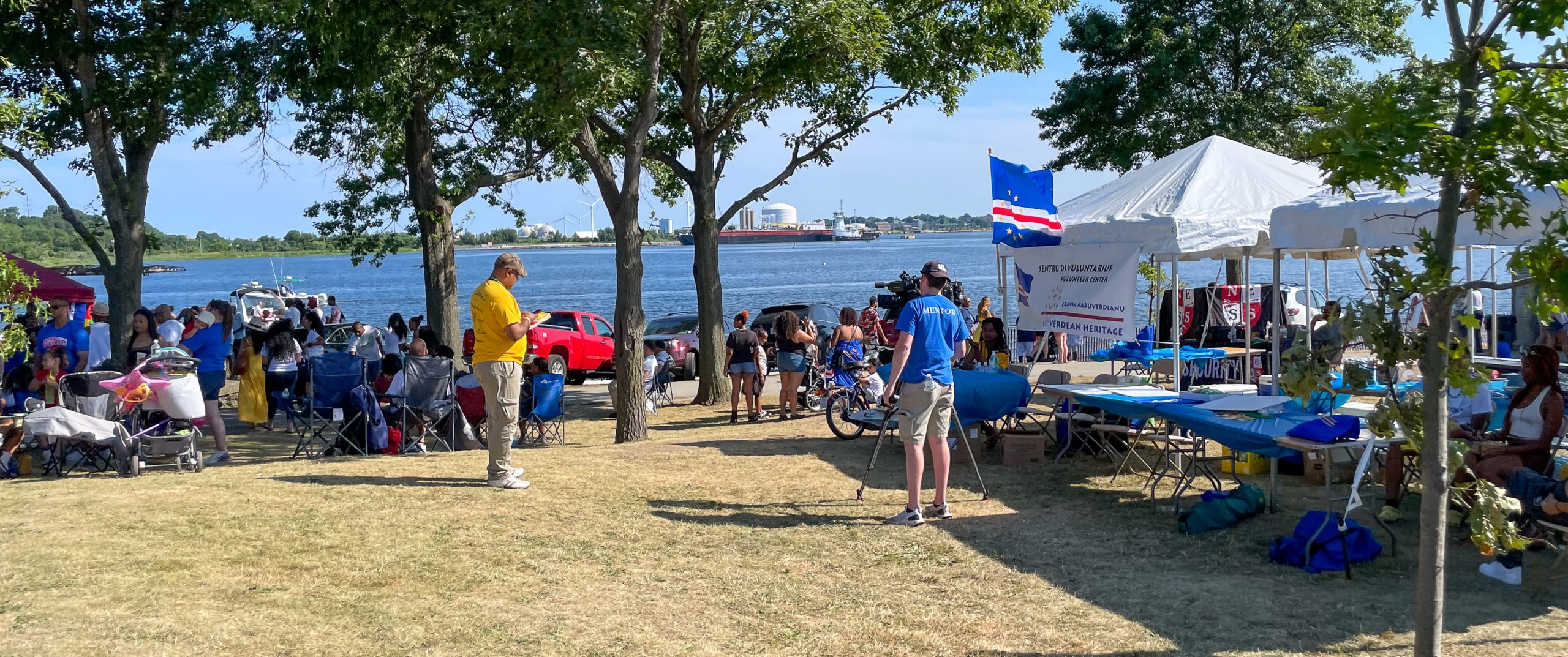
They called it the Point. Down on the Providence waterfront, where the lumber boats came in loose and the coal dust hung over the docks, you could hear Kriolu spoken on the street corners and smell cachupa simmering in third-floor kitchens. From the 1890s through the 1960s, this two-block grid below College Hill held the oldest Cape Verdean community in America, a neighbourhood of sailors, longshoremen and packet captains who had crossed an ocean from a chain of drought-struck islands off West Africa. By the time the bulldozers came, generations had been born here.
Fox Point: The Place
Fox Point sits at the southern tip of Providence’s East Side, wedged between the Providence and Seekonk rivers, with College Hill rising to the north. The Cape Verdean heart of it was the lower, flatter ground near the water, an area old residents called Tockwotton, running from South Main and Planet Streets down to the harbour.
The streets here were tight rows of clapboard houses and triple-deckers, working homes for working families. Wickenden Street was the commercial spine, lined with grocery stores and clubs. The port itself, at India Point, had been Providence’s first wharf since 1680, and it was the docks that pulled the community to this exact patch of ground.
How Fox Point Became Cape Verdean
Before the Cape Verdeans
Fox Point was a waterfront working district long before the islanders arrived. Through the early and mid 19th century it drew Irish dockworkers and tradesmen, drawn by the railroad and the steamship lines that fed the port.
Other groups passed through too, including Portuguese mainlanders and, later, Lebanese families. But by the second half of the 1800s the waterfront was changing again, and a new community was about to make the Point its own.
The Cape Verdeans Arrive
The Cape Verdeans came first by sea, as whalers. Yankee whaling ships out of Nantucket and New Bedford had long stopped at the islands to take on crew, and men desperate to escape cycles of drought and famine signed on for the dangerous, low-paid work. Many of the earliest arrivals came from Brava, the smallest inhabited island and the one with the deepest seafaring tradition.
As whaling declined late in the century, the islanders moved ashore and into the textile mills, cranberry bogs and docks of southeastern New England. Providence and nearby New Bedford became the two anchor ports. The Cape Verdeans in Fox Point and those who built the larger settlement among the mills and wharves of the Cape Verdean community in New Bedford, Massachusetts were often the same families, splitting between two harbours.
What made Fox Point unique was the packet trade. Cape Verdean owners bought aging schooners and ran them between New England and the islands, carrying passengers, mail, food and freight on the long Atlantic crossing. These packet ships were a lifeline, owned and crewed by islanders, and many of the men who later worked the Providence docks had first come into this very port on a packet.
Fox Point at Its Peak
By the 1920s and 1930s the community was at full tide. An estimated 35,000 Cape Verdeans crossed the Atlantic on those islander-owned packets, landing at Providence and New Bedford, making Rhode Island home to one of the oldest and largest Cape Verdean communities in the United States.
Daily life turned on the harbour. Cape Verdean men loaded and unloaded loose lumber, scrap iron and coal, and in 1933 they organised Local 1329 of the International Longshoremen’s Association, the first labour union in the United States founded by Cape Verdeans. Working the boats was passed down father to son.
The community built its own institutions to match. Beneficent societies offered health and death benefits, churches held the faith, and social clubs gave the neighbourhood its rhythm of feasts and saints’ days. Chain migration kept the pipeline open: each family that settled sent word, and money, back to a cousin on Brava or Fogo who would board the next packet.
The Change
The unmaking of Cape Verdean Fox Point began in the late 1950s. Urban renewal arrived, and the construction of Interstate 195 cut straight through the lower neighbourhood, taking homes, clubs and whole blocks with it.
Then came the slower pressure. As Brown University and the city’s institutions expanded eastward and renovated the surviving houses, Fox Point grew too expensive for working families. By the late 1970s most of the remaining Cape Verdeans had been pushed out.
The displaced community scattered: into South Providence, across the river to East Providence, and north to Pawtucket. The harbour work vanished too, as containerisation and automation erased nearly ninety percent of the longshore jobs by the end of the century. This same arc, a waterfront ethnic enclave thinned by highways and renewal, played out across New England, including among the Cape Verdeans who rebuilt in Brockton, Massachusetts.
The Landmarks of Cape Verdean Fox Point
Sheldon Street Church, Sheldon Street. Established in 1905, this was the first Cape Verdean Protestant church in the United States. It is the last surviving Cape Verdean institution from the old Tockwotton neighbourhood, a quiet brick witness to everything that stood around it.
The St. Antonio Cape Verdean Association. Founded in 1934 by Janencino Mello, Frank Freitas and other immigrant men and women of Fox Point, it was Rhode Island’s first Cape Verdean beneficent society, providing health and death benefits when no one else would. Its annual St. Antonio procession still steps off from the corner of Benefit and Wickenden Streets.
The Cape Verdean Progressive Center. Known simply as the CV Club, it was founded in 1944 by a group of Cape Verdean women dedicated to preserving the culture. Pushed out of Fox Point with everyone else, the club survives today across the river in East Providence.
Local 1329, the Port of Providence docks. The waterfront itself was a landmark. Organised in 1933, Local 1329 of the longshoremen’s union was the working heart of the community, and the docks at the foot of the neighbourhood were where Cape Verdean Fox Point earned its bread for three generations.
India Point Park. Built over the old port where the packets once tied up, the park is now the gathering ground. Every July, Cape Verdeans return here to mark the islands’ independence, and a Portugal Parkway path runs through it.
Our Lady of the Rosary Church, 21 Traverse Street. The Catholic Cape Verdeans of Fox Point worshipped here, and the St. Antonio procession still begins with a mass at this church before winding down toward the water.
Where the Fox Point Cape Verdeans Came From
The Cape Verde archipelago lies roughly 240 nautical miles off the coast of Senegal, ten islands colonised by Portugal and shaped by centuries of drought, famine and the Atlantic. Fox Point drew heavily from Brava, the small southern island whose men had crewed the Yankee whalers, along with families from Fogo and the other Sotavento islands.
They left because the rains failed and colonial rule offered little else. The same forces sent islanders and Portuguese mainlanders into the mill cities of southern New England, a migration that overlapped at the edges with the Portuguese community in Fall River, Massachusetts, though the Cape Verdeans always kept their own distinct identity, language and clubs.
Fox Point Today
Walk Wickenden Street now and you will find cafes, boutiques and Brown students in renovated triple-deckers. The 2020 census counted Fox Point as roughly 71 percent white and only a small share Black or Hispanic, a near-total reversal of the old waterfront. The Cape Verdean families who built the place mostly live elsewhere now.
But the community never let the memory go. Filmmaker Claire Andrade-Watkins, who grew up on the Point, made the documentary Some Kind of Funny Porto Rican? A Cape Verdean American Story, which premiered in Boston in 2006 and put the displacement on the record. The St. Antonio procession came back to Fox Point streets for its 90th anniversary in 2024, and the annual Cape Verdean Independence Day festival, run in Rhode Island since 1977, marked its 50th year in 2025.
There is now a campaign for a permanent Tockwotton Fox Point Cape Verdean Heritage Place memorial near India Point, so that the gentrified neighbourhood will carry the name of the people who made it. The streets changed hands. The story did not move out. Like the Italians of Federal Hill in Providence, the Cape Verdeans of Fox Point built an identity that outlived the addresses it was born in.
Frequently Asked Questions
Why did Cape Verdeans settle in Fox Point, Providence?
The Cape Verdeans in Fox Point, Providence came for the sea and the docks. They first arrived as crew on Yankee whaling ships, then settled on the waterfront to work as longshoremen loading lumber, coal and scrap iron, and to run the packet ships between New England and the islands. Fox Point’s port and cheap working-class housing made it the natural anchor.
Is Fox Point still Cape Verdean today?
No, not in any large way. Urban renewal, Interstate 195 and the expansion of Brown University displaced most Cape Verdean families between the late 1950s and the 1970s, scattering them to South Providence, East Providence and Pawtucket. Fox Point today is a gentrified, mostly white neighbourhood, though Cape Verdean memory lives on through festivals, churches and a planned heritage memorial.
What are the most famous Cape Verdean landmarks in Fox Point?
The Sheldon Street Church, founded in 1905 as the first Cape Verdean Protestant church in the country, is the last institution surviving from old Tockwotton. Other key sites include the St. Antonio Cape Verdean Association founded in 1934, the Cape Verdean Progressive Center founded in 1944, and India Point Park, where the community gathers each July.
Where in Cape Verde did the Fox Point Cape Verdeans come from?
Most came from Brava, the small southern island with the deepest whaling and seafaring tradition, along with families from Fogo and the other Sotavento islands. They left to escape repeated droughts, famine and Portuguese colonial rule, crossing the Atlantic on Cape Verdean-owned packet ships.
When did Cape Verdeans first arrive in Fox Point?
Cape Verdeans began arriving on the Providence waterfront in the late 1800s, recruited as whalers and then settling ashore as the whaling industry declined. The community grew rapidly around the turn of the 20th century, and by the 1920s and 1930s the Cape Verdeans in Fox Point, Providence formed the oldest established Cape Verdean settlement in America.
If your family’s story passed through Fox Point, or any of the harbours and mill towns the Cape Verdeans made home, Atlas of Home can help you trace that journey. From a drought-struck island like Brava, to the packet ships, to the Providence docks, to wherever you are now. Explore your story →
Further reading: Fox Point, Providence on Wikipedia and the history of Cape Verdean immigration in the United States.