
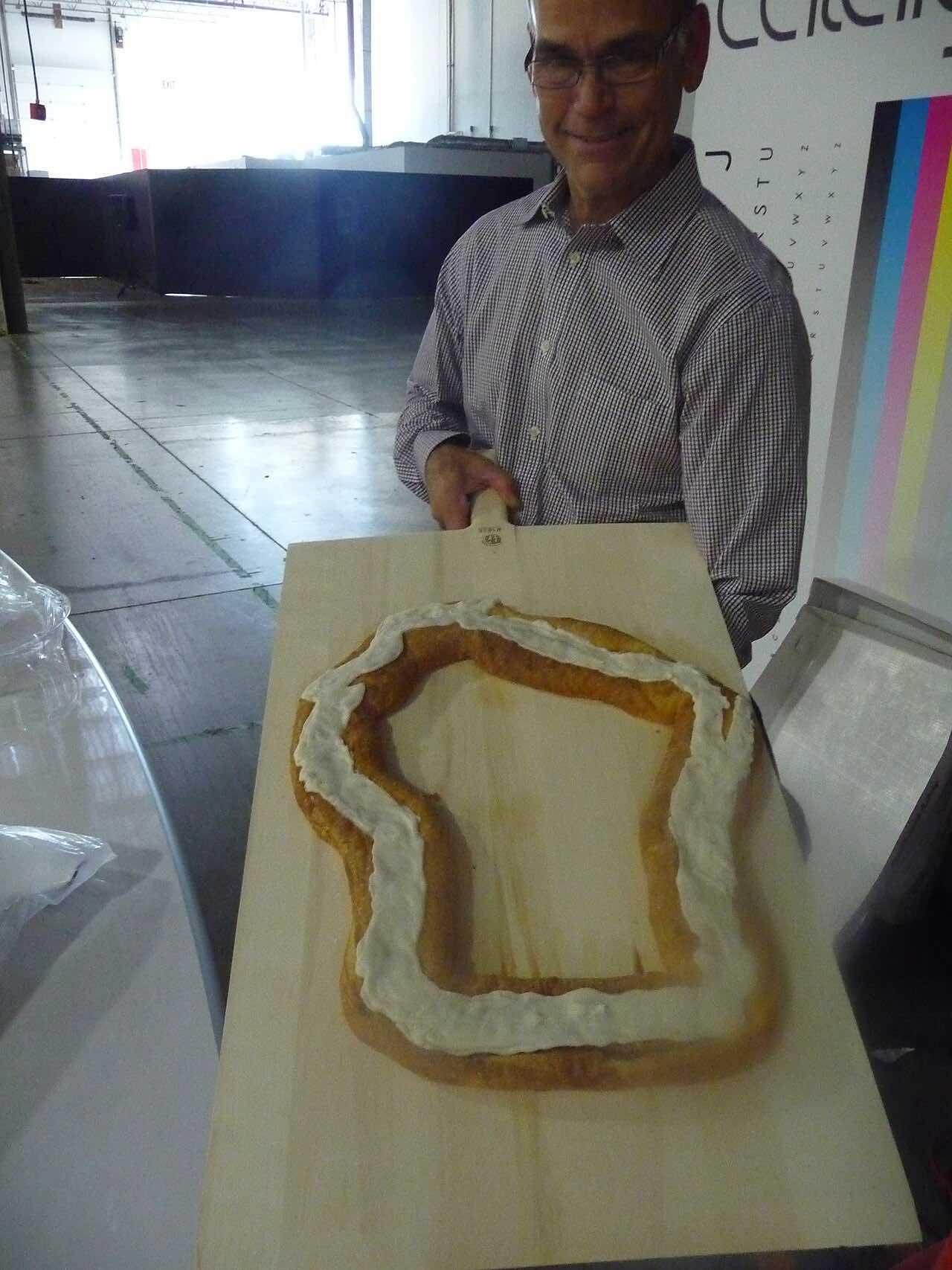
On the last day of June in 2013, a baker walked into the Wisconsin governor’s budget signing carrying a pastry shaped like the state itself. Flaky layers traced the borders, a ribbon of white icing followed the coastline of Lake Michigan, and the whole thing came from Racine. That was the day the kringle became Wisconsin’s official state pastry, and the choice surprised almost no one. For more than a century, the Danes in Racine had been baking that oval, butter-laminated pastry on the western edge of town, and the city had quietly become the most Danish place in America.
Walk into a Racine bakery on a Saturday morning and the smell tells you the rest. Almond, cardamom, warm sugar. Behind the counter, fourth-generation bakers are still folding dough the way their great-grandfathers learned it in Denmark.
Racine: The Place
Racine sits on the western shore of Lake Michigan where the Root River empties into the lake, about 22 miles south of Milwaukee and 60 miles north of Chicago. It covers roughly 15 square miles of flat lakefront grid, a working harbor town built on heavy industry rather than scenery. The housing runs to modest frame cottages and brick worker bungalows, densest in the old factory wards. West Racine, the Danish heart of the city, grew up around the streetcar line and the wagon works a couple of miles inland from the water.
How Racine Became the Most Danish City in America
Before the Danes
The land at the river mouth was opened to white settlement after the Black Hawk War of 1832. Captain Gilbert Knapp staked his claim in 1834 and called it Port Gilbert, though the older Potawatomi name for the river, meaning root, soon won out. The settlement incorporated as a village in 1841 and became a city in 1848, the same year Wisconsin entered the Union.
The first arrivals were Yankees, families from New England and upstate New York chasing cheap farmland and lake commerce. They laid out the grid, built the first harbor piers, and started the foundries and machine shops that would, within a generation, pull thousands of Danes across the Atlantic.
The Danes Arrive
Danes began trickling into Racine County in the late 1830s, but the flood came after the American Civil War. Denmark was crowded, especially in the less fertile southern and eastern districts, and Wisconsin was selling land for as little as $1.25 an acre. Word traveled home in letters, and the letters did the recruiting.
This was chain migration in its purest form. A young man from a parish on Lolland or from the sandy north of Jutland would land a job at a Racine foundry, send back wages and a description of the work, and within a year or two a cousin, a brother, a neighbor from the same village would follow him to the same street and often the same factory floor. Whole stretches of West Racine filled up with people who had been baptized in the same Danish church.
The jobs were the magnet. J.I. Case, the giant farm-implement maker, and the Mitchell wagon works needed strong hands, and the Mitchell company actively recruited Danes into West Racine. Men who had worked iron and wood in Denmark found the same trades waiting on Lake Michigan, only at higher pay.
Racine at Its Peak
By 1860 there were roughly 1,150 Danes in all of Wisconsin. By the turn of the century the state held about 33,000, close to a tenth of every Dane in the United States, and the largest single concentration of them lived in Racine. They were not farmers spread across the prairie like the Danes of Elk Horn, Iowa. They were city people, packed into factory wards, which is what made Racine unusual.
The census of 1920 put the city’s Danish-born and second-generation population at 13.7 percent, and Racine started calling itself the most Danish city outside Denmark. The community built the institutions to match. The Dania Society, founded in 1867 to help newcomers learn English and find their footing, raised Dania Hall at 1019 State Street, completed in 1876. Inside were dinners, dances, a singing society, and a dramatic club performing in Danish.
There were Danish libraries and Danish-language newspapers, Danish Brotherhood and Sisterhood lodges, and Lutheran congregations that anchored Sunday life. Emaus Lutheran Church, organized on August 22, 1851, is counted as the oldest Danish Lutheran congregation in the country. It began serving Danes and Norwegians together and survives today as an Anglo and Latino parish, the neighborhood having changed around it.
The Change
The Danish wave slowed after the immigration restrictions of the 1920s, and the children and grandchildren did what immigrant children do. They learned English first, married outside the community, and scattered into the wider city. Danish-language services faded. The newspapers folded. By the second half of the twentieth century the everyday sound of Danish on West Racine sidewalks was mostly gone.
The factories that drew the Danes thinned out too. Racine’s later decades brought waves of Black and Hispanic newcomers, and the 2020 census recorded a city that is roughly 46 percent white, 23 percent Black, and 24 percent Hispanic. What endured from the Danish century was not the language or the lodges. It was the kringle, and the bakeries that never stopped making it.
The Landmarks of Danish Racine
Dania Hall, 1019 State Street. Built in 1876 by the Dania Society, this was the social center of immigrant Racine, the place where a Dane fresh off the boat could find a meeting in his own language and a meal he recognized. The society had formed in 1867 to teach English and Danish customs, and the hall hosted everything from dramatic productions to the gatherings that held the community together.
Emaus Lutheran Church. Organized in 1851, it is the oldest Danish Lutheran congregation in the United States, founded when the first Danes and Norwegians in Racine wanted to worship in a familiar tongue. The congregation outlived the Danish era and now serves a largely Latino and Anglo membership, a single building carrying the whole arc of the neighborhood’s history.
Bendtsen’s Bakery, West Racine. Laurits Bendt Bendtsen was born in Odense in 1905, learned his trade in Denmark, and bought a corner in West Racine in 1934 to open his own shop. He brought the old pretzel-shaped kringle with him, and the bakery he started has stayed in business for roughly ninety years, one of the strongholds of the original recipe.
O&H Danish Bakery. The O and the H stand for Olesen and Holtz. Christian Olesen, who had come to Racine as a teenager with his father Anton and spent twenty-five years learning the baking trade, opened the shop with his partner Harvey Holtz in May 1949. The Olesen family bought out the Holtz share in 1963 and has run it ever since, through Ray and Myrna and into the fourth generation, with Peter Olesen taking over as president in 2024.
Larsen’s Bakery, West Racine. In business since 1969 and billing itself as Racine’s original kringle, Larsen’s still works from century-old Copenhagen recipes and turns out more than thirty varieties. It sits in the same West Racine district that earned the nickname Kringleville, within a short walk of its rivals.
Lehmann’s Bakery. Often called the oldest continuously operating bakery in Racine, Lehmann’s has been baking for more than eighty years. Along with O&H, Bendtsen’s, and Larsen’s, it makes Racine a place where four serious kringle bakeries compete on the same handful of streets, each defending its own version of the right way.
Where the Racine Danes Came From
The Danes who filled West Racine did not come evenly from all of Denmark. They came heavily from the islands and the poorer rural districts, places like Lolland in the south and the sandy farming country of northern Jutland, where overpopulation and thin soil pushed young people to look across the ocean. Parish records tie specific Racine families to villages such as Uggerby in the north and to the parish of Kirke Stillinge on Zealand.
What made Racine different from Danish farm colonies was where these rural people ended up. Instead of taking up the plow again, they walked into Racine’s foundries and wagon shops. The skills they carried, working metal and wood and dough, slotted directly into a city that needed all three, and the kringle they had eaten at home in Denmark came along in their hands.
Racine Today
The Danes in Racine are no longer a neighborhood you can hear. The lodge halls have other uses, the church serves other congregations, and the families with names like Olesen and Bendtsen are woven into a city that is now mostly something else. You will not find a living Little Denmark of shops and signs in Danish.
What you will find is the smell of butter and almond on the west side, and lines out the door for kringle, especially around the holidays. O&H ships its pastries across the country and stocks the shelves of Trader Joe’s, which means a slice of West Racine turns up in kitchens that have never heard of the Root River. Each December the downtown stages a Kris Kringle Tour, with samples spread across dozens of shops and the city leaning happily into the pun.
The bakeries are the institution now. They quarreled in court over who could call a pastry a Racine kringle, fourth-generation bakers stand at the ovens their great-grandfathers would recognize, and a state full of people who could not place Denmark on a map know exactly what to bring to a party. The Danes built that, one folded layer at a time, and it is still rising.
Frequently Asked Questions
Why did the Danes settle in Racine, Wisconsin?
The Danes in Racine were drawn by factory jobs and cheap land. After the Civil War, employers like J.I. Case and the Mitchell wagon works needed skilled hands, and the Mitchell company actively recruited Danes into West Racine. Wisconsin land sold for as little as $1.25 an acre, and letters home turned a trickle of newcomers into a flood.
Is Racine still a Danish city today?
Not in the way it once was. The 1920 census counted Racine as 13.7 percent Danish, but the language and lodges have largely faded, and the city today is a mix of white, Black, and Hispanic residents. The clearest living trace of the Danes in Racine is the kringle, still baked by family bakeries on the west side.
What are the most famous Danish landmarks in Racine?
The historic anchors are Dania Hall at 1019 State Street, built by the Dania Society in 1876, and Emaus Lutheran Church, organized in 1851 as the oldest Danish Lutheran congregation in the country. The most visited landmarks now are the bakeries: O&H Danish Bakery, Bendtsen’s, Larsen’s, and Lehmann’s.
Where in Denmark did the Racine Danes come from?
Most came from the islands and poorer rural districts rather than the cities. Lolland in the south and the sandy farm country of northern Jutland were major sources, with families tied to specific villages like Uggerby and to Kirke Stillinge parish on Zealand. Overpopulation and thin soil pushed young people to emigrate.
When did the Danes first arrive in Racine?
Danes began settling in Racine County in the late 1830s, soon after the area opened to white settlement. The large waves came after the American Civil War, from the late 1860s into the early twentieth century. By 1900, the single largest urban concentration of Danes in the United States lived in Racine.
If your family’s story passed through the foundries and bakeries of West Racine, that thread of folded dough and crossed oceans is worth following. You might also trace the Danes who chose California farmland in Solvang, California, the plain-spoken farm colony of Elk Horn, Iowa, or the larger immigrant story of the Germans in Milwaukee just up the lakeshore.