
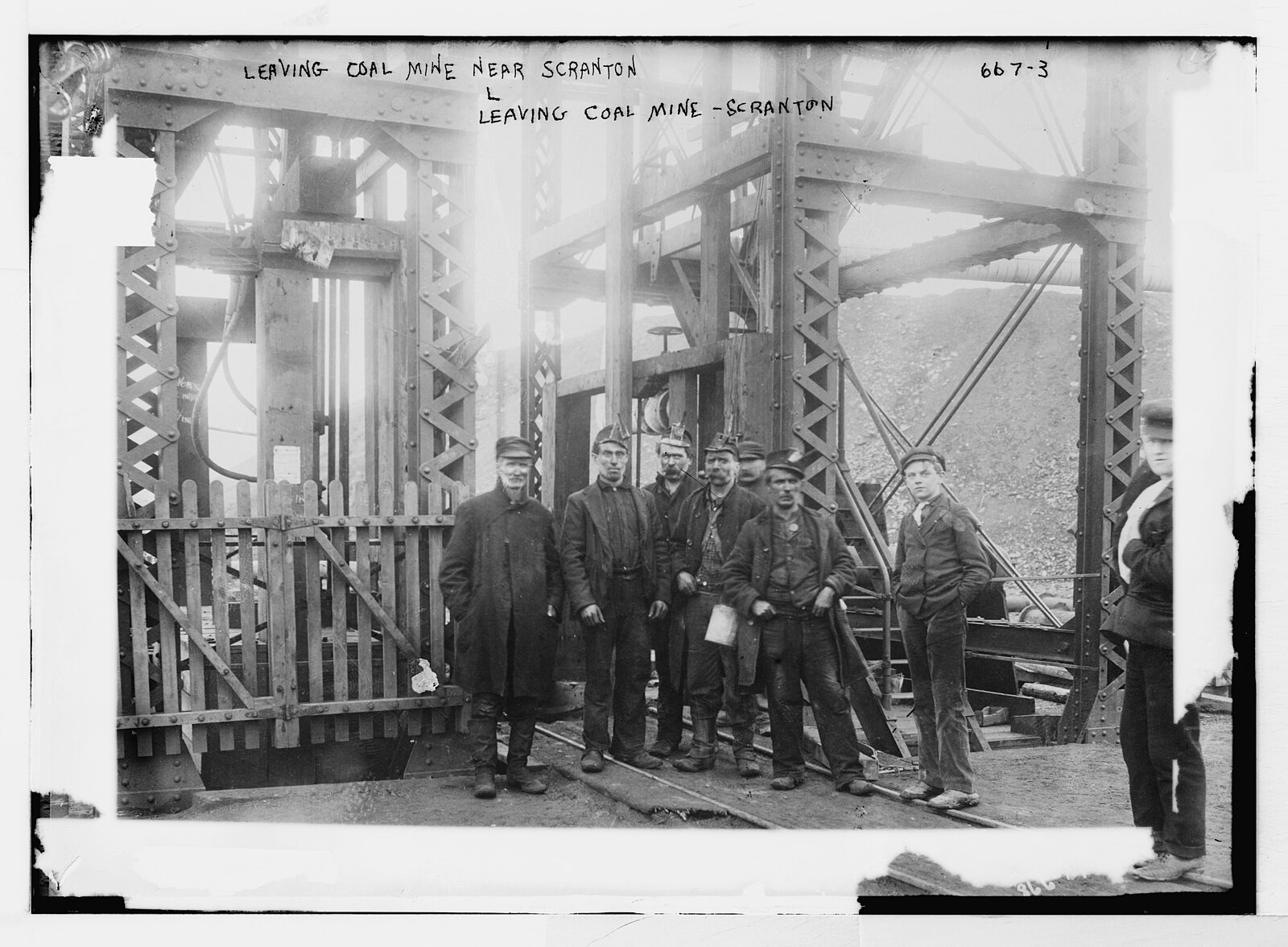
On a Sunday evening in Hyde Park, you could stand on a street corner and hear four-part harmony pouring out of three different chapels at once. The hymns were in Welsh. The voices belonged to coal miners and their wives, men whose fathers had cut anthracite in the Rhondda Valley and now cut it 300 feet beneath the Lackawanna. By the 1880s, this western ward of Scranton, Pennsylvania, held the largest Welsh-American community per capita anywhere outside Wales itself.
Hyde Park, Scranton: The Place
Scranton sits in the Lackawanna Valley of northeastern Pennsylvania, a deep crease in the Appalachian Plateau lined with the richest anthracite seams in the United States. Hyde Park is the historic ward on the west side of the Lackawanna River, climbing the hillside from the old breaker grounds toward Keyser Avenue and Main Avenue. The neighbourhood was incorporated as its own borough in 1852, then absorbed into the City of Scranton in 1866.
It was, and in places still is, a working district of brick rowhouses and double-frame miners’ homes on tight grid streets. Jackson Street and South Main were the commercial spine. The breakers and shaft heads were a short walk downhill, which is why the Welsh chose it.
How Scranton Became Welsh
Before the Welsh
The valley was Lenape land until the late eighteenth century, then patented to Connecticut and Pennsylvania farmers who knew there was black rock in the hillsides but had no use for it. Anthracite was difficult to ignite. It would not catch on a domestic hearth and it would not coke for iron-making by any method then known on the eastern seaboard.
That changed in the 1840s when George and Selden Scranton, the iron-making brothers from New Jersey, succeeded in smelting iron with anthracite at their Lackawanna Iron and Coal works. The town that grew up around the furnace took their name. They needed two things in volume: anthracite, and people who knew how to mine it. Both arrived from Wales.
The Welsh Arrive
The first Welsh miners came in the 1840s. By the 1850s the flow was steady, and by the 1860s and 1870s it was a torrent. Recruiters worked the South Wales coalfield directly. Notices posted in Merthyr Tydfil and Aberdare promised passage, work, and a wage that no Glamorgan colliery could match.
The reason was simple. Welsh miners knew deep-shaft anthracite. The geology of the Lackawanna and the Schuylkill was harder, the pitches steeper, the pillar work more delicate than the Pennsylvania English and Irish labour force could yet manage. Mine owners paid premiums for Welsh foremen, fire bosses, and inside contractors. Each man who landed wrote home to a brother, a cousin, a chapel friend, and the chain pulled tight.
The Welsh did not scatter. They gathered on the west side of the river, in Hyde Park, within walking distance of the Dodge, Diamond, and Continental shafts. By 1870 the borough was effectively a Welsh town transplanted into Pennsylvania bedrock.
Hyde Park at Its Peak
By the 1880s, walking through Hyde Park was, by every contemporary account, like walking through Brynmawr or Aberdare. English was a second language on many streets. Chapel services, school recitations, and Saturday eisteddfodau ran in Welsh. The 1900 census recorded nearly 5,000 Wales-born residents in Scranton, with more than 2,000 in nearby Wilkes-Barre. Estimates of the total Welsh and Welsh-descended population of the Lackawanna and Wyoming valleys ran past 80,000.
The institutional anchors were the chapels. Welsh Calvinistic Methodist, Welsh Congregational, and Welsh Baptist congregations multiplied through the 1860s and 1870s. The Providence Welsh Congregational Church, formally organised in 1855, was the parent of several Hyde Park daughter churches. By the end of the century there were more than a dozen Welsh-language chapels within the borough alone.
The music followed the chapels. Cymanfa Ganu, the four-part hymn-singing festival pioneered in Aberdare in 1859, became a recurring Hyde Park institution. Welsh choirs from Scranton travelled to compete in eisteddfodau across the eastern United States, and the city hosted gatherings that drew thousands. In 1926, a Cymanfa Ganu conducted by the composer Daniel Protheroe in Scranton was reported to have more than 6,000 participants.
The Welsh-language press tracked it all. Y Drych, the Welsh-American newspaper of record, was published variously in New York, Utica, and other Welsh-American hubs, and circulated heavily in Scranton. An earlier Welsh-language Scranton paper, Baner America, ran in the city in the late 1860s and 1870s. Hyde Park readers learned the news of Glamorgan in their own language, on the same day they learned the price of coal.
The Change
The fade was slow and structural rather than sudden. From the 1880s onward, the anthracite mines drew waves of new labour from Poland, Slovakia, Lithuania, Italy, and Ireland. The Welsh, who arrived with skill premiums, moved upward and outward. Many became mine managers, foremen, engineers, and shop owners. Their children went to high school in English and to college if the family could afford it.
The First World War cut off chapel reinforcement from Wales. The Welsh language thinned out one funeral at a time through the 1920s and 1930s. The anthracite industry itself peaked around 1917, then declined as oil and gas displaced hard coal in domestic heating. The Knox Mine disaster of 1959, when the Susquehanna River broke into the workings near Pittston, effectively ended deep-shaft anthracite as a mass employer in the region.
By the time the last Welsh-language services were held in Hyde Park chapels, most of the community’s grandchildren were already living in Dunmore, Clarks Summit, or Philadelphia.
The Landmarks of Welsh Scranton
The Lackawanna Coal Mine Tour, McDade Park, west Scranton. The mine itself opened in 1903 as a working shaft of the Continental Coal Company, closed in 1966, and reopened as a public tour in 1985. Visitors descend roughly 250 feet down the No. 190 slope into the Clark Vein, on the same kind of mantrip car that carried generations of Welsh and later Slavic miners to the face. It is the closest thing surviving to a walk-in monument to the Welsh anthracite craft.
The Pennsylvania Anthracite Heritage Museum, McDade Park, west Scranton. Adjacent to the mine tour, the museum tells the full immigrant-labour history of hard coal. The Welsh are not the only people in its galleries, but they are the founding people. The mining vocabulary, the chapel-and-eisteddfod cultural pattern, and the early skilled-labour migrations all run through the Welsh chapter first.
The Providence Welsh Congregational Church lineage, North Main Avenue corridor. Organised in 1855 as the parent Welsh Congregational body in Scranton, Providence Welsh seeded the network of Hyde Park chapels that defined Welsh religious life for three generations. The 1857 daughter congregation that broke off for Hyde Park purchased the old Universalist church there and dedicated it in March 1858. Most of the original Welsh chapel buildings have been demolished, repurposed, or merged into successor English-speaking congregations.
The Welsh Baptist congregations of Hyde Park. A Welsh Baptist presence took root in Hyde Park in the 1850s and 1860s, with internal splits producing both Welsh-speaking and English-speaking offshoots by the 1870s. The chapels themselves, like much of Hyde Park’s nineteenth-century religious infrastructure, are mostly gone. The hymn tunes survived longer than the buildings.
Hyde Park itself. The neighbourhood west of the Lackawanna River, bounded roughly by Keyser Avenue and Main Avenue, is the single largest landmark in Welsh America. It is still a residential district with the bones of the nineteenth-century miners’ city intact: tight grid streets, double-frame houses, the slope of the hill that once ran straight down to the breakers.
The Welsh Cultural Endeavor of Northeastern Pennsylvania. The Scranton-area Welsh diaspora supports an active heritage organisation that runs St David’s Day events, Welsh language and culture programmes, and an annual Cymanfa Ganu. Programmes shift year to year. The Endeavor is the living thread back to the chapel culture of the 1880s.
Where the Scranton Welsh Came From
The bulk of the migration came from the South Wales coalfield. Merthyr Tydfil and Aberdare sent the earliest waves in the 1840s and 1850s, as the South Wales iron towns shed labour and Pennsylvania recruiters bid for skill. From the 1860s onward, the Rhondda Valley fed the flow heavily. The Rhondda link was so strong that in Porth, Glamorgan, a small district was nicknamed America Fach, Little America, after the men who had spent years in the Pennsylvania mines.
A second, smaller current came from North Wales, particularly the slate-quarrying districts of Caernarfonshire and the Bethesda area, with quarrymen converting their hard-rock skills to anthracite. Anglesey contributed farming families who took up mining only on arrival. The cultural register of Hyde Park, the chapels and the language, was unmistakably South Walian.
Scranton Today
The Welsh language is gone from Hyde Park as a daily medium. The last Welsh-medium chapel services in the region were held in the mid twentieth century. The neighbourhood today is mixed: third- and fourth-generation Welsh and Irish descendants alongside more recent Latino and Vietnamese families, with the same row of frame houses still climbing the hill toward Keyser Avenue.
What survives is heritage, not demography. Cymanfa Ganu still happens. St David’s Day, 1 March, is marked annually by the Welsh Cultural Endeavor of Northeastern Pennsylvania, with services and concerts that draw descendants in from the Pocono suburbs and beyond. Y Drych, now merged with Ninnau as Ninnau and Y Drych, still publishes for the North American Welsh community.
The anthracite region as a whole is a layered immigrant story. The Irish were also a major presence in Scranton and across the Lackawanna and Wyoming valleys, and after the Welsh skilled-labour wave came Poles, Slovaks, Lithuanians, Italians, and others, each with their own parishes and clubs. The Welsh chapter is the first chapter. The hymn that opens it has not stopped echoing.
Frequently Asked Questions
Why did Welsh immigrants settle in Scranton, Pennsylvania?
The Welsh settled in Scranton because the Lackawanna Valley held the richest anthracite seams in the United States, and Pennsylvania mine owners needed deep-shaft expertise that only the South Wales coalfield could supply. Welsh miners arrived from the 1840s onward, recruited directly from Merthyr Tydfil, Aberdare, and the Rhondda Valley, and concentrated in the Hyde Park ward on the west side of the city.
Is Scranton still Welsh today?
Scranton is no longer a Welsh-speaking city, and the chapel network that once defined Hyde Park has largely been absorbed or closed. Welsh identity in Scranton today is heritage-based: an annual St David’s Day, a Cymanfa Ganu hymn-singing gathering, and the work of the Welsh Cultural Endeavor of Northeastern Pennsylvania. Descendants of the original Welsh families are mostly now scattered through the surrounding suburbs.
What are the most famous Welsh landmarks in Scranton?
The Lackawanna Coal Mine Tour and the Pennsylvania Anthracite Heritage Museum, both in McDade Park on the west side, are the strongest physical witnesses to the Welsh anthracite generation. The Hyde Park neighbourhood itself, with its grid of nineteenth-century miners’ housing, is effectively a living landmark. Most of the original Welsh chapel buildings have been lost.
Where in Wales did the Scranton Welsh come from?
The largest share came from the South Wales coalfield, especially Merthyr Tydfil, Aberdare, and the Rhondda Valley in Glamorgan. A smaller but distinct current came from the slate-quarrying districts of North Wales, particularly Caernarfonshire and the Bethesda area, along with Anglesey. The Rhondda link was strong enough that one Glamorgan district came to be nicknamed America Fach.
When did the Welsh first arrive in Scranton?
Welsh miners began arriving in the 1840s, drawn by the Scranton brothers’ new anthracite-fired iron works and the deep-shaft coal industry growing around it. The flow became steady in the 1850s, peaked between the 1860s and 1880s, and effectively ended by the First World War. By 1900 the city held nearly 5,000 Wales-born residents and the largest Welsh-American population per capita anywhere outside Wales.
What happened to the Welsh community in Scranton?
The Welsh community in Scranton dispersed gradually rather than collapsed. As the anthracite industry declined through the twentieth century, Welsh families moved into management, the professions, and out to the surrounding suburbs and beyond. The chapels closed or merged, the Welsh language thinned out by the 1930s, and the community survives today as a heritage network rather than a residential enclave.
If your family’s story passed through Hyde Park, Scranton, or any of the anthracite towns the Welsh made home, Atlas of Home can trace that journey. From a chapel in Aberdare to a mine shaft in the Lackawanna Valley, to wherever in America you find yourself now.