
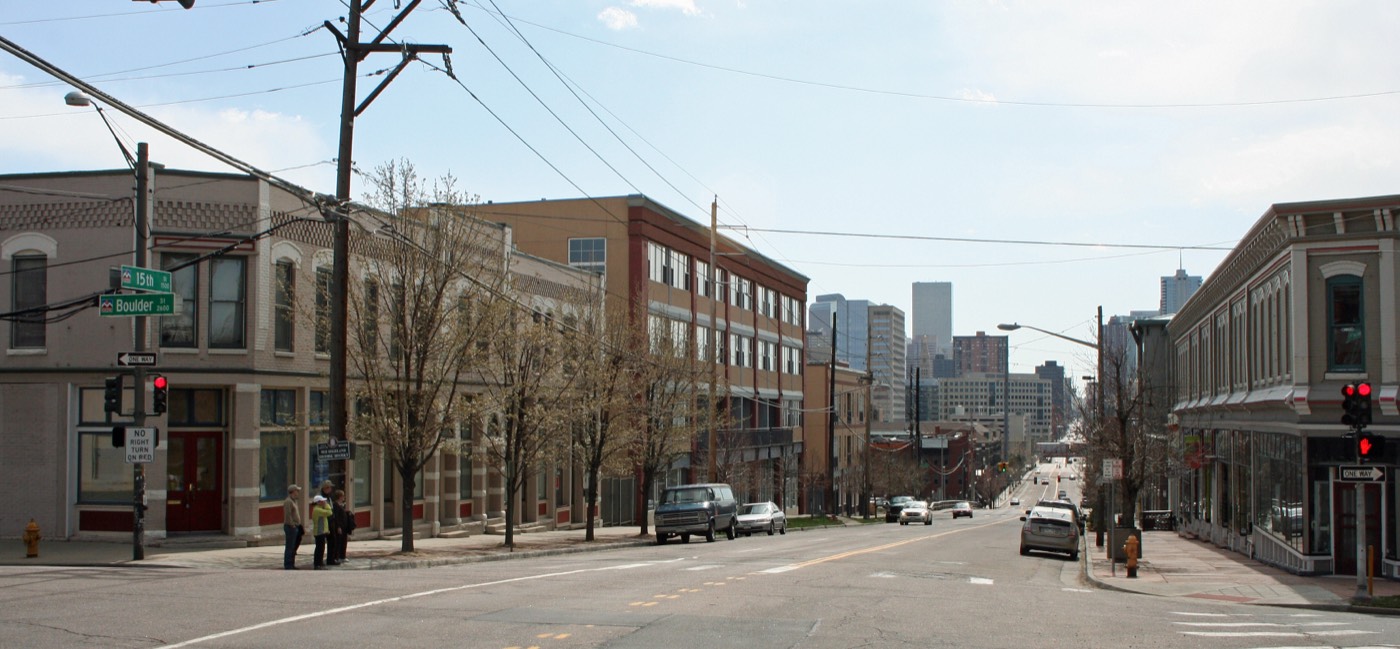
Stand on Navajo Street on a July evening and the bells still find you. For more than a century, the thousand-pound bell of Our Lady of Mount Carmel set the rhythm of the Italians in Denver, calling them to Mass, to the feast, to supper. The neighbourhood around it was once so thoroughly Italian that children learned the dialects of Potenza and Calabria before they learned much English. The bakeries are fewer now, the names on the storefronts changed. But on the first Sunday of every month, the Mass is still said in Italian, and the Northside remembers.
The Place
North Denver climbs the bluffs west of the South Platte River, a grid of brick bungalows and Victorian cottages looking back across the valley toward downtown. Today the maps call it the Highland and Lower Highland neighbourhoods, or simply LoHi, and the storefronts along 32nd Avenue and Tejon Street trade in cocktails and small plates.
It was not always so. For most of the twentieth century this was Denver’s Little Italy, a working district of grocers, sausage makers and stonemasons clustered around a Catholic parish. The boundaries everyone agreed on ran roughly from West 38th Avenue down to West 32nd, between Zuni and Lipan streets, with Navajo Street as its spine.
The Italians did not arrive to an affluent place. They built one, brick by brick, and then watched a later generation of newcomers price their grandchildren out of it.
How It Became Italian
The mining years, from the 1850s
Italians began settling in Colorado as early as the 1850s, drawn west by the same thing that drew everyone else: the promise of metal in the ground. They worked the mines of Leadville and Georgetown and the railroad lines that stitched the territory together. The first wave came largely from the north of Italy, from Lombardy and the Piedmont.
Denver became the place they fell back to. When a mine closed or a man was hurt, the city offered grocery counters, market gardens and church. Arriving to work on the railroad and in the mines, the early Italians were poorly paid, given the menial jobs, and often the first laid off when cheaper labour appeared. Public intolerance toward them ran harsh, especially during recessions.
The Southern wave and the parish, 1894
By the 1890s the character of the migration had shifted. The newcomers now came overwhelmingly from the south, from Basilicata, Calabria and Sicily, fleeing the grinding poverty of the Mezzogiorno. They settled the section of Navajo Street between 32nd and 38th Avenues, where they lived and worked and spoke their own dialects.
In March 1894 they established Our Lady of Mount Carmel, Colorado’s first Italian national parish. The original was a small wood-framed church, dedicated on Palm Sunday by Bishop Nicholas Matz. Four months later the parish held its first Feast of Our Lady of Mount Carmel, a tradition that has run, in one form or another, ever since.
The little frame church did not last. In 1898 it was destroyed by arson, an ugly fact that sits uneasily beside the romance often spun around the old neighbourhood. The parish rebuilt in brick between 1899 and 1904, this time to last.
Mother Cabrini and the orphans, 1902
In 1902 a small, determined nun from Lombardy arrived to find thousands of Italians already settled and in need. Frances Xavier Cabrini, later canonised as the first American citizen to be made a saint, came at the bishop’s urgent invitation.
Mining was lethal work, and many children were left fatherless. In 1904 Mother Cabrini opened the Queen of Heaven orphanage in north Denver, eventually housing 160 children at a time. Between 1904 and 1967, when foster care replaced such institutions, an estimated 20,000 girls passed through its doors. She would later buy land on the slope of Lookout Mountain for a summer camp, the site that is now the Mother Cabrini Shrine.
The neighbourhood at its height, 1899 to 1930
The mutual aid society came in 1899, when immigrants from the city of Potenza in Basilicata founded the Potenza Lodge. It survives as the oldest continuously operating Italian organisation in Colorado, out of the thirty-seven the state once counted. The lodge was a safe haven for men who had crossed the ocean with five or ten dollars in their pockets, and it still keeps the Feast of St. Rocco, the saint invoked against disease.
By 1930 the Mount Carmel parish counted more than three thousand souls, and Italians had become Denver’s fourth-largest foreign-born group. The Northside had its own grammar, its own gossip, its own economy of bakers and butchers and stonecutters. Brick by brick, the menial labourers of the 1880s had built a district they owned.
The dispersal, 1950s onward
Prosperity, as it often does, scattered the community it had created. Through the 1950s and 1960s the children and grandchildren of the immigrants moved out to Wheat Ridge and Arvada, to ranch houses with garages and lawns. The Northside stayed Italian in spirit but thinned in numbers, and later waves of Hispanic families and, eventually, young professionals moved into the brick bungalows the Italians had left.
The Landmarks
Our Lady of Mount Carmel Church, 3549 Navajo Street. The spiritual centre of Italian Denver, its twin towers capped with copper domes in the Romanesque Revival style, the interior hung with marble statues and murals brought from Italy. Listed as a Denver Landmark in 1977, it still offers La Prima Domenica, a Mass in Italian, on the first Sunday of every month.
Potenza Lodge, North Denver. Founded in 1899 by immigrants from Potenza in Basilicata, this mutual aid society is the oldest continuously operating Italian organisation in Colorado. More than a century on it still hosts the Feast of St. Rocco, an evening of food, music and procession that draws the descendants of the Northside back to the old neighbourhood.
Patsy’s Inn, formerly on the Northside. Opened in 1921 by Michael Carmine Aiello as Aiello’s Italian Kitchen, it was Denver’s oldest Italian restaurant. The name changed to Patsy’s during the years when anti-Italian feeling ran high over Mussolini. It served the red sauce of the old country for ninety-five years before closing in 2016, one of a string of classic joints lost in a decade.
Gaetano’s, 38th Avenue and Tejon Street. Opened in 1947 and long carrying the whispered reputation of a mob hangout, Gaetano’s is one of the survivors. It began as a red-sauce joint and remains one, now independently owned, a working monument to the neighbourhood’s culinary past.
Carbone’s Italian Sausage Deli, 1221 West 38th Avenue. Part market, part sandwich counter, almost always with a queue. In 1974 Rosa and Nick Lonardo bought the place from Dominic Carbone, who taught them to make sausages and meatballs the old-fashioned way. The Carbone name runs deep in the Northside, from the original bakery off 34th and Quivas where families rode bicycles on Saturday mornings for twist bread and sugar doughnuts.
Leprino Foods, West Highland. Mike Leprino Sr. emigrated from Italy in 1914 at sixteen, worked the farms, and in 1950 opened a corner grocery, Leprino & Sons, in Little Italy. When the chains squeezed out the family market, his son James turned the back-room cheese-making into Leprino Foods, today the largest mozzarella producer in the world, still headquartered in the neighbourhood where it began.
The Queen of Heaven orphanage site, north Denver. Mother Cabrini’s home for the orphaned children of Italian miners opened here in 1904. Across six decades it sheltered an estimated twenty thousand girls, a quiet monument to the toll the mines took on immigrant families and the woman who answered it.
Where They Came From
The story divides cleanly in two. The earliest arrivals of the 1850s and 1860s came from the north of Italy, from Lombardy and the Piedmont, men with some experience of mountains and hard rock who took naturally to the Colorado mines.
The great wave that built the Northside came later and from the south. They were Lucanians from Potenza and the hill towns of Basilicata, Calabrians, and Sicilians, leaving the poverty of the Mezzogiorno for any work they could find. The Potenza Lodge, named for a single southern city, tells you where the heart of the community lay.
They came chasing the same chain that pulls every migration: a cousin already in Denver, a job at a mine or a market garden, a parish that said Mass in a language they understood. Once one family from a village arrived, others followed, until whole streets of the Northside spoke the dialect of a particular corner of southern Italy.
Denver Today
Walk the Highland today and the Italian Northside is something you have to look for. The cocktail bars and boutiques of 32nd Avenue have little to say about Basilicata. Patsy’s is closed, Carbone’s original locations have come and gone, and the brick bungalows that immigrant masons built now sell for sums those masons could never have imagined.
Yet the bones of the place hold. Mount Carmel still rings, still says its Italian Mass. Gaetano’s still pours Chianti, Tony’s Market still slices prosciutto, and the Potenza Lodge still throws the Feast of St. Rocco. Each summer the Festival Italiano, now held out at Belmar in nearby Lakewood, draws more than seventy-five thousand people for food, wine and the noise of an old culture refusing to go quiet.
There is a campaign now, led by descendants, to have the old core declared a Little Italy historic district, the stretch from 38th down to 32nd between Zuni and Lipan. Whether or not it succeeds, the impulse is the same one that built the place: a refusal to let the Northside forget who raised it. For more on the Italians who settled Colorado’s mining country, see our companion piece on the Italians in Pueblo, Colorado. Denver’s Italian story also sits among the wider tapestry of newcomers who made Colorado home, from the Ethiopians in Aurora to the Indians in Centennial.
Frequently Asked Questions
Where did the Italians in Denver settle?
The Italians in Denver settled the Northside, in what became known as Little Italy, centred on Navajo Street between 32nd and 38th Avenues in today’s Highland neighbourhood. The agreed core ran from West 38th to West 32nd, between Zuni and Lipan streets, anchored by Our Lady of Mount Carmel church.
When did Italians first come to Denver?
Italians began arriving in Colorado as early as the 1850s, drawn by the mining boom in towns like Leadville and Georgetown, and falling back on Denver between jobs. The larger wave that built the Northside came in the 1890s and early 1900s, mostly from southern Italy.
What is Our Lady of Mount Carmel church?
It is Colorado’s first Italian national parish, founded in 1894 and rebuilt in brick between 1899 and 1904 after the original frame church was destroyed by arson. With its twin copper-domed towers, it remains the spiritual heart of the Italians in Denver and still offers a Mass in Italian on the first Sunday of each month.
Where did Denver’s Italians come from in Italy?
The earliest arrivals came from the north, from Lombardy and the Piedmont. The great wave that shaped the Northside came from the south: from Potenza and the rest of Basilicata, from Calabria and from Sicily, fleeing the poverty of the Mezzogiorno.
Is there still an Italian community in north Denver?
The community has dispersed since the 1950s, with many families moving to Wheat Ridge and Arvada, but its institutions endure. Mount Carmel, the Potenza Lodge, Gaetano’s and the annual Festival Italiano keep the heritage alive, and descendants are campaigning to protect the old district.
Who was Mother Cabrini in Denver?
Frances Xavier Cabrini was an Italian nun who arrived in 1902 to serve Denver’s Italian immigrants. In 1904 she founded the Queen of Heaven orphanage in north Denver for the children of miners killed at work, and she was later canonised as the first American citizen to be declared a saint.
If your family’s story passed through Denver, or any of the places Italians have made home in America, Atlas of Home can trace that journey. From a hill town in Basilicata to a brick bungalow on Navajo Street, to wherever you are now.