
Walk south from Dupont Circle on a cold morning, past the embassies and the dry cleaners, and you will eventually smell it: berbere and clarified butter, the deep iron tang of a stew that has been on the stove since before dawn. Follow it and you find a small dining room where the radio plays Tigrinya pop and the waiter brings you injera without asking. The Eritreans in Washington, District of Columbia, have been a quiet, stubborn presence here for half a century, and this is one of the rooms they built.
It is easy to miss them. In the national imagination the Horn of Africa diaspora in Washington is Ethiopian, and the numbers bear that out. But Eritrea is its own country with its own long war behind it, and the people who left it for the American capital came for reasons all their own. Their story in DC begins not in a restaurant but in a rented room above a print shop, where a handful of students argued late into the night about a homeland that did not yet exist.
The Place
Washington is a city of arrivals. Embassies, universities, international institutions and a federal government that hires the world’s educated have made the District a magnet for immigrants since the middle of the twentieth century, and the Horn of Africa community here is among the largest in the United States.
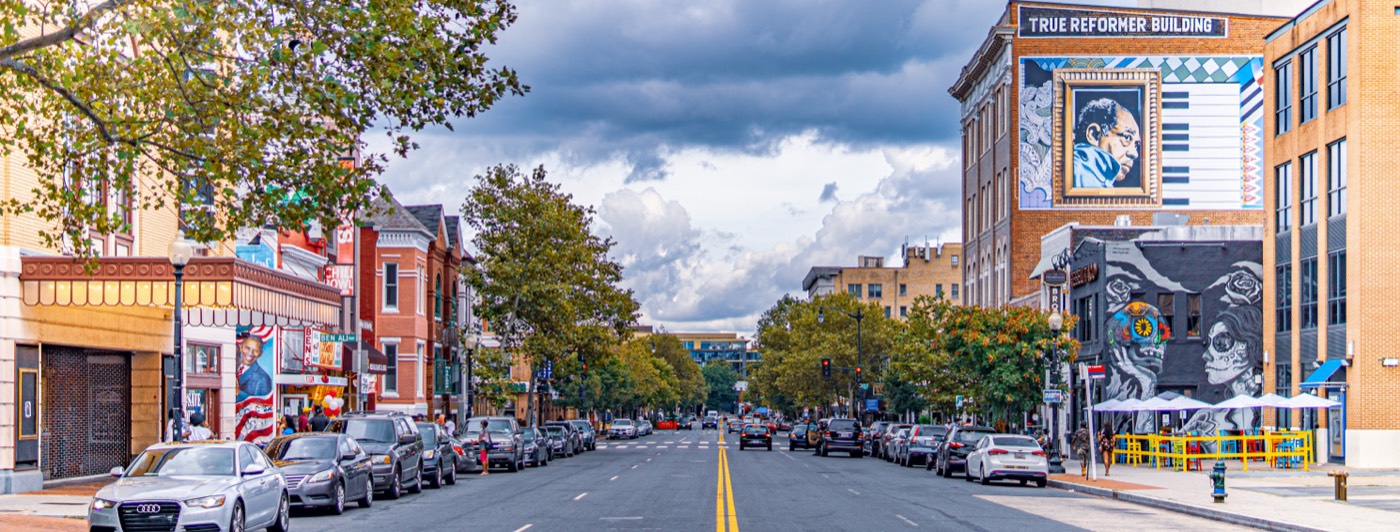
The Eritrean presence has clustered along the old immigrant spine of the city: Adams Morgan, the U Street corridor, the blocks around 18th Street and Florida Avenue NW, then outward into the Maryland and Virginia suburbs as rents rose. The District itself stayed the symbolic centre, the place where the churches were consecrated and the festivals were held.
This is a community defined less by a single block than by a set of institutions: a church, a civic centre, a scatter of restaurants and groceries that have outlasted everything around them.
How It Became Eritrean
To understand why so many Eritreans ended up in Washington, you have to start with a war that almost nobody in America was watching.
The students and the struggle (1960s and 1970s)
Eritrea’s armed struggle for independence from Ethiopia began in 1961 and ground on for thirty years. Among the first Eritreans to reach Washington were students, some on scholarships, some sent by families who could see the war coming.
They were not only studying. In June 1971, Eritreans for Liberation in North America, the EFLNA, was established in Washington, D.C. It became one of the most important nodes of the independence movement outside the Horn itself, a clearing house for news, money and recordings that travelled back and forth between the capital and the field.
The community had no building of its own at first. It met in rented rooms across the city: an address on Vermont Avenue NW in the mid 1970s, then a space on 18th Street, then a house on Kilbourne Place NW by the end of the decade. These were not glamorous places. They were where you went to hear a cassette smuggled out of the trenches, or to send a few dollars home through channels the Ethiopian government could not see.
Refugees and the long war (1980s)
As the war deepened in the 1970s and 1980s, the character of the Eritrean arrival changed. The students were joined by refugees, people who had fled first to Sudan and then onward to the United States, many of them resettled through programmes that channelled Horn of Africa refugees toward cities with existing communities.
Washington was the obvious destination. There were jobs in parking, in hotels, in the federal economy’s vast service underbelly, and there was already a network of Eritreans who could explain how an American lease worked. Adams Morgan, then cheap and a little rough, absorbed many of them.
In 1985 the community bought its first property of its own, a three storey townhouse on Ontario Road NW. For a people whose homeland was still occupied, owning a building in the capital of the United States was not a small thing. It was a flag planted.
Independence and after (1991 to 2000)
In 1991 the Eritrean People’s Liberation Front captured Asmara and declared de facto independence. Two years later, between 23 and 25 April 1993, Eritreans voted in a referendum that returned 99.83 per cent in favour of independence. Crucially, the diaspora voted too. Independence was formally declared on 27 April 1993.
In Washington that spring there was dancing in the streets near 18th Street, by every account of those who were there. The country the students had argued about in rented rooms two decades earlier was suddenly real, and the people who had paid for it from afar finally had a homeland to go back to, or at least to visit.
Many did not go back, the same choice made by the Eritreans who settled in Oakland, California on the opposite coast. They had children in American schools, mortgages in Maryland, businesses on U Street. And within a few years the homeland’s promise curdled: the 1998 to 2000 border war with Ethiopia, and the closing of Eritrea’s political space afterward, gave many in the diaspora reason to stay exactly where they were. The Washington community, founded on the dream of return, became permanent almost in spite of itself.
The Landmarks
Keren Restaurant, 1780 Florida Avenue NW. Opened in 1987 and named for the Eritrean highland town, Keren sits at the southern tip of Adams Morgan, between Dupont Circle and 18th Street. It is small, plain and beloved. Regulars come for ful and eggs in the morning, the stewed fava beans a legacy of Eritrea’s Italian and Red Sea past, and for tsebhi dorho, the spiced chicken stew eaten with injera, later in the day. After a long closure it reopened in 2023, to audible relief from its expatriate regulars.
Eritrean Cultural and Civic Center, 2154 24th Place NE. The ECCC traces its roots to the early diaspora organisations of the 1970s and grew into the community’s living room. Over the decades it occupied a string of addresses across the city, from Ontario Road to the blocks near 6th and L Streets NW, before moving to its current Northeast home in 2019. It is where Eritrean language classes are held, where the independence-era recordings once circulated, and where the community still gathers for its festivals.
Massawa Event Center. Operated in connection with the civic centre and named for Eritrea’s old Red Sea port, the Massawa hall is where the community holds the weddings, the funerals and the holiday celebrations that need a room bigger than a restaurant. It is the kind of place where three generations turn up in the same evening.
91 Restaurant and Bar. Also tied to the civic centre, 91 is named for the year of liberation, 1991. It functions as a gathering spot as much as an eatery, a place to watch football from home, drink Eritrean coffee and argue about politics in Tigrinya across the bar.
The U Street corridor. Long the heart of Black Washington and later of the Horn of Africa diaspora, U Street NW gave the Eritrean community its first commercial foothold alongside its Ethiopian neighbours. In 2020 the District formally honoured the corridor as Little Ethiopia, a recognition Eritreans regard with a complicated affection: they share the street and the cuisine’s roots, but insist, gently and firmly, that they are not the same. The corridor’s other Horn of Africa neighbours, from Ethiopians on U Street to Salvadorans up the hill in Mount Pleasant, all came up the same immigrant spine of the city.
Eritrean Orthodox Tewahedo churches. Faith anchors much of the community, and the Eritrean Orthodox Tewahedo Church, with its Ge’ez liturgy and its fasting calendar, has long maintained congregations in the Washington area, including Medhane Alem in the District and Kidane Mehret across the river in Alexandria, Virginia. On feast days the women come in white netela, and the chanting carries out into the parking lot.
Where They Came From
Eritrea is a small country of perhaps six million people, but it is layered: nine recognised ethnic groups, two main faiths, and a coastline that has traded with Arabia and the Mediterranean for centuries. The Washington community reflects that layering.
Many of the early arrivals were Tigrinya speakers from the highlands around Asmara, the educated Christian core from which the independence movement drew much of its leadership. Over time the community broadened to include lowland Muslims, Tigre speakers and others, mirroring the country they had left.
The pull factors were specific to Washington: the EFLNA’s early presence, the federal and service economy’s appetite for labour, and the simple gravitational fact that immigrants go where their countrymen already are. The push was the war and, later, the political repression that international monitors have documented in the years since independence. By 2005 the Population Reference Bureau estimated that roughly 2,300 people from Eritrea lived in the region, a figure almost certainly conservative and one the US Census, which does not cleanly separate Eritreans from Ethiopians, has never properly captured.
Washington Today
The Eritrean Washington of 2026 is a suburban community with an urban heart. The families have largely followed the same path as every other DC immigrant group, out to Silver Spring, Hyattsville, Alexandria and beyond, where the houses are bigger and the schools are calmer. The restaurants and the churches are what keep drawing them back across the District line.
It is also a community marked by distance and by politics. Eritrea’s government keeps a close eye on its diaspora, and the festivals held in Washington have at times become flashpoints between supporters and opponents of the regime back home. The unity of the independence years has frayed; the room above the print shop has split into many rooms.
And yet the institutions hold. Keren still serves ful at breakfast. The civic centre still teaches children to read Tigrinya. The Orthodox churches still fast through Lent and feast at Easter. For a community that spent thirty years fighting for a country from six thousand miles away, the achievement in Washington is quieter and more durable than independence: it is permanence, an Eritrean life lived fully and openly in the American capital, generation after generation.
Frequently Asked Questions
Where do Eritreans live in Washington, DC?
The historic core of the Eritrean community in Washington runs through Adams Morgan and the U Street corridor, around 18th Street and Florida Avenue NW. As in most DC immigrant stories, many families have since moved out to suburbs in Maryland and Northern Virginia, including Silver Spring and Alexandria, while keeping their churches and restaurants in the District.
Are Eritreans and Ethiopians the same community?
No. They share a region, a cuisine’s roots, injera and a long intertwined history, and in Washington they often share the same blocks. But Eritrea is a separate country that won independence from Ethiopia in 1993 after a thirty year war, and Eritreans in Washington are usually firm about the distinction, even on a street the city has named Little Ethiopia.
What is the best Eritrean restaurant in Washington, DC?
Keren Restaurant at 1780 Florida Avenue NW, open since 1987, is the most enduring Eritrean restaurant in the city. It is known for its ful and eggs at breakfast and its tsebhi dorho, a spiced chicken stew served with injera, and it reopened in 2023 after a long closure.
How did the Eritrean community in Washington begin?
The Eritreans in Washington, District of Columbia, trace their organised beginnings to June 1971, when Eritreans for Liberation in North America was founded in the city. Students and, later, refugees from the war for independence built a community around that political core, long before independence finally came in the early 1990s.
Is there an Eritrean cultural centre in Washington?
Yes. The Eritrean Cultural and Civic Center, now at 2154 24th Place NE, grew out of the diaspora organisations of the 1970s and is the community’s main gathering place. It runs cultural and language programmes and is connected to the Massawa Event Center and the 91 Restaurant and Bar.
What religion do Eritreans in Washington practise?
Most Eritrean Christians belong to the Eritrean Orthodox Tewahedo Church, with congregations such as Medhane Alem in the District and Kidane Mehret in Alexandria, Virginia. The community also includes Catholics, Protestants and a significant number of Muslims, reflecting the religious mix of Eritrea itself.
If your family’s story passed through Washington, or any of the places Eritreans have made home in America, Atlas of Home can trace that journey. From the highlands around Asmara to a rented room near 18th Street, to wherever you are now.