
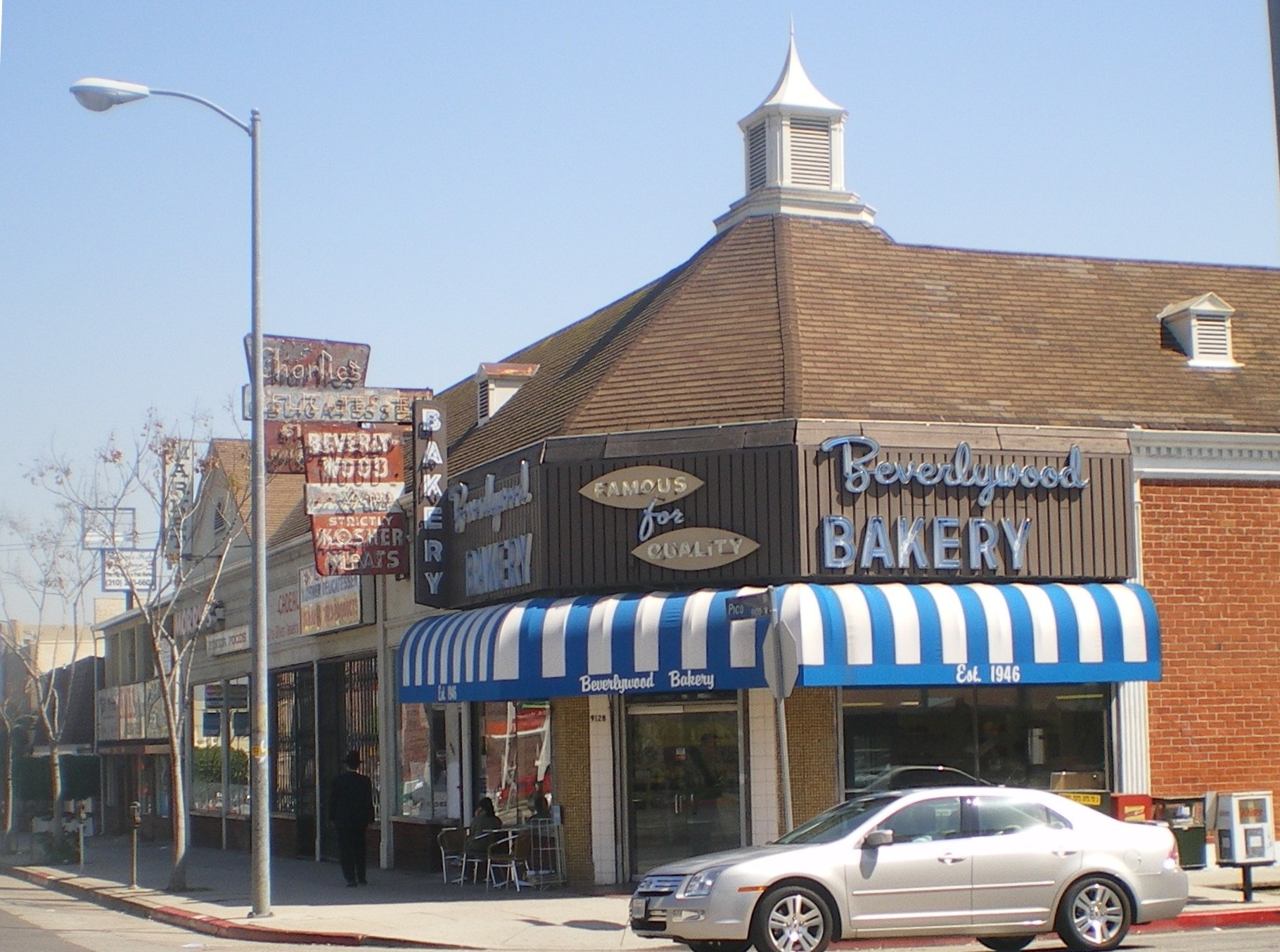
On a Sunday morning in West Los Angeles, the loudest language on Pico Boulevard is Hebrew. A father at Cafe Aroma calls to a daughter in line for shakshuka, the cadence pure Tel Aviv. Two doors down, a butcher counts out lamb chops for a customer asking about cuts in a Beersheba accent.
By Friday afternoon, the same stretch of street performs a weekly drill that no one teaches and everyone knows. Strollers and shopping bags converge on Eilat Bakery, Bibi’s, and the Pico Glatt Market. Challah comes out of the ovens. The traffic on Pico thins by sundown. Shabbat lands on Pico-Robertson the way it lands on Rehavia.
Greater Los Angeles is home to the largest Israeli diaspora population in the United States. The Israeli American Council puts the figure above 250,000, counting Israeli-born residents and their American-raised children. They are scattered across the San Fernando Valley, Encino, Tarzana, Beverly Hills, and the Westside. But the spiritual high street, the place where Hebrew is the unembarrassed default, runs along Pico Boulevard.
Pico-Robertson, The Place
Pico-Robertson sits on the Westside of Los Angeles, a low-rise residential grid centered on the intersection of Pico Boulevard and Robertson Boulevard. The neighborhood runs roughly from Beverly Hills to the north down to the Santa Monica Freeway to the south, with Beverwil and Westwood to the west and Carthay and Mid-City to the east. The housing is small Spanish bungalows and 1940s duplexes, most of them within walking distance of a synagogue.
The commercial spine is Pico Boulevard itself, a long east-west boulevard that runs from downtown Los Angeles to the Pacific. The stretch between Roxbury Drive and Crescent Heights is what locals call the “Kosher Corridor.” Beverly Hills and Century City are minutes north. The Westfield Century City mall sits just over the border. The neighborhood is walkable, residential, and unmistakably Jewish, but the accent on the corridor is something more specific. It is Israeli.
How Pico-Robertson Became Israeli
Before the Israelis
The neighborhood was Jewish long before it was Israeli. German-Jewish families had been settling in the area since the 1910s, when streetcars first ran out of downtown Los Angeles to the relatively rural Westside. By the 1940s and 1950s, Pico-Robertson was a comfortable middle-class Jewish neighborhood of Conservative synagogues, delicatessens, and bungalows.
The character was suburban and American. Many synagogues were so large in the 1950s and 1960s that they ran two Bar Mitzvah ceremonies on the same Shabbat morning. Torah observance was visible but unspectacular. Few people walked the streets on Saturdays. The neighborhood was Jewish in the way Brookline was Jewish, or Long Island. American first.
A second layer arrived after 1979. The Iranian Revolution drove tens of thousands of Persian Jews out of Tehran, Shiraz, and Isfahan, and a substantial share of them landed in Los Angeles. Many settled in Beverly Hills and Westwood, but Pico-Robertson absorbed a Persian-Jewish commercial presence that still defines the neighborhood. Kosher Persian restaurants, Persian-owned groceries, and Farsi conversation became part of the soundscape before the Israeli wave fully took hold.
The Israelis Arrive
Israelis had been trickling into Los Angeles since the 1950s, but the real movement began after October 1973. The Yom Kippur War shook a generation. A country that had felt invincible in 1967 spent three weeks fighting for its survival, lost more than 2,600 soldiers, and emerged with its confidence cracked. Emigration rates rose. By the late 1970s, the share of Israeli emigrants choosing Los Angeles had more than doubled, from roughly eight percent earlier in the decade to seventeen percent.
They came with a stigmatized name. In Israel, those who left were called “yordim,” literally “those who descend,” in contrast to the “olim” who “ascend” to Israel. In 1976, Prime Minister Yitzhak Rabin called Israeli emigrants “the fallout of weaklings.” The Israeli press treated them as a national embarrassment. The yordim themselves often arrived intending to stay a year or two, save money, and return. Most never did.
The 1982 Lebanon War sent another wave. The 1980s economic crisis sent a third. By the time the 1990s arrived, Los Angeles had a critical mass of Hebrew speakers large enough to sustain Hebrew radio, Hebrew supermarkets, and Hebrew schools. Pico-Robertson, with its existing Jewish infrastructure and proximity to Beverly Hills and the entertainment industry, became the obvious anchor.
Pico-Robertson at Its Peak
By the early 2000s, the Kosher Corridor was unmistakable. The stretch of Pico between Beverwil and Crescent Heights held more than thirty certified kosher restaurants, half a dozen kosher bakeries, two kosher butchers, several Israeli-owned cafes, and a chain of supermarkets. Hebrew signage appeared in storefront windows. Cafes advertised “sandwichim,” the Hebrew plural that English speakers learned by osmosis.
The wave was no longer only refugees from war. The 1990s and 2000s brought a different kind of Israeli to Los Angeles: tech founders, ex-Unit 8200 engineers, lawyers, doctors, real estate developers, and the children of all of the above. Israeli-American identity stopped being something to apologize for. By 2007, the diaspora had become organized enough to launch its own institution.
In July of that year, about eighty Israeli-American business leaders gathered at the Beverly Hilton, two miles north of Pico Boulevard, to launch the Israeli Leadership Council. The founders included Adam Milstein, Shoham Nicolet, and the Israeli Consul General Ehud Danoch. Mayor Antonio Villaraigosa spoke. In 2013, the organization rebranded as the Israeli-American Council. With backing from Sheldon and Miriam Adelson, the IAC expanded to sixteen regional chapters serving the more than 500,000 Israeli-Americans now living in the United States. Its origin is Los Angeles. Its center of gravity is still the Westside.
The Change
The shift in the Israeli government’s posture mattered too. By the mid-1980s, Jerusalem had stopped denouncing yordim and started courting them. Programs offered employment leads, housing assistance, and travel loans. The stigma softened. Israeli-American identity became something a family could claim openly, raise children inside, and pass on. Hebrew-language schools opened. Israeli scouts (Tzofim) chapters expanded. Hebrew-language summer camps in the San Fernando Valley filled up.
And then, on October 7, 2023, everything changed again. The Hamas attack on southern Israel killed roughly 1,200 people and took more than 240 hostages. Within forty-eight hours, the Israeli community on Pico Boulevard had organized.
Temple Beth Am collected more than 200 suitcases of supplies in a single day, bound for Israel by the end of the week. Rallies, vigils, and solidarity marches filled Pico Boulevard from Beverwil to Roxbury. The IAC mobilized nationally from its Los Angeles base. For a community that had spent two generations downplaying its Israeli-ness, the post-October-7 months were a hard, public reassertion of it.
The Landmarks of Israeli Pico-Robertson
Eilat Bakery (9060 W Pico Blvd). Named for the Red Sea resort city in southern Israel, Eilat has been baking Israeli pastries, challah, and rugelach in Los Angeles for more than three decades. The current Pico Boulevard location, opened in 2010, became a Friday afternoon institution. Late on a Friday the line for challah extends out the door.
Bibi’s Bakery Cafe (8928 Pico Blvd). A working Israeli bakery and coffeehouse, Bibi’s sells kosher pitas, pizza, sabich, and Friday challahs. The interior could be lifted out of Ramat Gan. Hebrew is the working language behind the counter.
Got Kosher Cafe (8914 Pico Blvd). A cafe-bakery and Shabbat-takeout institution. The chalkboard menu rotates Israeli salads, shakshuka on Sundays, and a deep slate of pastries on Thursday and Friday for the pre-Shabbat rush.
Young Israel of Century City (9317 W Pico Blvd). Founded in 1976 and grown to more than 400 families, this Modern Orthodox congregation became one of the largest in West Los Angeles. A 300-pound bronze menorah modeled on the Knesset symbol stands in the courtyard as a tribute to the families of YICC’s “Lone Soldiers,” congregants’ children serving in the IDF without immediate family in Israel.
Beth Jacob Congregation (9030 W Olympic Blvd). Founded in West Adams in 1925 as the West Adams Hebrew Congregation, Beth Jacob moved west with its membership and is now one of the largest Modern Orthodox synagogues in the city, with substantial Israeli-American membership.
B’nai David-Judea Congregation (8906 W Pico Blvd). A Modern Orthodox synagogue on the corridor itself, B’nai David-Judea has been a community anchor and a frequent gathering point for cross-denominational Israeli events.
The Israeli Consulate General (11766 Wilshire Blvd). A mile north of Pico-Robertson on Wilshire, the consulate is the bureaucratic heart of the Los Angeles Israeli community. Passport renewals, voter rolls, military reserve paperwork, and the long line outside the building on Israeli election day are part of the rhythm of being Israeli in Los Angeles.
Where the LA Israelis Came From
They came from across Israel. Tel Aviv supplied the largest single stream, followed by Jerusalem, Haifa, and the smaller cities of the coastal plain: Netanya, Rishon LeZion, Petah Tikva, Holon, Ramat Gan. Beer Sheva and the southern desert towns sent a smaller but identifiable stream, often through military or academic routes. Kibbutzim sent farmers’ children who never went back.
Inside Israeli identity, there is no single ethnic story. The Los Angeles Israeli community spans every internal stream of the Israeli mosaic.
Ashkenazi Israelis trace family roots back through Eastern Europe, often through grandparents who survived the Holocaust and built lives in 1950s Tel Aviv. Mizrahi Israelis carry the histories of Iraqi, Yemenite, Moroccan, Tunisian, Libyan, and Egyptian Jewish communities, most of whom arrived in Israel in the mass aliyot of the 1950s after being pushed out of Arab countries. Sephardic Israelis trace deeper roots back to Iberia. Ethiopian Israelis, who came to Israel in Operations Moses and Solomon in the 1980s and 1991, are a smaller but visible presence in Los Angeles too.
And there is a layer of Russian-speaking Israelis, the children of the post-Soviet aliyah of the 1990s. Roughly a million Soviet Jews arrived in Israel between 1989 and the early 2000s. Many were engineers and scientists. Some, after a decade or two in Israel, re-emigrated to Los Angeles for tech jobs. Their kids grow up trilingual: Russian at home, Hebrew at school, English everywhere else.
Pico-Robertson Today
The corridor is full. Rents on Pico Boulevard between Roxbury and Beverwil have risen with the rest of West Los Angeles, but the kosher infrastructure has held. There are still more than thirty kosher restaurants, more than twenty active synagogues, and at least six major Jewish day schools serving the neighborhood. The Pico-Robertson branch of the Los Angeles Public Library closes on Saturdays and opens on Sundays, a small civic acknowledgment of what the neighborhood actually is.
The Israeli identity inside the broader Jewish community is more visible now than it was a decade ago. Israeli flags hang from balconies. Hebrew radio plays out of cars. The IAC’s annual Celebrate Israel festival in May fills a park with tens of thousands of Israeli-Americans and their kids. After October 7, the visibility intensified. The community has not gone quiet since.
What you do not hear, on Pico in 2026, is much talk of going back. The first wave of yordim arrived with one foot still in Tel Aviv. The second wave learned to live with the contradiction. The third, the American-born children, do not have the same struggle. They are Israeli the way their grandparents were Polish or Iraqi: a story carried forward, a language kept alive, a Friday-afternoon ritual that nobody assigned them. On Pico Boulevard, that is enough.
Frequently Asked Questions
Why did Israelis settle in Pico-Robertson?
Israelis settled in Pico-Robertson because the neighborhood already had Jewish infrastructure when the post-1973 emigration wave arrived: synagogues, kosher butchers, day schools, and a critical mass of Hebrew speakers. Its proximity to Beverly Hills, Century City, and the entertainment and tech industries made it practical. Once a few Israeli-owned businesses opened on Pico Boulevard, chain migration did the rest.
Is Pico-Robertson still Israeli today?
Yes. Pico-Robertson remains the commercial and cultural heart of the Los Angeles Israeli community in 2026. Hebrew is widely spoken on Pico Boulevard, Israeli-owned restaurants and bakeries dominate the Kosher Corridor, and the Israeli-American Council still operates from Los Angeles. The community has grown more visible since the October 7, 2023 attacks.
What are the most famous Israeli landmarks in Pico-Robertson?
The most famous landmarks include Eilat Bakery at 9060 W Pico Blvd, Bibi’s Bakery Cafe at 8928 Pico Blvd, Got Kosher Cafe at 8914 Pico Blvd, Young Israel of Century City at 9317 W Pico Blvd, Beth Jacob Congregation at 9030 W Olympic Blvd, and B’nai David-Judea on Pico Boulevard. The Israeli Consulate General at 11766 Wilshire Blvd is a mile north and serves as the bureaucratic anchor.
Where in Israel did the Pico-Robertson Israelis come from?
They came from across Israel, with the largest streams from Tel Aviv, Jerusalem, Haifa, and the cities of the coastal plain: Netanya, Rishon LeZion, Petah Tikva, Holon, and Ramat Gan. Inside that geography, the Los Angeles Israeli community includes Ashkenazi, Mizrahi, Sephardic, Ethiopian, and Russian-Jewish-Israeli families, reflecting the full internal diversity of Israeli society.
When did Israelis first arrive in Pico-Robertson?
Israelis began arriving in Los Angeles in small numbers in the 1950s, but the major waves came after the 1973 Yom Kippur War, the 1982 Lebanon War, and the economic shocks of the late 1980s. By the 1990s, Pico-Robertson had a critical mass of Israeli residents. The 2000s and 2010s brought a further wave of tech founders, engineers, and entrepreneurs that the community is still absorbing.
If your family’s story passed through Tel Aviv, Jerusalem, Haifa, or any of the cities and kibbutzim the Israelis brought with them to Pico Boulevard, Atlas of Home can trace that journey. From the streets of Rishon LeZion or Ramat Gan to a bakery on Pico, to wherever you are now.