
They call Brooklyn the fifteenth parish. Officially Jamaica has fourteen. But stand at Flatbush and Church on a Saturday afternoon, with the smell of jerk smoke drifting from a corner steel pan and the bass of a sound system shaking a parked Caprice, and you understand the joke. From Empire Boulevard down to Foster Avenue, Flatbush is where Jamaica went when it left Jamaica.
Roughly half a million people of Jamaican descent live in New York City, and the dense heart of that population sits between Prospect Park and Brownsville. They came from Kingston and Spanish Town, from Mandeville and Montego Bay, from St. Andrew and the cane fields of St. Catherine. They came as nurses and as cousins of nurses, as men with carpentry tools and women with Bibles. Many, many of them landed on Flatbush Avenue.
Flatbush, The Place
Flatbush sits in central Brooklyn, south of Prospect Park, north of Midwood, with Coney Island Avenue along its west side and Rogers Avenue brushing its east. The two long spines are Flatbush Avenue, which carries the B41 bus down toward Brooklyn College, and Church Avenue, the old Dutch road named for the Flatbush Reformed Dutch Church that has stood at the corner since 1654.
The 2 and 5 trains run beneath Nostrand Avenue. The Q runs to the west. The housing stock is its own giveaway: tall pre-war elevator buildings in Art Deco brick on Ocean Avenue, frame Victorians in Ditmas Park, brownstones in Prospect Lefferts Gardens, and long blocks of six-storey walk-ups through the middle. Working class. Residential. Caribbean before it is anything else.
How Flatbush Became Jamaican
Before the Jamaicans
For most of the twentieth century, Flatbush was a Jewish, Italian and Irish neighbourhood. By 1930 roughly one third of its residents were Jewish. There were fifteen movie theatres, fifty-four churches, and a population over four hundred thousand by the Great Depression. Children went to Erasmus Hall High on Flatbush Avenue, founded in 1786. Barbra Streisand and Neil Diamond walked those halls.
The shift began in the late 1960s and accelerated through the 1970s. White flight pulled long-time residents out to Long Island, Staten Island, New Jersey. Landlords carved up the big elevator buildings, the rents fell, and Flatbush became one of the cheaper rental neighbourhoods within easy subway reach of Manhattan. Between 1970 and 1980, the white share of the population fell from eighty-nine per cent to thirty per cent. Into that opening came the Caribbean.
The Jamaicans Arrive (1965 to 1980)
The legal door opened in 1965. The Hart-Celler Immigration and Nationality Act tore down the old national-origins quotas that had capped Caribbean migration at almost nothing. Jamaicans could now apply through family reunification or occupational visas. The first wave was nurses, teachers and clerks, the educated middle class of late-colonial Kingston.
They headed for Brooklyn because Brooklyn already had Caribbean people. A small Jamaican and Trinidadian community had taken root in Bed-Stuy and Harlem in the 1920s, the Marcus Garvey generation. Newer arrivals had places to stay and churches to attend.
Then came 1972. Michael Manley, leader of the People’s National Party, won the Jamaican general election on a programme of democratic socialism. To working-class Jamaicans Manley was a hero. To the merchant class and the light-skinned professionals he sounded like Castro a flight away. They began to leave.
The 1976 election was the bloodiest in Jamaican history until that point. Hundreds died in political violence between PNP and JLP gunmen on the streets of Kingston. Manley won again, and the trickle became a flood. By 1980, when the JLP’s Edward Seaga finally beat Manley after another viciously violent election, more than two hundred thousand Jamaicans had moved to the United States. Many landed in Flatbush.
Flatbush at Its Peak (1980s to 2000s)
By the mid-1980s, walking down Flatbush Avenue between Empire Boulevard and Church Avenue, you were inside Jamaica. The bus stop conversations were in patois. Barber shop walls carried a portrait of Marcus Garvey and a poster of Bob Marley. The Biltmore Ballroom on Church Avenue became one of the most important reggae venues outside Kingston, hosting Shabba Ranks, Super Cat, Ninjaman and Papa San when they came north.
Churches anchored the community as much as restaurants. Jamaican Pentecostal congregations multiplied along Church Avenue, taking over old synagogues and dance halls. Seventh-day Adventist churches packed their sanctuaries on Saturday morning. Methodist and Anglican parishes adapted to a new accent in the pews.
The work was real. Jamaican women became the bedrock of the city’s home health aide workforce, of the nursing units at Kings County Hospital and Downstate, of the school cafeterias and the MTA token booths. Jamaican men became the city’s mechanics, livery drivers, contractors and corrections officers.
Chain migration ran the families. One sister came on a nursing contract. She filed for her mother. The husband came last on a spousal visa and worked nights at a hospital to repay the loans. By the time the second sister came over, a basement apartment was waiting in a brownstone on Linden Boulevard. The pattern repeated thousands of times.
Political ascent followed the migration. In 1991, Jamaican-born Una Clarke was elected to the New York City Council to represent the 40th District covering Flatbush, the first Caribbean-born woman ever elected to the Council. In 2006 her daughter Yvette Clarke succeeded her, this time in Congress, representing the 9th District. The Clarkes’ story was the Flatbush story, in two generations.
The Change
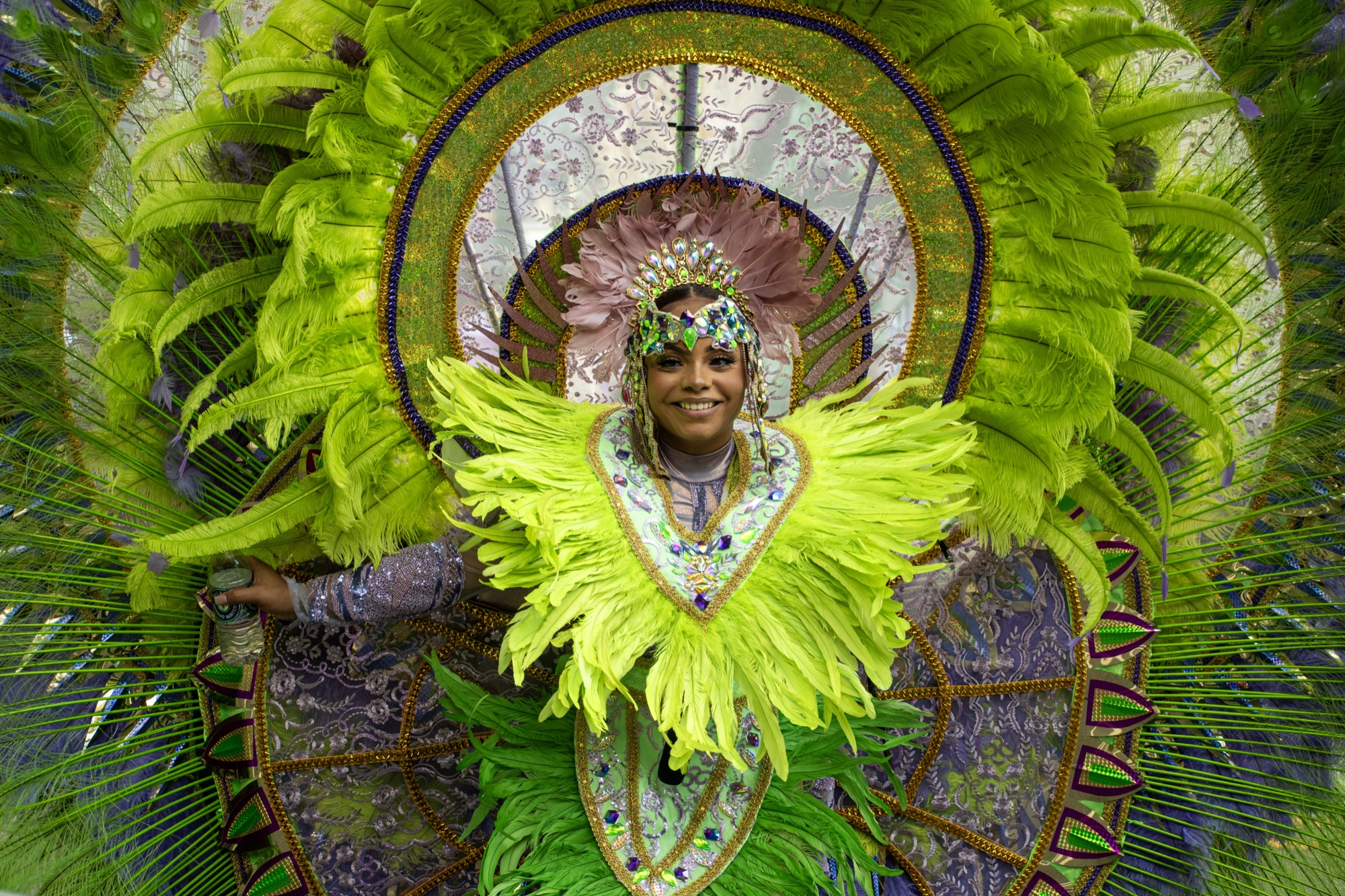
The first marker of change was the West Indian Day Parade itself. Founded by Trinidadian immigrant Jessie Waddle in Harlem in the 1940s, it lost its Harlem permit in 1964. Trinidadian organiser Carlos Lezama brought it to Eastern Parkway in 1969, just as the Caribbean population of central Brooklyn was about to explode. By the 1990s the parade pulled in more than two million spectators every Labor Day, with pre-dawn J’ouvert turning Crown Heights and Flatbush into Kingston-on-the-Hudson.
The parade was pan-Caribbean. Trinidadians built the floats. Haitians, Guyanese, Barbadians and Grenadians marched. But Jamaicans were the largest single contingent, and Jamaican sound systems supplied much of the bass.
The other change came slower. From the late 2000s the rents began to climb. The western edges of Flatbush were rebranded as Prospect Lefferts Gardens and Ditmas Park West. Brownstones that had sold for two hundred thousand dollars in 1995 changed hands for two million by 2018. Between 2000 and 2010, central Brooklyn neighbourhoods with large West Indian populations each lost up to fourteen per cent of their Black residents.
Jamaican families who bought two-family houses in the 1980s cashed out and moved to Canarsie, East Flatbush, Mount Vernon, Rosedale, and increasingly to Broward County in Florida. The community did not disappear. It dispersed. The Flatbush Jamaican world stretched outward without ever quite breaking.
The Landmarks of Jamaican Flatbush
Allan’s Bakery, 1109 Nostrand Avenue. Allan and Gloria Smith began baking patties and currant rolls out of their station wagon in 1958, selling at Brooklyn cricket games. They opened their first storefront on Saratoga Avenue in 1961 and moved to Nostrand Avenue in 1967, where the third generation of the family still runs the counter. The Smiths’ roots are in St. Vincent and Panama, but Allan’s became the patty bakery of choice for two generations of Jamaican Flatbush.
Peppa’s Jerk Chicken, 738 Flatbush Avenue. Gavin Hussey, known as Peppa since childhood, grew up in St. Andrew Parish helping his mother cook. He co-founded a small jerk spot called Danny & Pepper’s on Flatbush in 1995, then opened Peppa’s under his own name in 2004. The drum smoker out front, the foil-wrapped quarter chicken, the rice and peas in styrofoam: this is the canonical Flatbush jerk meal. There are now two more locations in Crown Heights and East Flatbush, both run by family.
The Flatbush Reformed Dutch Church, 890 Flatbush Avenue. The congregation was founded in 1654 at the order of Peter Stuyvesant. The current Greek Revival church dates to 1796. It is not a Jamaican institution, but the building is the geographic anchor of the entire neighbourhood. Every Jamaican Flatbush resident gives directions from it.
The Biltmore Ballroom (former), 100 Church Avenue. The room is no longer a music venue. But in the late 1980s and through the 1990s the Biltmore was the most important reggae and dancehall room in the United States. Stone Love, King Addies, Killamanjaro and Bodyguard sound systems played there, and most of the headline acts to come out of Jamaica that decade played the room at least once.
The West Indian Day Parade route, Eastern Parkway between Utica Avenue and Grand Army Plaza. Held every Labor Day Monday, with the J’ouvert pre-dawn procession at six in the morning. The parade is a multi-Caribbean affair, with Trinidad, Haiti, Guyana and Barbados marching alongside Jamaica. For many Flatbush Jamaicans it is the closest the New York calendar comes to a national holiday. Two million people. Four-foot speakers on flatbed trucks. The smell of jerk for half a mile in every direction.
The Caribbean American Chamber of Commerce and Industry. Founded in 1985 by Dr. Roy Hastick to advocate for Caribbean small business owners in New York. Hastick built it into the central institution for Caribbean entrepreneurship in Brooklyn before his death in 2020. Its annual gala remains a fixture of Caribbean Brooklyn’s professional class.
The Flatbush barrel trade. Up and down Flatbush, Nostrand and Utica, small shipping agents have for decades packed fifty-five-gallon barrels of canned goods, sneakers, baby formula and toiletries for relatives back home. The barrel run, twice a year and especially before Christmas, is the most Jamaican thing a Flatbush family does.
Where the Flatbush Jamaicans Came From
The dense majority came from Kingston and the surrounding parish of St. Andrew, the combined urban capital known officially as the Kingston and St. Andrew Corporation since 1923. Tivoli Gardens. Trench Town. Half Way Tree. Constant Spring. Jones Town. The Kingston neighbourhood names are stamped on the second-generation imagination of Flatbush.
Beyond Kingston, steady flows came from Spanish Town in St. Catherine, Jamaica’s old colonial capital. Montego Bay sent the children of the tourism economy, hotel workers and craft vendors whose cousins ended up in New York hospitality. Mandeville, the cooler highland town in Manchester, sent nurses and teachers. The rural parishes of St. Ann, St. Elizabeth, Westmoreland, Trelawny and Portland sent the families whose fathers had cut cane and whose sons drove livery cabs on Linden Boulevard.
Religion came with them. Most of Flatbush’s Jamaicans are Christian: Pentecostal, Anglican carried over from the Church of England, Catholic, Seventh-day Adventist and Methodist. A smaller Rastafarian community keeps the locks and the red, gold and green flags visible on Flatbush Avenue. Patois, the English-based creole of Jamaica, remains the kitchen language of three generations of Flatbush families, even as the children speak American English everywhere else.
Flatbush Today
Walk Flatbush Avenue south of Empire Boulevard in 2026 and the Jamaican signal is still loud, but it is layered. Haitian, Trinidadian and Guyanese businesses share the same blocks. The new tenants on the renovated brownstones are increasingly young white professionals from Park Slope and Bed-Stuy. The patty bakery is still there. So is the new oat milk cafe next to it.
The neighbourhood was officially designated Little Caribbean in September 2017, thanks to the campaigning work of Shelley Worrell and her organisation I AM CaribBEING. The designation covers the commercial spines of Flatbush, Nostrand and Church Avenues, and is meant to protect the cultural identity of the area against the push of gentrification.
The Jamaican community has not left so much as it has stretched. The matriarch’s two-family house on Foster Avenue is now her three grown children’s collateral, and they live in Canarsie, Mount Vernon, and a townhouse in Plantation, Florida. They drive in for Christmas. They drive in for the parade. The next generation goes to Erasmus or to Brooklyn Tech, and hears patois at home and English at school and Spanish on the corner.
Some things do not change. The bass from the Caprice is still on Nostrand. The smell of jerk still leaks out of Peppa’s at noon. Every Labor Day Monday, the family that has scattered to four counties and three states finds its way back to Eastern Parkway, draped in the flag, looking for cousins in a crowd of two million.
Frequently Asked Questions
Why did Jamaicans settle in Flatbush?
Jamaicans began settling in Flatbush in large numbers after the 1965 Hart-Celler Immigration Act opened legal migration from the Caribbean, and the flow became a flood during Jamaica’s politically violent and economically turbulent 1970s under Michael Manley. They chose Flatbush because Brooklyn already had a Caribbean foothold from the 1920s, the rents were affordable after white flight in the 1970s, and chain migration meant cousins and church members were already on those blocks.
Is Flatbush still Jamaican today?
Yes, Flatbush remains a heavily Caribbean and Jamaican neighbourhood, though the community has dispersed. Rising rents and the gentrification of the western edges of Flatbush have pushed many Jamaican families to Canarsie, East Flatbush, Mount Vernon, Long Island and Broward County in Florida. The commercial spine along Flatbush, Nostrand and Church Avenues, officially designated Little Caribbean in 2017, is still where the Jamaican community gathers.
What are the most famous Jamaican landmarks in Flatbush?
Allan’s Bakery at 1109 Nostrand Avenue and Peppa’s Jerk Chicken at 738 Flatbush Avenue are the canonical food landmarks. The Biltmore Ballroom on Church Avenue was the most important reggae and dancehall venue in the United States during the 1980s and 1990s. Every Labor Day, the West Indian Day Parade and its pre-dawn J’ouvert procession on Eastern Parkway draws roughly two million people, with a major Jamaican presence.
Where in Jamaica did the Flatbush Jamaicans come from?
The majority came from Kingston and the surrounding parish of St. Andrew, the urban capital region that forms Jamaica’s largest population centre. Significant numbers also came from Spanish Town in St. Catherine, Montego Bay in St. James, and Mandeville in Manchester Parish, plus rural parishes such as St. Ann, St. Elizabeth, Westmoreland, Trelawny and Portland.
When did Jamaicans first arrive in Flatbush?
A small Jamaican presence in Brooklyn dates back to the 1920s, the Marcus Garvey generation. The much larger waves arrived after the 1965 Immigration and Nationality Act, with the biggest surge during the political and economic upheaval in Jamaica between 1972 and 1980 under Prime Minister Michael Manley. Further growth came throughout the 1990s through family reunification visas.
If your family’s story passed through Flatbush, or through Kingston, Spanish Town, Mandeville or any of the parishes that fed it, Atlas of Home can trace that journey. From the harbour at Kingston to Nostrand Avenue, to wherever you are now.