
On a Friday afternoon in Morrisville, the call to prayer drifts across a town that, within living memory, was a railroad crossing of barely a few hundred souls. Today the Pakistanis in Morrisville pray at a mosque founded in 2009, shop for atta and goat meat on Davis Drive, and watch their sons bowl leg spin on a municipal cricket pitch that now hosts the United States national team. It is one of the most unlikely diaspora stories in the American South.
The Place
Morrisville sits midway between Raleigh and Durham, on the eastern edge of the Research Triangle, the sprawling cluster of laboratories and corporate campuses that gives this corner of North Carolina its name. The town takes its name from Jeremiah Morris, who in 1852 donated land to the North Carolina Railroad for a depot and water tower.
For more than a century it was a quiet whistle stop. In 1950 the town counted just 221 residents, and it was disincorporated entirely between 1933 and 1947.
Then came the chips and the chemistry. Research Triangle Park, founded in 1959, drew the world’s technology and pharmaceutical companies to the pine flats nearby, and Morrisville grew up in their shadow. Lenovo runs its operational headquarters here, alongside Oracle, Syneos Health and a long roster of biotech firms.
How It Became Pakistani
The Pakistani story in Morrisville is inseparable from the larger South Asian transformation of the town. To understand one, you have to understand the other.
The Triangle pulls in the engineers
Research Triangle Park was conceived in the mid-1950s by state leaders alarmed that North Carolina had one of the lowest per capita incomes in the nation, its economy tethered to tobacco, textiles and furniture. The bet was simple: build a park, lure the laboratories, and the talent would follow.
It worked beyond anyone’s expectations. By the technological boom of the 1990s, employment in the park peaked near 45,000. The companies needed engineers, programmers, statisticians and physicians, and increasingly they recruited them from South Asia.
Pakistani professionals arrived along the same currents that carried Indian engineers and doctors into the Triangle. They came for jobs in information technology, healthcare, pharmaceutical research and operations, and they came on the strength of qualifications earned at universities in Lahore, Karachi and Islamabad.
It was a quiet kind of migration. There was no single landing point, no tenement block or factory gate that funnelled everyone to one street. Instead the Pakistanis arrived as families, one hire at a time, settling wherever a good school and a short commute to the park could be found. Morrisville, small and central and full of fresh subdivisions, kept catching them.
From apartment complexes to subdivisions
The early arrivals tended to rent first, clustering in the apartment complexes near the park before buying into Morrisville’s new subdivisions as families and savings grew. Proximity mattered. A short commute to RTP, good schools and the gravitational pull of relatives and friends already settled nearby all drew newcomers to the same few square miles.
The numbers tell the story of how fast it happened. In 2000, residents of Indian or other South Asian origin made up roughly four per cent of the town. By 2010 that share had climbed to around twenty per cent.
The town that changed colour
By the 2020 census, Morrisville’s population had reached 29,630, up almost sixty per cent in a single decade. Asian residents now make up about 46 per cent of the town, roughly 13,700 people, the largest single group ahead of white and Black residents.
Local journalists have taken to calling Morrisville North Carolina’s “little India,” a label that captures the visible South Asian presence even as it flattens the diversity within it. Pakistani families form a distinct thread inside that fabric, bound by language, faith and the shared institutions of the wider Muslim and desi community.
Faith builds the first roots
For Pakistani Muslims, the turning point came in 2009, when the Islamic Center of Morrisville was founded during Ramadan to serve the growing Muslim population of Morrisville, West Cary and Research Triangle Park. The centre, on Quail Fields Court, became an anchor.
It is more than a prayer hall. The mosque runs Quran schools, an academy, youth programmes, a food pantry, financial aid and family counselling, the connective tissue that turns a scattering of professionals into a community.
Alongside the mosque, the North Carolina Pakistani-American Anjuman, a non-political cultural and social organisation, works to bring together Pakistani families across the Triangle for social and cultural programmes. Together, faith and culture gave the diaspora a place to gather that was not simply a workplace.
The Landmarks
Islamic Center of Morrisville, 101 Quail Fields Ct. Founded in Ramadan 2009, this Sunni mosque serves Muslims across Morrisville, West Cary and RTP under the motto “Many skin colours, one ummah.” For many Pakistani families it was the first institution that felt unmistakably theirs, and it remains the spiritual centre of gravity for the community.
Apna Bazar, 3607 Davis Dr, Suite 116. One of the largest independent South Asian supermarkets in the Triangle, Apna Bazar stocks fresh produce, halal meat, fish and the spices that a Lahori or Karachi kitchen cannot do without. Its expanding frozen section and shelves of subcontinental groceries make it a weekly ritual for Pakistani households.
Suvidha’s International Market, Morrisville. Owned by Nitin Patel, Suvidha grew to meet a simple need that he put plainly: families want the diet they have eaten for years. The store has become a fixture of South Asian Morrisville and has since planned a second location in nearby Apex.
Church Street Park. Opened in 2015, this town park gave the Triangle its first serious cricket venue, and it has since been expanded into a professional ground. From 2024 it has hosted the United States national cricket team, and its seating has grown toward several thousand. For Pakistani fathers and sons, weekend cricket here is a direct line back home.
Tasty Halal Eats, 9825 Chapel Hill Rd. One of a cluster of halal kitchens that have opened to feed Morrisville’s Muslim residents, it sits among neighbours like Shawarma Stop and Afghan Kabob. The spread of zabihah-certified restaurants is one of the clearest signs of how deeply the community has put down roots.
Bawarchi Biryani Point, Morrisville. A biryani specialist on the desi restaurant strip, it serves the slow-cooked rice dishes that anchor any South Asian celebration. On Eid and weekend evenings, the queues are a reminder that the town’s appetite has changed.
Research Triangle Park. Not a Pakistani landmark in the usual sense, but the reason any of the others exist. The laboratories and corporate campuses minutes from Morrisville drew the engineers and physicians whose families remade the town.
Where They Came From
Morrisville’s Pakistanis are, overwhelmingly, a professional migration. They came from Pakistan’s big cities, Lahore, Karachi and Islamabad chief among them, with degrees in engineering, computer science, medicine and the sciences.
This is migration shaped by qualification rather than refuge. Many arrived on skilled-worker and student visas, took jobs in the Triangle’s technology and pharmaceutical firms or trained in its hospitals, and stayed. Healthcare, information technology, government and operations are the fields the Triangle’s Pakistani community most often names as its own.
Chain migration did the rest. One cousin’s success in an RTP firm became another’s reason to apply; one family’s comfort at the mosque became another family’s reason to buy nearby. The result is a community concentrated not by accident but by the steady logic of jobs, faith and kin.
That pattern echoes the way Pakistanis settled other American tech and medical hubs, from the Pakistani families of Frisco, Texas to the established community in Naperville, Illinois, and the older enclaves around Edison, New Jersey.
Morrisville Today
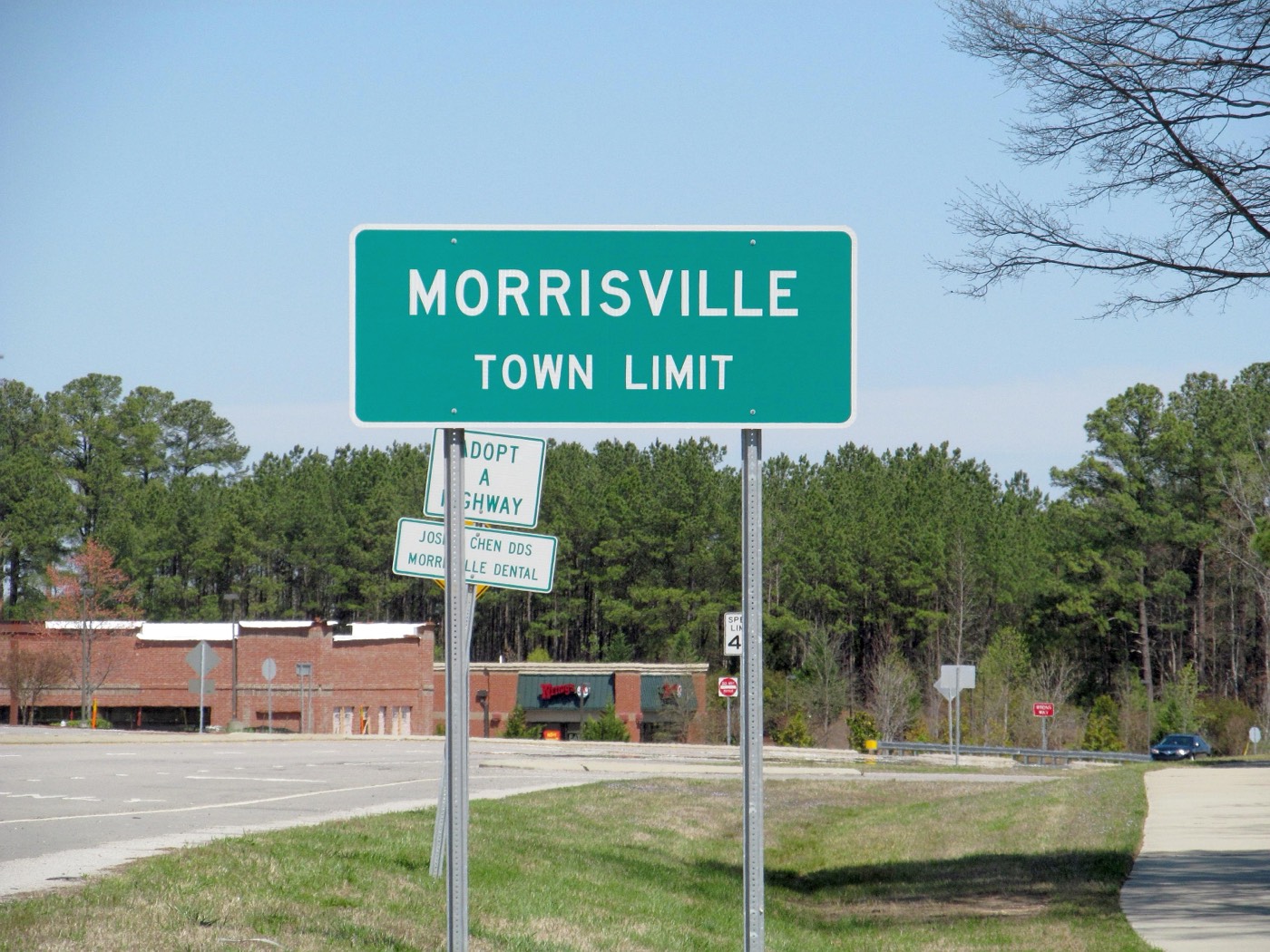
Walk Morrisville today and the transformation is everywhere, in the green Town Limit sign, in the grocery aisles stacked with lentils and ghee, in the cricket whites laid out at Church Street Park on a Saturday morning. Mayor TJ Cawley likes to describe the town as inclusive and welcoming, and council member Satish Garimella is among the South Asian voices now shaping local government.
The Pakistani community here is comfortable but not complacent. Theirs is a young diaspora, barely two decades deep, still building the second-generation institutions, weekend schools, youth groups and social networks, that turn a professional migration into a permanent home.
It is also a community that lives alongside, and sometimes inside, a larger South Asian and Muslim world. The same town that drew the Pakistanis drew the Indians of Morrisville, the Korean community in neighbouring Cary and the Pakistani families just across the line in Cary. The mosque, the grocers and the cricket pitch are shared ground.
What was once a single railroad water tower has become, in two short decades, a place where a Pakistani family can pray, shop, eat and play the game of home without ever leaving the town limits. That is the quiet achievement of Morrisville.
Frequently Asked Questions
How many Pakistanis live in Morrisville, North Carolina?
There is no published figure for the Pakistani population specifically. What is documented is that Asian residents make up about 46 per cent of Morrisville’s roughly 29,630 people as of the 2020 census, with South Asians the dominant group. The Pakistanis in Morrisville form a distinct community within that broader South Asian population.
Why did Pakistanis settle in Morrisville?
They came for work in the Research Triangle, the cluster of technology, pharmaceutical and research employers around Research Triangle Park. Pakistani engineers, IT professionals and physicians were recruited into firms like those in the park and into Triangle hospitals, and Morrisville’s proximity, schools and growing community drew them to settle there.
Is there a mosque in Morrisville?
Yes. The Islamic Center of Morrisville, founded in Ramadan 2009 on Quail Fields Court, serves Muslims across Morrisville, West Cary and Research Triangle Park. It offers prayer, Quran schools, youth programmes and welfare services, and it anchors the religious life of the Pakistanis in Morrisville and the wider Muslim community.
Where do Pakistani families shop for groceries in Morrisville?
Apna Bazar on Davis Drive is one of the largest independent South Asian supermarkets in the Triangle, stocking halal meat, fresh produce and subcontinental staples. Suvidha’s International Market is another long-standing South Asian grocer in the area, founded to give immigrant families the foods they grew up eating.
Why is cricket so popular in Morrisville?
Church Street Park, opened in 2015 and later expanded, gave the Triangle a serious cricket venue and now hosts the United States national cricket team. For the region’s large South Asian population, including Pakistani families, cricket is a deep cultural tie, and the pitch has helped make Morrisville a cricket hub in the American South.
What do Pakistanis in Morrisville do for work?
Most are professionals. The Triangle’s Pakistani community is concentrated in healthcare, information technology, government and operations, reflecting a migration built on skilled-worker and student visas rather than displacement. Many trace their education to universities in Lahore, Karachi and Islamabad.
If your family’s story passed through Morrisville, or any of the places Pakistanis have made home in America, Atlas of Home can trace that journey. From a university lecture hall in Lahore or Karachi, to a laboratory in the Research Triangle, to wherever you are now.