
On a Sunday morning in West Valley City, you can stand outside a low brick chapel on 3300 South and hear the choir before you see the doors open. The hymns are in Tongan, the harmonies are four parts deep, and the voices carry past the strip malls and out into the Wasatch foothills.
By evening the same families will be gathered around a wooden bowl of kava in someone’s garage, passing a coconut cup clockwise, talking softly in the half-light. And on a graduation day the grandmother will wear a taovala, a finely woven pandanus mat tied at the waist, because that is what respect looks like.
Roughly one in every four Tongan-Americans calls Utah home. The Wasatch Front is the largest concentration of Tongans anywhere in the continental United States, a community of nearly twenty thousand built almost entirely in the last sixty years, almost entirely along the spine of a single church.
Salt Lake City, The Place
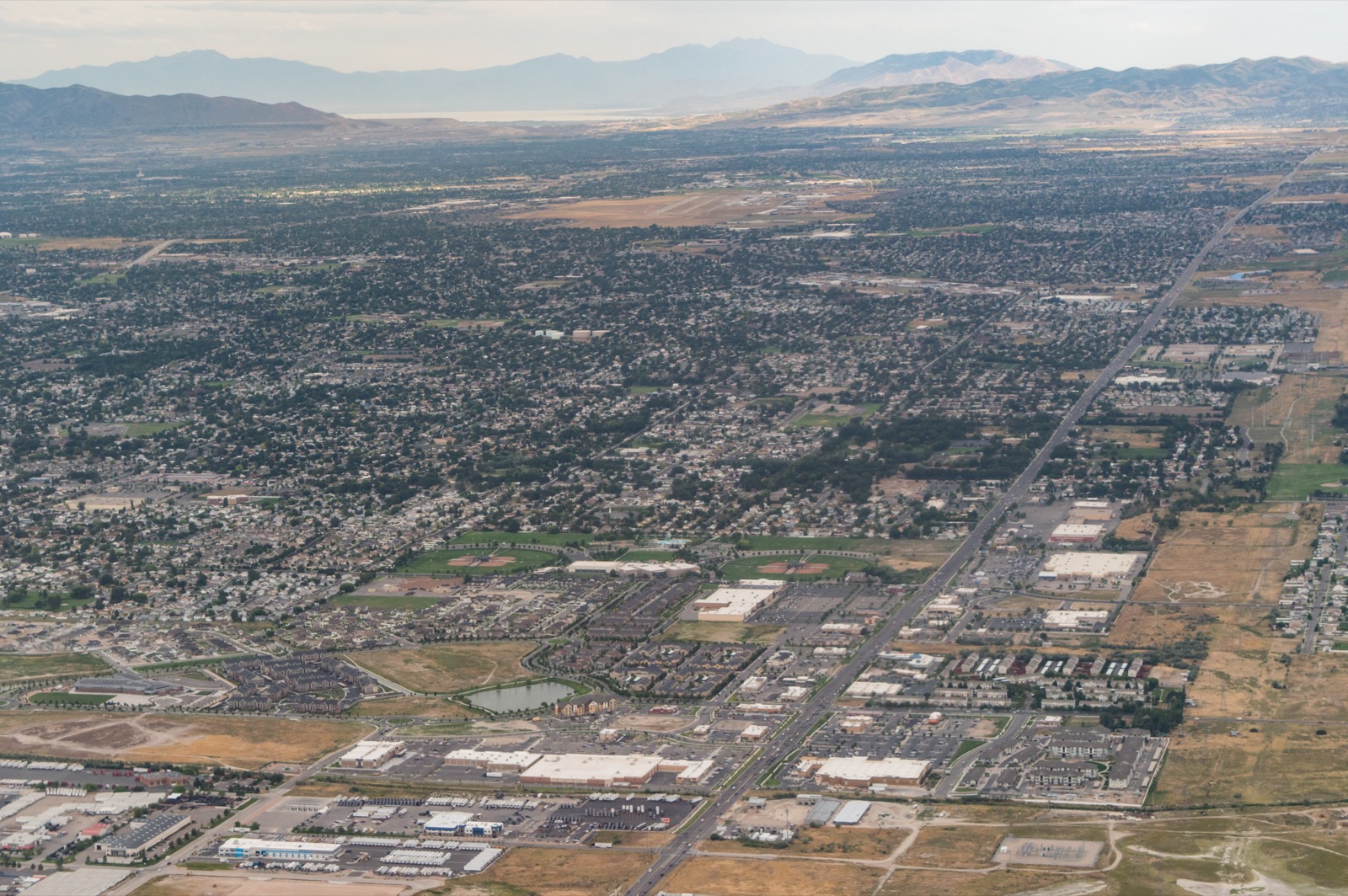
Salt Lake City sits in a high desert valley pressed against the Wasatch Range, with Temple Square at its geographic and spiritual centre. The Tongan community, however, is not concentrated downtown. It sits on the west side of the valley, in West Valley City, Taylorsville, Kearns, Murray, and Midvale, with smaller clusters in Glendale and Rose Park inside the Salt Lake City limits.
These are the postwar suburbs: ranch houses, stucco bungalows, wide quiet streets laid out on a grid, schools named after canyons and stakes. The TRAX light rail runs west from downtown through Decker Lake, threading the neighbourhoods together. West Valley City alone is now home to more than three thousand Tongan residents, the highest concentration of any city in the state.
It is not a Chinatown or a Little Italy in the visible sense. There is no archway, no signposted strip. The Tongan presence is woven through the suburb instead, ward by ward, market by market, family by family.
How Salt Lake City Became Tongan
Before the Tongans
The Salt Lake Valley was Mormon country long before it was anything else. Brigham Young’s pioneers entered in July 1847, and within a generation the city was planned, irrigated, and walled in by neat wards and stake boundaries. The first chapels and the first Temple were built by Anglo and Scandinavian converts, with smaller waves arriving later from Germany, the British Isles, and the American Midwest.
For nearly a hundred years after the pioneers, the Salt Lake Valley was overwhelmingly white. The Pacific was a long way away, and the Pacific Islanders who had begun joining the church in Tahiti, Samoa, and Tonga generally stayed home, in their own villages, in their own missions.
That changed slowly, then all at once.
The Tongans Arrive
Latter-day Saint missionaries first reached Tonga in 1891, working through Tongatapu, Ha’apai, and Vava’u. After a turbulent stretch including the country’s 1922 Passport Act, which briefly tried to shut Mormon missionaries out, the Tongan Mission was firmly established and grew rapidly. By the middle of the twentieth century Tonga had become one of the most Mormon countries on Earth per capita.
The first Tongan families began arriving in Utah after the Second World War, a small trickle of converts drawn to what they called Zion. By 1990 there were just under four thousand Tongans in the state. By 2000 the number had more than doubled. Today it is closer to twenty thousand.
The pull was specific. The Church of Jesus Christ of Latter-day Saints had its headquarters here, with its temples, its university system, and its enormous welfare and employment infrastructure. Brigham Young University in Provo and especially BYU-Hawaii in Laie became the pipeline. A young Tongan would arrive on a student visa to BYU-Hawaii, transfer or graduate into the Utah system, and a year later a brother or a cousin would follow.
The Immigration and Nationality Act of 1965, which scrapped the old national-origins quotas and opened up family reunification, did the rest. Every Tongan-American who took out citizenship could sponsor parents, siblings, and unmarried children. One family in Kearns became three, became seven, became a Tongan-language ward of its own.
Salt Lake at Its Peak
By the 1990s and into the 2010s, the Tongan Wasatch Front had become a community with its own internal logic. The Salt Lake Utah West Stake (Tongan) was organised, eventually anchoring nine Tongan-language wards including Granger 8th, Hunter 13th, Hunter 37th, Kearns 9th, Kearns 13th, Magna 2nd, Taylorsville 5th, Taylorsville 6th, and West Valley 8th. The Salt Lake YSA 1st Ward (Tongan) gave young single adults their own Sunday gathering.
Outside the LDS Church, the Tongan United Methodist Church on Crystal Avenue and the Free Wesleyan Church of Tonga branches kept the older Wesleyan tradition alive, the one most Tongans back home still belong to. The Tongan Catholic mission added a third strand.
Then there was the football. By the early 2000s, Tongan boys were a recognisable force on every high school field in the valley. Highland High in the city, Bingham High in South Jordan, Hunter High in West Valley, all of them began producing NFL prospects at a per capita rate no other ethnic group in America could match.
Vai Sikahema had broken the door open in the 1980s. Haloti Ngata, who moved to Salt Lake at nine and graduated from Highland in 2002, became a five-time Pro Bowl defensive tackle. Star Lotulelei followed out of Bingham and the University of Utah, drafted in the first round by Carolina in 2013.
In 2015 the documentary In Football We Trust, shot over five years in Salt Lake City by Tongan-American director Tony Vainuku, made the pipeline visible to the rest of the country. Its four subjects, Harvey Langi from Bingham, Fihi Kaufusi from Highland, and the Bloomfield brothers from Hunter, were all Tongan kids playing on Friday nights in Salt Lake suburbs.
Rugby travelled with them. The Highland Rugby Club, where Ngata also played, won repeated national championships with rosters thick with Tongan and Samoan names. The Utah Warriors rugby franchise now routinely fields Tongan internationals. Saturday evening kava circles in Glendale garages doubled as scouting networks.
The Change
The community is not in decline. If anything it is still growing, just dispersing. Younger families have moved south into Utah County around Provo and Orem, west into Tooele, and out of state to Las Vegas and the Bay Area, where Tongan congregations are also expanding fast.
What has changed is the second generation. The young people in the Tongan wards today were born in Murray and Taylorsville, not Nuku’alofa. They speak English at school and Tongan at home, sometimes more haltingly each year. The church remains the centre of life, but the form of the centre is shifting. The kava bowl now sits next to a phone playing TikTok. The taovala goes on over a graduation gown.
Crime, gangs, and the costs of football scholarships have all taken a real toll on parts of the community, as the documentary tried to show honestly. But the dominant story is still ascent: home ownership, BYU degrees, NFL contracts, small businesses, and a steady stream of new arrivals from the islands joining cousins who arrived in the 1970s.
The Landmarks of Tongan Salt Lake City
The Salt Lake Utah West Stake (Tongan). Nine Tongan-language wards spread across West Valley City, Kearns, Hunter, Magna, and Taylorsville. These are not symbolic congregations. They are full Sunday operations in the Tongan language, with their own bishops, choirs, primary classes, and welfare networks. For most Tongan families in the valley this is where every week begins.
Tongan United Methodist Church, 1553 West Crystal Avenue, Salt Lake City. One of the older non-LDS Tongan congregations in the valley, serving families whose roots are with the Free Wesleyan tradition that has historically been the largest church in Tonga itself. Sunday services blend English and Tongan with the heavy four-part hymn singing the islands are known for.
Laumalie Ma’oni’oni Free Wesleyan Church of Tonga, West Valley City. A Free Wesleyan congregation that finally dedicated its own building in 2023 after years of meeting in garages, school gyms, and rec centres. The story is typical of the valley: a small congregation built first out of houses, then promoted into permanence.
Pares Polynesian Market, Taylorsville. A Tongan-run market that sells the things you cannot find at Smith’s: green bananas, taro, lu (taro leaves), ‘ota ika fish, lamb flaps from New Zealand, and trays of fresh pagi popo, the coconut buns Tongan grandmothers bake on weekends. Stop in on a Saturday and the queue runs out the door.
The Hawaiian Hut. Long advertised as Utah’s largest Polynesian market, the Hawaiian Hut imports across the Tongan, Samoan, and Hawaiian palette, with everything from frozen yams to ngatu cloth supplies. For the older generation it is a weekly stop.
The Friendly Islands Tongan Festival, Glendale. An annual cultural festival hosted by the National Tongan American Society in the Glendale neighbourhood of Salt Lake City. Founded by NTAS in the mid-1990s, it has run for nearly three decades now, with traditional dance, kava demonstrations, lakalaka group performance, food stalls, and an audience that fills the park. It is the largest single gathering of Tongans in the state each year.
Highland High School and Bingham High School football fields. Not strictly Tongan landmarks, but Tongan in spirit on a Friday night. Highland on 2166 South 1700 East produced Haloti Ngata. Bingham, in South Jordan, produced Star Lotulelei and Harvey Langi. The Tongan grandmothers in the stands, often with kiekie or taovala over their clothes, have watched a generation of grandsons play for those schools.
Where the Salt Lake Tongans Came From
Most Tongan families in the Wasatch Front trace back to one of three island groups. Tongatapu, the main island, sent the largest share, with families coming out of the capital Nuku’alofa and villages like Mu’a, Pea, and Kolovai. Vava’u, the northern island group, sent another major wave, often through families with deep Free Wesleyan or LDS roots. Ha’apai, the central low islands, sent fewer but tight clusters of families that often resettled together in single Utah neighbourhoods.
Smaller numbers came from ‘Eua and from the remote Niuas, the northernmost specks of the kingdom. A meaningful subset arrived via stops in American Samoa, New Zealand, and Hawaii rather than directly from Tonga, with BYU-Hawaii in Laie acting as the most common waypoint of all.
The reasons were rarely just one thing. The church pulled. Family chain migration pulled harder. Education, particularly the cheap and accessible education BYU offered to LDS members from the Pacific, did the rest. By the time a Tongan teenager landed in Salt Lake in the 1990s, there was almost always an aunt waiting at the airport.
Salt Lake City Today
The Wasatch Front Tongan community is now squarely into its third and fourth generations. The original immigrants of the 1960s and 1970s are grandparents and great-grandparents. Their grandchildren are at the University of Utah, BYU, Salt Lake Community College, in the construction trades, in nursing, in tech, in the NFL, and in the missionary corps abroad.
The Tongan-language wards are still full. The Friendly Islands Festival is still held. The kava bowls still come out on Saturday evenings. New flights still arrive from Nuku’alofa with cousins who will spend their first month sleeping on a sofa in Murray or Kearns.
The community is also visible in ways it was not before. Tongan elected officials sit on school boards. Tongan-American police officers patrol the same neighbourhoods their parents arrived into. Tongan business owners run construction crews, trucking companies, restaurants, and the markets the rest of the valley shops in for taro leaves.
It is not, in the end, a story about preserving something endangered. It is a story about a small Pacific kingdom that quietly built a second homeland on the wrong side of the world, and is still building it.
Frequently Asked Questions
Why did Tongans settle in Salt Lake City?
Tongans settled in Salt Lake City primarily because of the Church of Jesus Christ of Latter-day Saints. Tonga is one of the most Mormon countries on Earth per capita, and LDS converts began moving to Utah in the 1950s and 1960s to be near the church headquarters, BYU, and a network of family already settling there. After the 1965 Immigration and Nationality Act made family reunification easier, the trickle became a wave.
Is Salt Lake City still home to a large Tongan community?
Yes. Roughly one in four Tongan-Americans lives in Utah, with the heaviest concentration along the Wasatch Front in West Valley City, Taylorsville, Kearns, Murray, and parts of Salt Lake City itself. The community continues to grow, with nearly twenty thousand Tongan residents statewide and active Tongan-language LDS, Methodist, and Free Wesleyan congregations across the valley.
What are the most famous Tongan landmarks in Salt Lake City?
The most prominent Tongan landmarks include the nine Tongan-language wards of the Salt Lake Utah West Stake, the Tongan United Methodist Church on Crystal Avenue, the Laumalie Ma’oni’oni Free Wesleyan Church of Tonga in West Valley City, Pares Polynesian Market in Taylorsville, the Hawaiian Hut, and the annual Friendly Islands Tongan Festival in Glendale. Highland High and Bingham High football fields are unofficial cultural landmarks for the football-mad community.
Where in Tonga did the Salt Lake Tongans come from?
Most Salt Lake Tongans trace back to the main island of Tongatapu, especially around the capital Nuku’alofa and villages like Mu’a and Pea, with significant numbers also from the Vava’u and Ha’apai island groups. Smaller numbers came from ‘Eua and the Niuas. Many arrived in Utah via stops in American Samoa, New Zealand, or BYU-Hawaii in Laie rather than directly from the islands.
When did Tongans first arrive in Salt Lake City?
A small number of Tongan LDS converts began arriving in Utah after the Second World War, with the first significant wave taking shape in the 1950s and 1960s. The community grew rapidly after the 1965 Immigration and Nationality Act and again through the 1980s and 1990s. Utah’s Tongan population went from under four thousand in 1990 to roughly twenty thousand today.
If your family’s story passed through Tongatapu, Vava’u, Ha’apai, or any of the places the Tongans made home, Atlas of Home can help you trace that journey. From the kingdom of Tonga to a chapel in West Valley City, to wherever you are now.