
On a Saturday morning at 420 East Golf Road, the parking lot of a former Kohl’s department store fills with families speaking Mandarin, Cantonese and the flat vowels of suburban Chicago. They are heading into H Mart, eighty thousand square feet of Asian groceries that opened in early 2026. The crowd is the most visible sign of a quieter story: the Chinese in Schaumburg, drawn to this corporate corner of Illinois not by a Chinatown but by jobs, schools and a particular kind of middle-class promise.
The Place
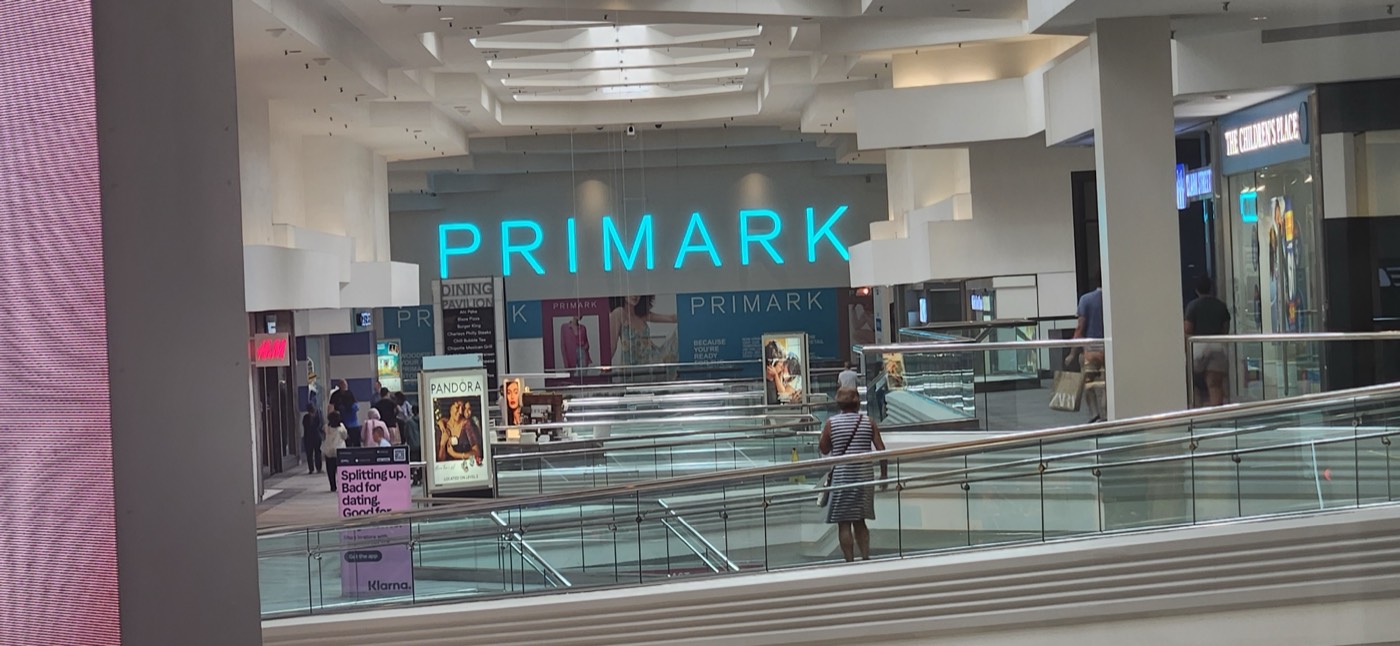
Schaumburg sits about thirty miles northwest of downtown Chicago, in Cook County, with a population of roughly 78,000. It is not a quaint commuter village. It is the commercial capital of the northwest corridor, anchored by Woodfield Mall, the largest shopping centre in Illinois outside the city itself.
The numbers tell the rest. Asian residents make up about 23.8 percent of Schaumburg, some 18,000 people, far above the Illinois figure of under six percent. Nearly a third of all residents were born outside the United States, and Schaumburg is, in census terms, one of the most Asian places in the state.
It is a landscape of office towers, expressway interchanges and broad arterial roads rather than walkable village streets. The Chinese families who live here did not move for charm. They moved for what those roads connect to: jobs in the corridor, schools in two strong districts, and a supermarket run that no longer requires a drive into the city. Much of the village’s history is captured in the public record of the town’s transformation from prairie to commercial hub.
How It Became Chinese
To understand why Chinese families settled in Schaumburg, you have to start with a German farming town and a shopping mall.
From farmland to corporate campus
Schaumburg was incorporated in 1956. Its name came from Schaumburg-Lippe, the small German principality that many of its nineteenth-century settlers had left behind. For a century it was prairie and dairy farms.
That changed fast. Alfred Campanelli broke ground on large-scale suburban housing in 1959. Woodfield Mall opened in 1971. The village’s 1961 comprehensive plan had deliberately set aside huge tracts around Woodfield for offices and industry, and the bet paid off. The population was 19,000 in 1970 and 55,000 by 1980.
Then came the employer that would define the town. Motorola moved its world headquarters to Schaumburg in 1976, sprawling across 225 acres where Algonquin and Meacham roads meet. Where there are large technology and engineering campuses, skilled immigrants follow.
The professional wave
The Chinese who came to Schaumburg were not, by and large, the railroad and laundry generations of an older American story. They were engineers, accountants, software developers and researchers, many arriving on student and work visas from the 1980s onward and converting to permanent residence.
Motorola was the magnet, but it was never the only one. The Woodfield office corridor filled with firms such as Zurich North America and Paylocity, alongside Motorola Solutions, the company that remained after the old Motorola split. These were employers that hired the kind of credentialed talent that mainland China, Taiwan and Hong Kong were sending abroad in growing numbers.
The professional character of this migration shaped everything that followed. These were families that prioritised education above almost all else, that arrived with savings and degrees, and that could afford the townhouses and single-family homes going up across the northwest suburbs. They were less interested in a dense ethnic enclave than in the conditions for their children to do well, and Schaumburg supplied those conditions in abundance.
Schaumburg offered what these families wanted. Strong public schools. New housing. A short drive to other Chinese families in nearby Hoffman Estates and Palatine. And it sat within reach of the larger Chinese populations forming further west, around the Chinese community in Naperville along the technology and research corridor.
Two communities, one suburb
It is worth being precise about who settled here, because Schaumburg’s Asian story is often told as a single thing. It is not. The town is home to a large South Asian population as well, and the Indian presence is substantial enough to have its own institutions and its own gravitational pull, documented in the story of Indians in Schaumburg and the closely linked Indian community in neighbouring Hoffman Estates.
The Chinese community is distinct. It clusters more quietly, organised less around a single corridor of temples and restaurants and more around schools, grocery runs and weekend classes. The two communities share the same excellent school districts and the same supermarket aisles, but their social worlds rarely fully overlap.
Roots that pulled families in
Once a few Chinese engineering families settled near Motorola, the familiar logic of chain migration took over. A cousin heard the schools were good. A colleague mentioned a townhouse for sale. A new graduate took a first job in the corridor and called his parents about staying.
By the 2010s the Asian share of Schaumburg was climbing steadily, part of a wider surge across the northwest suburbs. The Chinese portion of that growth was professional, dispersed and increasingly settled, with second-generation children moving through District 54 and District 211 schools.
The Landmarks
H Mart, 420 East Golf Road. The Korean-founded chain opened this 80,000-square-foot store in late January 2026 inside a renovated former Kohl’s at Woodfield Plaza, replacing a far smaller H Mart that had operated at 34 East Schaumburg Road. For Chinese families it functions as the everyday pantry: live seafood, Asian produce, a food court and shelves of imported staples that no ordinary supermarket carries.
Campanelli Elementary School, Schaumburg School District 54. The district runs a Mandarin Chinese Immersion Program out of Campanelli, where most enrolling children begin with no Chinese at all and learn core subjects in Mandarin. For Chinese-American parents it is a way to keep the language alive in children who would otherwise drift into English-only lives, and a sign of how mainstream the language has become here.
Lao Hu Tong, 24 West Golf Road. This Schaumburg restaurant makes its dumplings in house, from crab xiao long bao to spicy shrimp wontons. It is the kind of place where the menu is written for people who already know what they are ordering, a reliable marker that a real community eats nearby.
Phat Phat, Schaumburg. A newer arrival drawing on culinary traditions across China and Southeast Asia, with soup dumplings and Sichuan-leaning small plates. Its presence signals a maturing food scene that goes beyond the older Americanised Chinese-restaurant template.
P.F. Chang’s, 5 Woodfield Mall. Inside the mall that built modern Schaumburg sits the national chain’s local branch. It is not where homesick families go for authenticity, but it marks how thoroughly Chinese food has been folded into the suburb’s mainstream retail life.
Big Bowl, Schaumburg. A long-running Chinese and Thai restaurant in town, serving kung pao chicken and Sichuan beef to a broad suburban clientele. It represents the accessible middle of the local Chinese dining world, the everyday rather than the special-occasion.
Weekend Chinese schools of the northwest suburbs. Families in Schaumburg send children to Saturday and Sunday heritage programmes such as the Chicago Northwest Suburban Chinese School and the Chicago North Chinese School, which run from late summer through spring. These classrooms, borrowed from public schools on weekends, are where Mandarin, calligraphy and lunar-calendar traditions get passed to the next generation.
Where They Came From
Schaumburg’s Chinese residents trace back to several distinct origins rather than a single village or province. A large share came from mainland China, particularly its major cities, arriving through universities and the technology workforce. Taiwan contributed an earlier professional wave, and Hong Kong added Cantonese-speaking families.
What unites them is not a hometown but a path: graduate school or a skilled-worker visa, a first job in American technology or finance, and a deliberate search for a suburb with good schools and other Chinese families nearby. Schaumburg, with Motorola at its centre and Woodfield’s corporate corridor around it, fit that search almost perfectly.
Schaumburg Today
The Chinese in Schaumburg today are an established, comfortably middle-class suburban community rather than a striving enclave. Their children fill honours classes and immersion programmes. Their parents shop at a supermarket that, a generation ago, would have been unimaginable in a former German farm town turned mall capital.
The community remains dispersed by design. There is no single Chinese street, no archway, no concentrated district. Identity lives instead in institutions and routines: the Saturday language class, the H Mart run, the restaurant where the dumplings are made fresh, the immersion classroom where a six-year-old learns to count in Mandarin.
The arrival of the larger H Mart in 2026 was a small landmark in itself. A store that size does not open without a community to support it, and a former Kohl’s becoming an eighty-thousand-square-foot Asian supermarket says something about how the demographics of the northwest suburbs have shifted. What was once a fringe convenience is now anchor retail.
For the second generation, Schaumburg is simply home, the place where they grew up speaking English at school and some Mandarin at the dinner table, where heritage was a Saturday obligation rather than a daily fact. Whether they keep the language, and the supermarket runs, and the weekend classes alive for their own children is the open question every immigrant suburb eventually faces.
It is an honest picture of how Chinese America increasingly looks in the twenty-first century. Not the historic urban Chinatowns such as Chicago’s own Chinatown, but a quieter suburban version, built around work and schooling, knit together by family and food rather than geography.
Frequently Asked Questions
How many Chinese people live in Schaumburg, Illinois?
Census data shows Schaumburg’s overall Asian population at about 23.8 percent, roughly 18,000 residents, with Chinese residents forming a significant share alongside a large Indian community. Precise Chinese-only counts are not separately published, but the Chinese in Schaumburg make up one of the area’s notable East Asian populations.
Why did Chinese families move to Schaumburg?
Most came for professional work and schools. Motorola’s headquarters, which moved to Schaumburg in 1976, and the surrounding Woodfield corporate corridor drew skilled engineers and technology workers, many of Chinese origin. Strong public schools and new housing then kept families settling here through chain migration.
Is there an Asian supermarket in Schaumburg?
Yes. H Mart opened a large 80,000-square-foot store at 420 East Golf Road in early 2026, inside a renovated former Kohl’s at Woodfield Plaza. It replaced a much smaller earlier H Mart and serves as the main grocery destination for Chinese and other Asian families in the northwest suburbs.
Can children learn Mandarin in Schaumburg schools?
Yes. Schaumburg School District 54 runs a Mandarin Chinese Immersion Program at Campanelli Elementary School, where students learn core subjects in Mandarin. Many Chinese families also send children to weekend heritage schools in the northwest suburbs for additional language and culture instruction.
Where can you find authentic Chinese food in Schaumburg?
Restaurants such as Lao Hu Tong at 24 West Golf Road, known for house-made dumplings, and newer spots like Phat Phat serve more authentic regional Chinese dishes. Long-running options including Big Bowl round out a dining scene shaped by Schaumburg’s Chinese community.
How is the Chinese community in Schaumburg different from the Indian community?
Both are large and well established, sharing the same schools and supermarkets, but they are distinct. The Chinese in Schaumburg are organised more around weekend language schools, immersion programmes and grocery life than around a single concentrated district, while the area’s Indian community maintains its own separate institutions and social networks.
If your family’s story passed through Schaumburg, or any of the places Chinese families have made home in America, Atlas of Home can trace that journey. From a graduate-school visa and a first job near Motorola, to a townhouse near good schools and a Saturday Mandarin class, to wherever you are now.