
On a Saturday morning in northeast Queens, the smell of garlic and grilling pork drifts down Bell Boulevard, a Korean grandmother fills her cart with napa cabbage at the H Mart on Francis Lewis, and a teenager hurries to Saturday hangeul class before soccer. The Koreans in Bayside did not arrive in a single wave or build a single Koreatown. They moved here house by house, from the crowded blocks of Flushing to one of the leafiest, most coveted corners of New York City, and they reshaped it quietly.
The Place
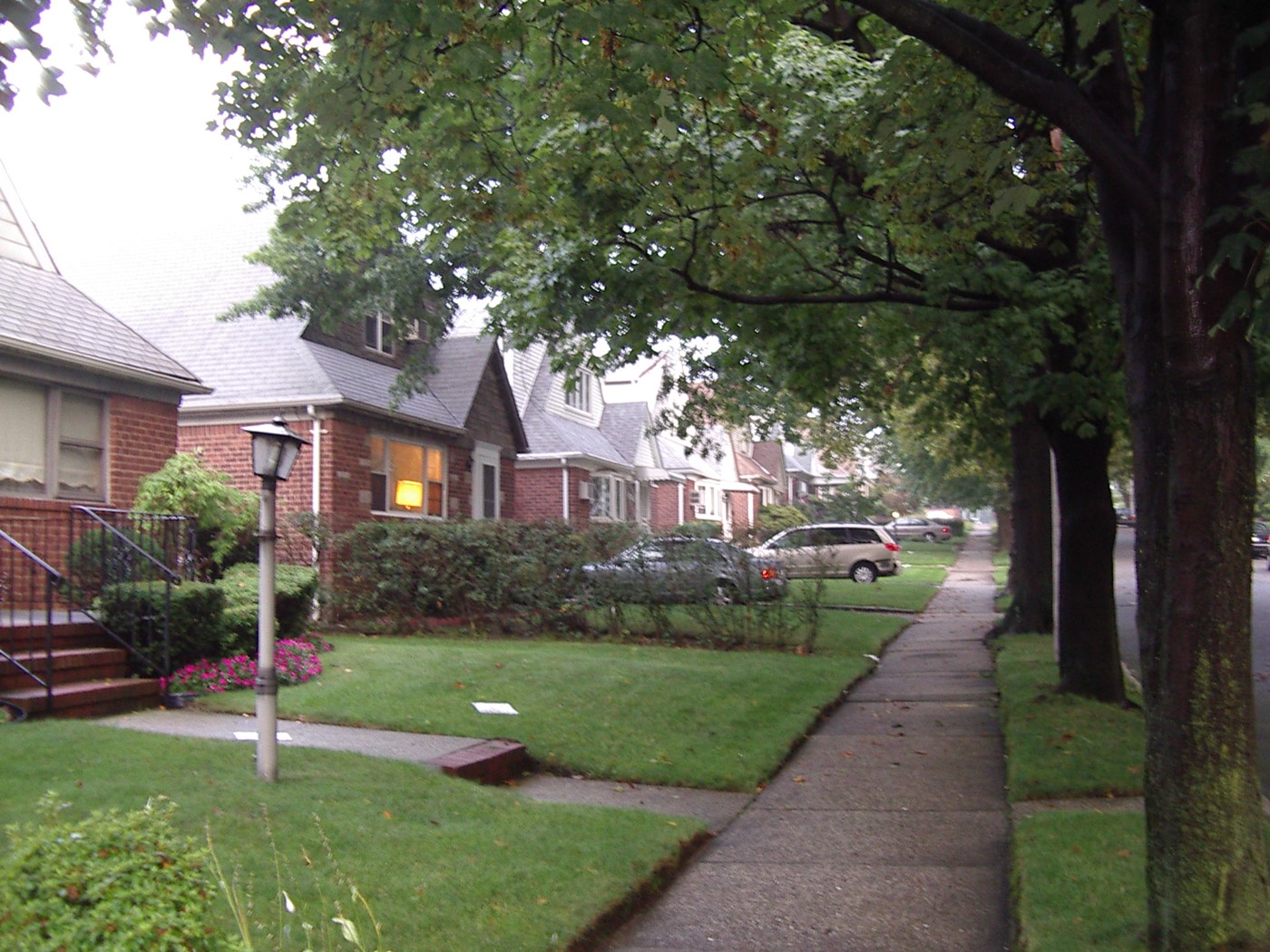
Bayside sits at the far northeastern edge of Queens, hard against the Nassau County line and the waters of Little Neck Bay. It is a neighbourhood of single-family homes, tree-lined streets and good public schools, with a compact commercial spine running up Bell Boulevard from the Long Island Rail Road tracks.
For most of its modern history it was known as a comfortable, semi-suburban enclave, the kind of place city workers moved to when they wanted a lawn. That reputation for space, safety and schools is exactly what later drew Korean families east. Today Bayside is one of the most heavily Asian neighbourhoods in the city, and Korean is among the languages you are most likely to overhear on the street.
How It Became Korean
To understand Korean Bayside, you have to start a few miles west, in Flushing, and you have to start with money, schools and the desire to move up.
The Bell estate and the suburban dream
Bayside was farmland and estate country long before it was anything Korean. The merchant Abraham Bell developed the area beginning in 1824, building a farm on land that gave its name to Bell Boulevard, still the neighbourhood’s commercial heart. When the Long Island Rail Road reached Bayside in 1866, wealthy New Yorkers built summer estates along the shoreline of Little Neck Bay.
By the 1920s the neighbourhood had a glamorous reputation. Silent-film stars including Rudolph Valentino and Gloria Swanson kept homes here, and Bayside marketed itself as the suburban dream within reach of the city. That promise, of detached houses, clean streets and quiet, would outlast the movie stars by a century. It is the promise that a later generation of Korean families would buy into.
The Flushing foothold
Korean immigration to this part of Queens took off in the 1980s. Many of the new arrivals had come to New York as medical workers or as international students from Seoul and other South Korean cities, drawn by professional and entrepreneurial openings rather than by factory work.
They put down their first roots in Flushing, along Union Street between 35th and 41st Avenues. There they built a dense commercial world of restaurants, noraebang karaoke rooms, grocery markets, nail salons, banks, bookstores and tutoring centres, a self-contained Korean economy a short walk from the Flushing LIRR station.
East along the Kimchi Belt
Flushing was a beginning, not a destination. As Korean families grew in income and number, they did what generations of New Yorkers had done before them: they moved east in search of more room and better schools.
They followed Northern Boulevard and the Long Island Rail Road tracks through Murray Hill, Auburndale and into Bayside, then onward toward Douglaston, Little Neck and the Nassau suburbs. The New York Times gave this corridor a name that stuck, the Kimchi Belt, a ribbon of Korean homes, churches and businesses running from Flushing out into Long Island. In Murray Hill, around the LIRR station, the restaurants grew so thick that the strip earned its own Korean nickname, a meokjagolmok, an eat-and-go alley reminiscent of Seoul.
Bayside was a natural anchor for the more settled, more affluent end of that belt. The families who reached it were often buying their first detached house, trading a Flushing apartment for a driveway and a school district. By the 2000 Census, Asian Americans already made up roughly 22.7 percent of Bayside’s population, and Korean Americans alone accounted for about 10.4 percent, then the largest single Asian group in the neighbourhood.
Building the institutions
Homes came first, then the institutions that turn houses into a community. The Korean Presbyterian Church of Bayside, founded in 1984, became one of the early gathering points, a place to worship in Korean, find a job lead and keep children connected to the language.
Older still was Korean Community Services of Metropolitan New York, founded in 1973 and now headquartered at 203-05 32nd Avenue in Bayside. It grew into the area’s main social-service backbone for Korean immigrants, with programmes in ageing, immigration, public health, mental health and workforce development. When the grocery, the church and the service agency were all within a short drive, Bayside stopped being a place Koreans had moved to and became a place that was, in part, theirs.
The Landmarks
H Mart, 46-40 Francis Lewis Boulevard. The Korean grocery chain opened here in 2013, taking over a shuttered Waldbaum’s that had left the area without a supermarket for more than a year. It is one of only three H Marts in the city with a full food court, and on weekends its aisles of banchan, fresh tofu and short ribs function as a community living room.
Korean Community Services of Metropolitan New York, 203-05 32nd Avenue. Founded in 1973, KCS is the oldest and largest Korean American social-service organisation in the area. From this Bayside base it runs senior centres, immigration help, mental-health counselling and job training, and it marches each year in the St. Patrick’s Day parade up Bell Boulevard to introduce newcomers to what it offers.
The Korean Presbyterian Church of Bayside, 45-62 211th Street. Established in 1984, this congregation was one of the neighbourhood’s first Korean institutions. Its English-language ministry now serves a second generation that grew up speaking more English than Korean, a sign of how the community has aged in place.
Mister Seoul, 39-35 Bell Boulevard. This Korean barbecue house opened in December 2021 in a corner space that had long held an Italian grill, a small marker of how Bell Boulevard’s old guard has given way. Tables crowd around tabletop grills for beef, pork and chicken cooked communally, in the heart of Bayside’s bar-and-restaurant strip.
Tyger’s Bowl and Kimbap, 39-35 Bell Boulevard at 40th Avenue. Opened in October 2024 next door to a sandwich shop run by the same owner, this fast-casual spot folds Korean flavours into bowls, burritos and tacos. It is the kind of hybrid, neither fully Korean nor fully American, that a neighbourhood produces once its two cultures have lived side by side for a generation.
Benjamin N. Cardozo High School, 57-00 223rd Street. One of Queens’ large, high-performing public high schools, Cardozo is roughly 44 percent Asian and offers Korean alongside Mandarin and Spanish. For many Bayside families the school district was the whole point of the move, and a class taught in their own language is the payoff.
Bell Boulevard. The neighbourhood’s commercial spine, named for the Bell family farm, now mixes Irish pubs and pizzerias with Korean barbecue, bubble tea and bakeries. Walk north from the LIRR station and the street tells the story of Bayside’s last forty years in storefronts.
Where They Came From
The Koreans who built Bayside came, for the most part, from South Korea’s cities, with Seoul prominent among them. Many of the earliest arrivals of the 1980s were not labourers but professionals and students: doctors, nurses, pharmacists and graduate students who entered the medical and academic worlds of New York and stayed.
That professional starting point shaped where they ended up. A community with savings, credentials and an intense focus on education was always going to gravitate toward neighbourhoods with strong schools and houses to buy, which is precisely what Bayside offered. The move from Flushing to Bayside was less an immigrant arrival than an internal climb, the second act of a story that had begun a few subway stops away.
Bayside Today
Bayside today is a neighbourhood where the Korean presence is woven into ordinary life rather than concentrated in a single block. There is no neon Koreatown gate here as there is in Manhattan. Instead there is an H Mart anchoring the weekly shop, Korean churches filling on Sundays, hagwon tutoring centres after school, and barbecue smoke on Bell Boulevard at night.
It is worth being precise about the demographics. Bayside is now home to large Korean and Chinese communities both, and the two are sometimes blurred together in the broad label of Asian Bayside. They are distinct: different languages, different churches, different grocery aisles, sharing the same excellent schools and the same quiet streets. The Korean story is one strong thread in that fabric, not the whole cloth.
What has changed most is permanence. The families who arrived as renters in Flushing now own homes here, their children have graduated from Cardozo, and the institutions founded in the 1970s and 1980s have grown into established neighbourhood fixtures. Bayside is no longer a place Korean New Yorkers are passing through on the way to the suburbs. For many, it is the suburb, inside the city limits, that they were aiming for all along.
Frequently Asked Questions
Are there many Koreans in Bayside, Queens?
Yes. The Koreans in Bayside form one of the neighbourhood’s largest communities, alongside a substantial Chinese population. As of the 2000 Census, Korean Americans made up about 10.4 percent of Bayside’s residents, and the share has remained significant, with Korean among the most commonly spoken home languages in the area.
Why did Koreans move from Flushing to Bayside?
As Korean families in Flushing grew in income, many sought larger homes, quieter streets and stronger schools. They moved east along Northern Boulevard and the LIRR through Murray Hill, Auburndale and into Bayside, a corridor sometimes called the Kimchi Belt. Bayside’s reputation for good public schools and single-family houses made it a natural destination.
Where is the best Korean food in Bayside?
Bell Boulevard is the centre of Korean dining in Bayside, with spots like Mister Seoul for barbecue and Tyger’s Bowl and Kimbap for fast-casual fusion. For groceries and a food court, the H Mart at 46-40 Francis Lewis Boulevard is the community hub, one of only three city H Marts with a full food court.
Is Bayside the same as Koreatown, Queens?
Not exactly. The original Koreatown in Queens began in Flushing and has expanded eastward through Murray Hill, Auburndale, Bayside, Douglaston and Little Neck. Bayside is part of that larger Korean corridor, often called the Kimchi Belt, rather than its single centre.
What is the difference between the Korean and Chinese communities in Bayside?
Both are large and both prize Bayside’s schools, but they are distinct communities with their own languages, churches, grocers and institutions. The Korean presence centres on churches, Korean Community Services and H Mart, while the Chinese community has its own networks. You can read more in our companion piece on the Chinese community of Bayside, Queens.
What schools serve Korean families in Bayside?
Bayside’s strong public schools were a major draw for Korean families. Benjamin N. Cardozo High School, which is around 44 percent Asian and offers Korean-language classes, is among the best known. The district’s academic reputation is a recurring reason families gave for moving east from Flushing.
If your family’s story passed through Bayside, or any of the places Koreans have made home in America, Atlas of Home can trace that journey. From the apartments of Flushing and the cities of South Korea, to a house off Bell Boulevard with the smell of barbecue on the night air, to wherever you are now.
Related reading from the Roots series: the Chinese in Bayside, Queens, the Koreans in Leonia, New Jersey, the Greeks in Astoria, Queens, and the Greeks in Port Washington, New York. For the wider picture, see Koreatown, Queens and the history of Bayside, Queens.