
Drive south on Cedar Boulevard on a Saturday morning and the cars angle into a strip-mall lot before the shops have fully opened. The draw is a grocery aisle stacked with toor dal and Hyderabadi pickle, a counter where the idli batter is still warm. This is the everyday rhythm of the Indians in Newark, California, a community that has quietly turned a small bayside city, wedged inside Fremont, into one of the most South-Asian corners of the East Bay.
The Place
Newark is an oddity on the map of Alameda County: an enclave, surrounded almost entirely by the city of Fremont, sitting on the flat ground between Interstate 880 and the southern edge of San Francisco Bay. It covers roughly 13.94 square miles, much of it once salt marsh and evaporation pond.
The Dumbarton Bridge launches west from its doorstep toward the Peninsula, which is the whole point of the place. Newark is close enough to the bay to smell it and close enough to Silicon Valley to commute to it.
It is small, with a 2020 population of 47,529, and for decades it was a working town of trucks and trailers. What it has become is something its founders never planned: a node in the Bay Area’s Indian map.
How It Became Indian
To understand the Indians in Newark you have to start with the town itself, which is younger and stranger than its neighbours.
Salt, rail and a Scottish name
The land belonged to the Ohlone, then to Mission San José, then to the cattle ranches of Washington Township. In 1878 the Pacific Land Investment Company purchased a stretch of it and subdivided a town, naming it after Newark Castle in Port Glasgow, Scotland, the choice of railway man J. Barr Robertson.
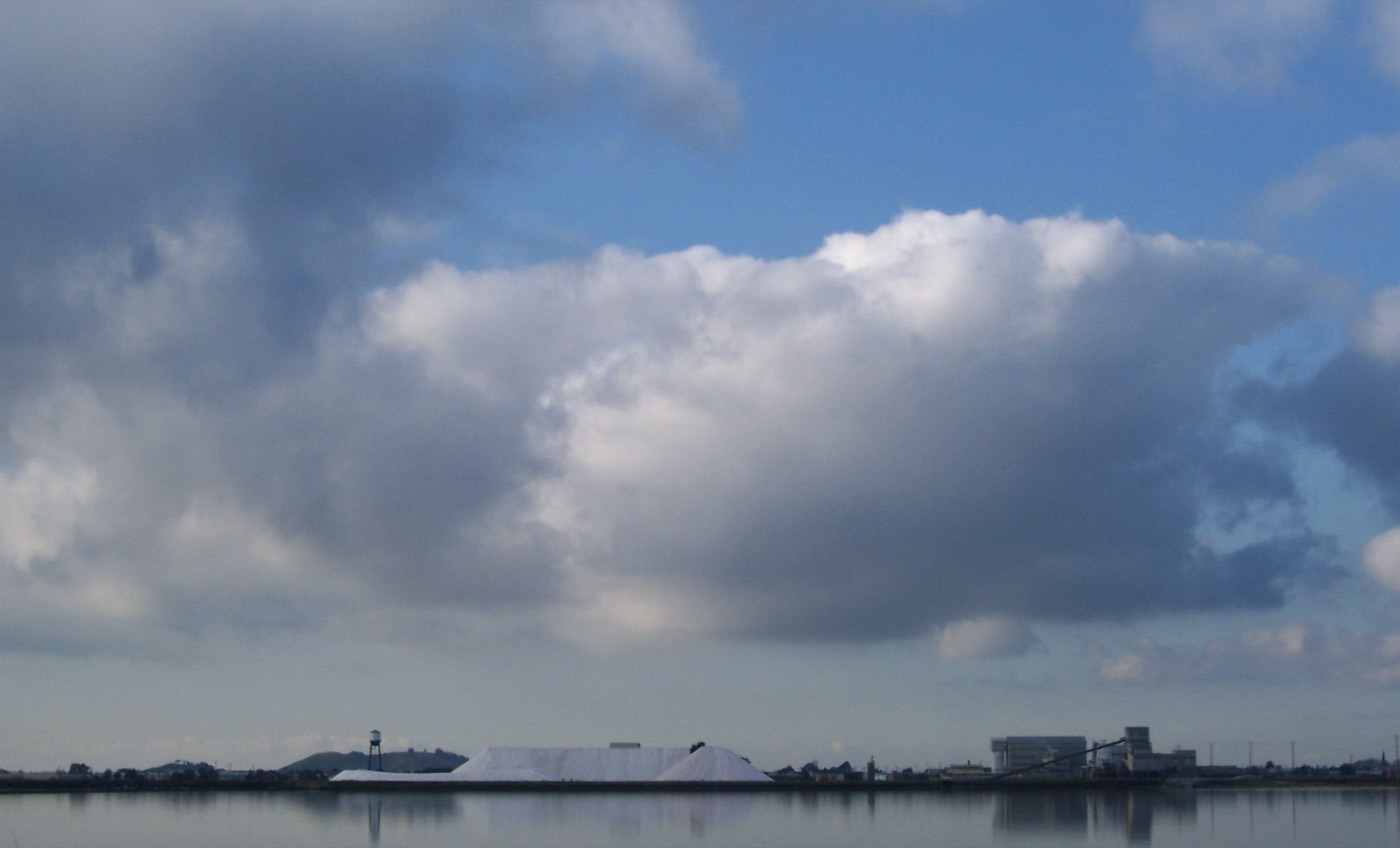
Rail and salt made the early economy. The Cargill evaporation ponds still glow pink and rust along the shoreline, a reminder that Newark was an industrial outpost long before it was a suburb.
In September 1955 residents voted to incorporate rather than be absorbed into the new metropolis of Fremont next door. Newark became the first new city in Alameda County in 47 years, and it has guarded that independence ever since.
The factory town, 1955 to 1990
For its first decades Newark made things. Peterbilt assembled trucks here, Trailmobile built trailers, and the workforce was largely white and Hispanic, drawn by manufacturing wages and cheap tract housing.
South Asians were barely present. In the 1990 census, Asian Indian residents numbered around 800, a little over two percent of the town. They were engineers and physicians scattered through a place still defined by its factories and its salt.
The Fremont overflow, 1990 to 2010
The change came from next door. Through the 1990s and 2000s the Indian population of neighbouring Fremont exploded, fed by the H-1B visa wave and the dot-com boom across the Dumbarton Bridge. Fremont’s Indian community is now one of the largest in Northern California, and Newark sits inside it like a pocket.
As Fremont’s Indian-heavy districts grew expensive and crowded, families looked over the city line. Newark offered the same schools-and-temples geography, the same fifteen-minute reach to the bridge, and houses that cost a little less. Engineers who worked in Santa Clara or Sunnyvale bought in Newark and drove the commute that the whole town had been built to serve.
It was chain migration of the suburban kind. A cousin bought near the lake, a colleague followed, and the Telugu and Tamil and Punjabi networks that anchored Fremont, and the wider valley from Cupertino outward, quietly extended their reach across the border.
Newark made the maths easy. A house there sat in the same school catchments and the same temple orbit as Fremont, the same single hop to the Dumbarton, and yet it asked a little less of a young family’s mortgage. For engineers weighing a down payment against a startup salary, that difference decided streets.
The Indian Newark, 2010 to now
By the 2020 census, Newark recorded 41.2 percent of residents as Asian alone, and the Census Bureau estimated that around 43 percent of the city was foreign-born. Indians are a large and visible share of that figure, alongside a substantial Afghan community that shares the same East Bay corridor.
Cedar Boulevard and Mowry Avenue filled with the proof: grocers, sweet shops, a curry house near the high school. The trucks left and Lucid Motors, now the city’s largest employer with more than 2,600 workers, moved into the old industrial land. The town that made trailers now builds electric cars, and a good share of the engineers who design them carry Indian passports or Indian surnames.
The Landmarks
Trinethra Indian Super Markets, 39207 Cedar Boulevard. This is the community’s pantry, a South-Indian-leaning supermarket stocked with dals, basmati, fresh and dried spice, frozen snacks, and a shelf of puja supplies. On weekends the lot fills early, and the aisles run in Telugu and Tamil as much as English.
Rams Grocers, 37330 Cedar Boulevard. A smaller, older neighbourhood grocer a few doors along the same boulevard, the kind of shop where the owner knows which household buys which brand of atta. Between the two stores, Cedar Boulevard has become Newark’s informal Indian high street.
Samraat Curry Hut, on Jarvis Avenue at Newark Boulevard. A workaday Indian kitchen serving the families on the east side of town, the sort of place that fills tiffin orders and feeds the weeknight crowd who would rather not cook after a long commute.
Bombay Garden, 5995 Mowry Avenue. For years this Mowry Avenue buffet was the community’s banquet hall, the room where biryani, butter chicken and fresh naan fed birthday parties and after-temple crowds. It has since closed, but for a generation of Newark families it was the default place to gather over a long lunch.
NewPark Mall, 2086 NewPark Mall Road. The super-regional mall opened in 1980 to serve the Tri-City area of Fremont, Newark and Union City, and after its 2017 renovation it became a default weekend destination for Indian families: a place to shop, watch a film at the IMAX, and let the children run while three generations drift between the food court and the shops.
Vedic Dharma Samaj Fremont Hindu Temple, 3676 Delaware Drive, Fremont. Just over the city line, this is the temple Newark’s Hindu families drive to, a busy centre with daily aarti and the full festival calendar from Navratri to Ram Navami. The short hop across the Newark-Fremont border for worship is woven into the week.
Gurdwara Sahib of Fremont, 300 Gurdwara Road, Fremont. The region’s Sikh families, including Newark’s Punjabi households, gather at this gurdwara for Sunday diwan and langar. Like the temple, it sits in Fremont but serves the whole Tri-City community without regard to the line on the map.
Where They Came From
Newark’s Indians mirror the wider Bay Area pattern, which means they are heavily Telugu and Tamil, the engineering states of southern India that supplied the H-1B generation. Trinethra’s South-Indian stock is no accident; it follows its customers.
There is a strong Punjabi thread too, families with roots in the farming districts of northern India who came earlier into California’s Central Valley and the East Bay and who fill the Fremont gurdwara. Gujarati and North Indian households round out the mix, the same blend that fills the Indian high streets of Southern California in a different key.
What unites them is the job. Most came on skilled-worker visas to write software, design hardware and staff the laboratories of Silicon Valley, then chose Newark because it put them inside Fremont’s Indian world at a slightly gentler price.
The arc is generational now. The first arrivals came as single engineers or young couples in the 1990s and 2000s; their children have grown up in Newark Unified classrooms, and a second wave of relatives has followed on family visas to a town that already felt familiar. The grocers stock for festivals, the temples run weekend classes, and the commute to the valley has become a shared morning ritual rather than a novelty.
Newark Today
Newark today is a quieter, more affordable cousin to Fremont, and that is exactly its appeal. The Indian families here are not chasing prestige; they are buying proximity, to the bridge, to the temples, to the grocers and the good-enough schools, at a price the rest of the corridor no longer offers.
The civic life reflects it. Sulekha-style Diwali parties fill local halls every autumn, cricket gear sits beside the spice racks in the grocery stores, and Newark Memorial High School and the wider Newark Unified district are now roughly a quarter Asian, a figure climbing year on year as more Indian families settle in.
It is not a showcase suburb, and it does not pretend to be. It is a working bayside town that happened to sit in the right place when the Indian Bay Area outgrew its first home, and it has absorbed that wave with the same unfussy practicality that built it. The salt ponds still shine to the west; the commuters still stream over the Dumbarton each dawn. In between, a small city keeps quietly becoming more Indian.
Frequently Asked Questions
How many Indians live in Newark, California?
Newark recorded a 2020 population of 47,529, of which 41.2 percent identified as Asian alone, and Indians are a large share of that group. Precise single-origin counts are not published for a city this size, but the Indian presence is clearly substantial and growing, visible in the grocers and restaurants along Cedar Boulevard and Mowry Avenue.
Why do so many Indians live in Newark rather than Fremont?
Newark is an enclave surrounded by Fremont, so the Indians in Newark live inside the same temple, grocery and commuting geography as Fremont’s much larger Indian community. Many chose Newark because home prices ran slightly lower while keeping the same fifteen-minute reach to the Dumbarton Bridge and Silicon Valley.
Where do Indian families in Newark shop for groceries?
Cedar Boulevard is the informal Indian high street, anchored by Trinethra Indian Super Markets at 39207 Cedar Boulevard and Rams Grocers at 37330 Cedar Boulevard. Both carry dals, basmati, spices, frozen snacks and puja supplies, with India Cash and Carry a short drive over the line in Fremont.
Where do Newark’s Indian families worship?
Most cross the short city line into Fremont. Hindu families gather at the Vedic Dharma Samaj Fremont Hindu Temple on Delaware Drive, while Sikh families attend the Gurdwara Sahib of Fremont on Gurdwara Road, both serving the whole Tri-City area.
What is the economy of Newark like?
Newark was historically a manufacturing town that built Peterbilt trucks and Trailmobile trailers. Today its largest employer is Lucid Motors, the electric-car maker, with more than 2,600 workers, and many Indian residents commute across the Dumbarton Bridge to technology jobs in Silicon Valley.
What are the origins of the Indians in Newark?
The community mirrors the wider Bay Area: heavily Telugu and Tamil from southern India’s engineering states, with a strong Punjabi thread and Gujarati and North Indian households. Most arrived on skilled-worker visas during the technology booms of the past three decades.
If your family’s story passed through Newark, or any of the places Indians have made home in America, Atlas of Home can trace that journey. From the engineering colleges of Hyderabad and Chennai to a strip-mall grocer on Cedar Boulevard, to wherever you are now.